.png)

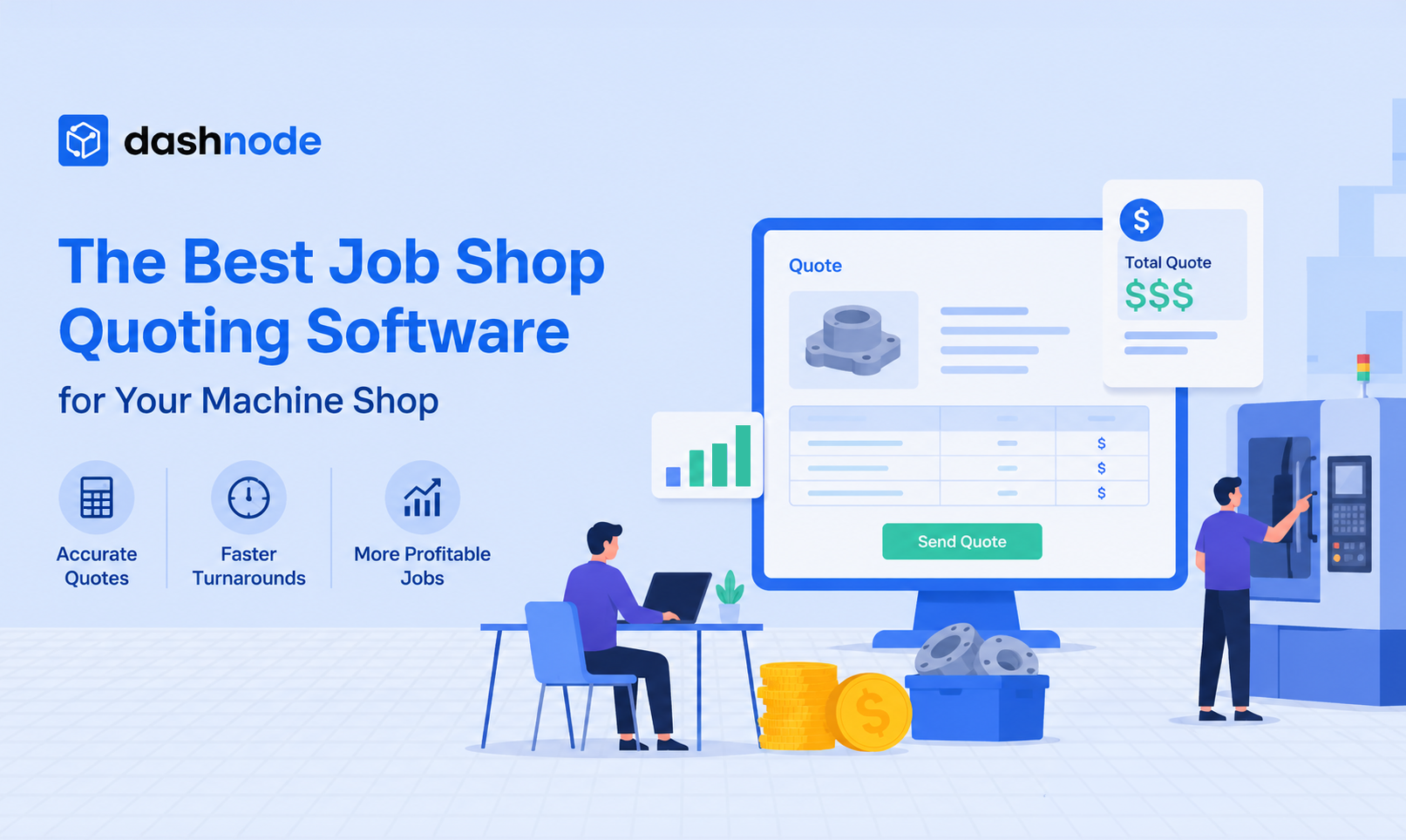
The right job shop quoting software can significantly improve how quickly and accurately your business responds to customer RFQs. Modern machine shop quoting software helps manufacturers move beyond spreadsheets by automating manufacturing cost estimation, reducing manual calculations, and standardizing the quoting process.
Dashnode supports machine shops by analyzing CAD models and generating AI-assisted manufacturing cost estimates, enabling estimators to prepare quotes more efficiently while retaining full engineering control.
For machine shops handling custom components, every quotation is unique. Material selection, machining operations, setup time, tooling, tolerances, and production volume all influence the final cost. The right software helps organize this information, making quoting faster without sacrificing accuracy.
This guide explains what to look for when evaluating quoting software, the features that deliver the greatest value, and how to choose a solution that fits your workflow.
Unlike high-volume manufacturing, most machine shops operate in a high-mix, low-volume environment. Every incoming RFQ may involve a different material, machining process, geometry, tolerance, or production quantity. As a result, quoting a pricing exercise as well as an engineering task.
Estimators need to determine:
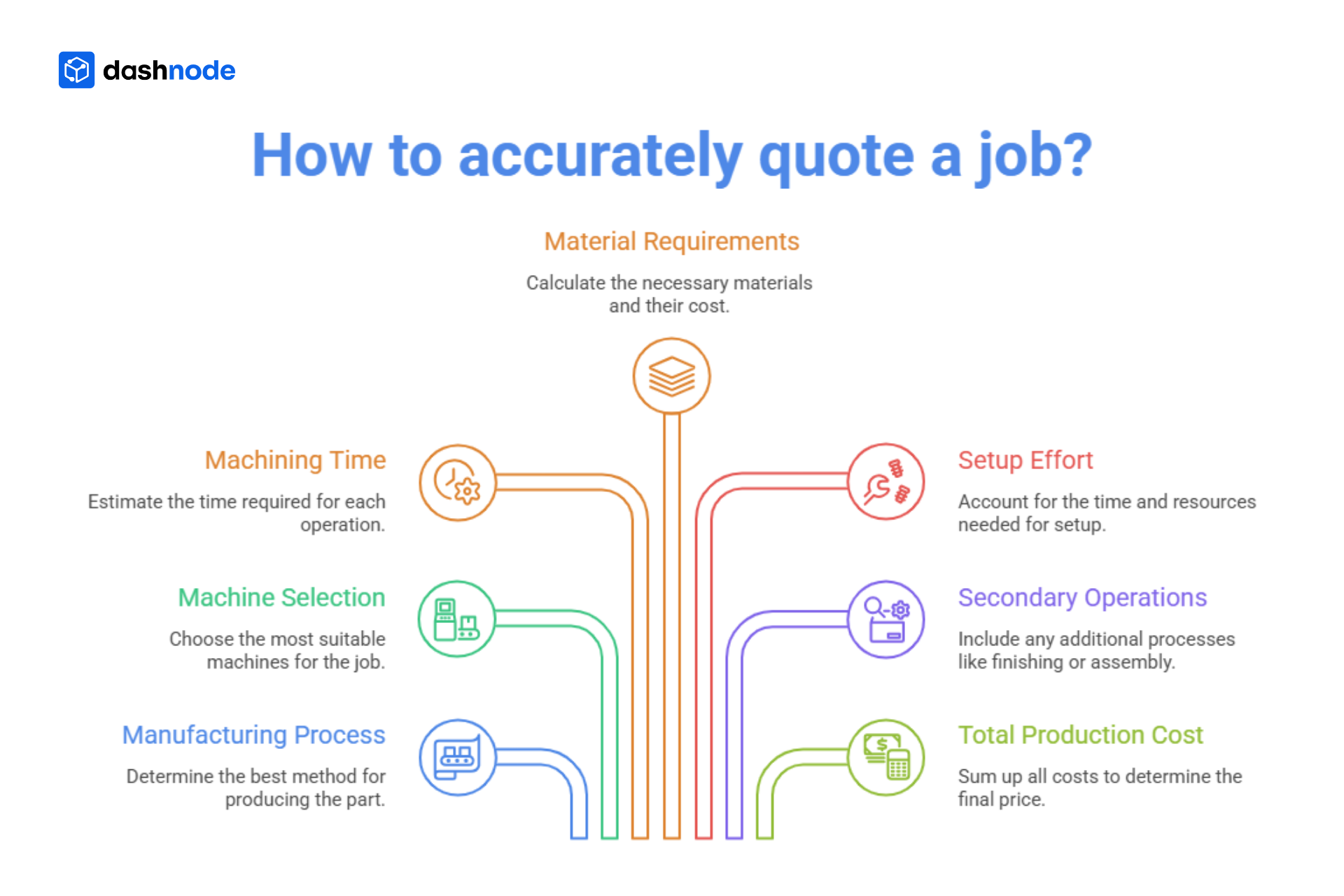
When this information is calculated manually, preparing a single quote can consume a significant amount of engineering time.
As RFQ volumes increase, machine shops often face new challenges:
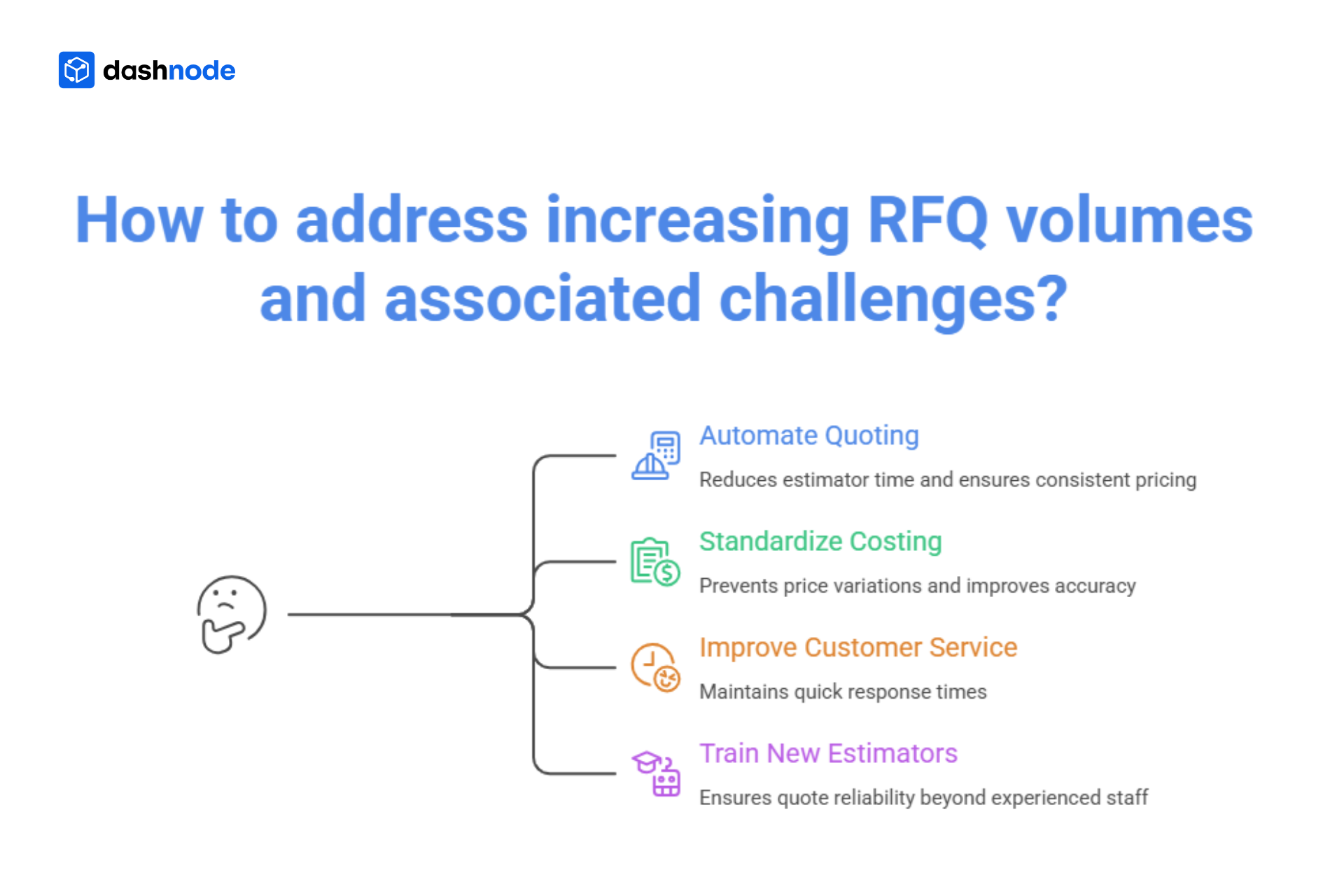
The right quoting software helps standardize the estimating process, making it easier to produce consistent, reviewable cost estimates regardless of who prepares the quotation.
Many machine shops begin with spreadsheets because they're familiar, flexible, and inexpensive. As the business grows, however, spreadsheets become increasingly difficult to manage.
One estimator may create formulas that only they understand. Another may update machine rates without documenting the changes. Over time, multiple versions of the same workbook circulate throughout the organization, making it difficult to determine which estimates are based on current production costs.
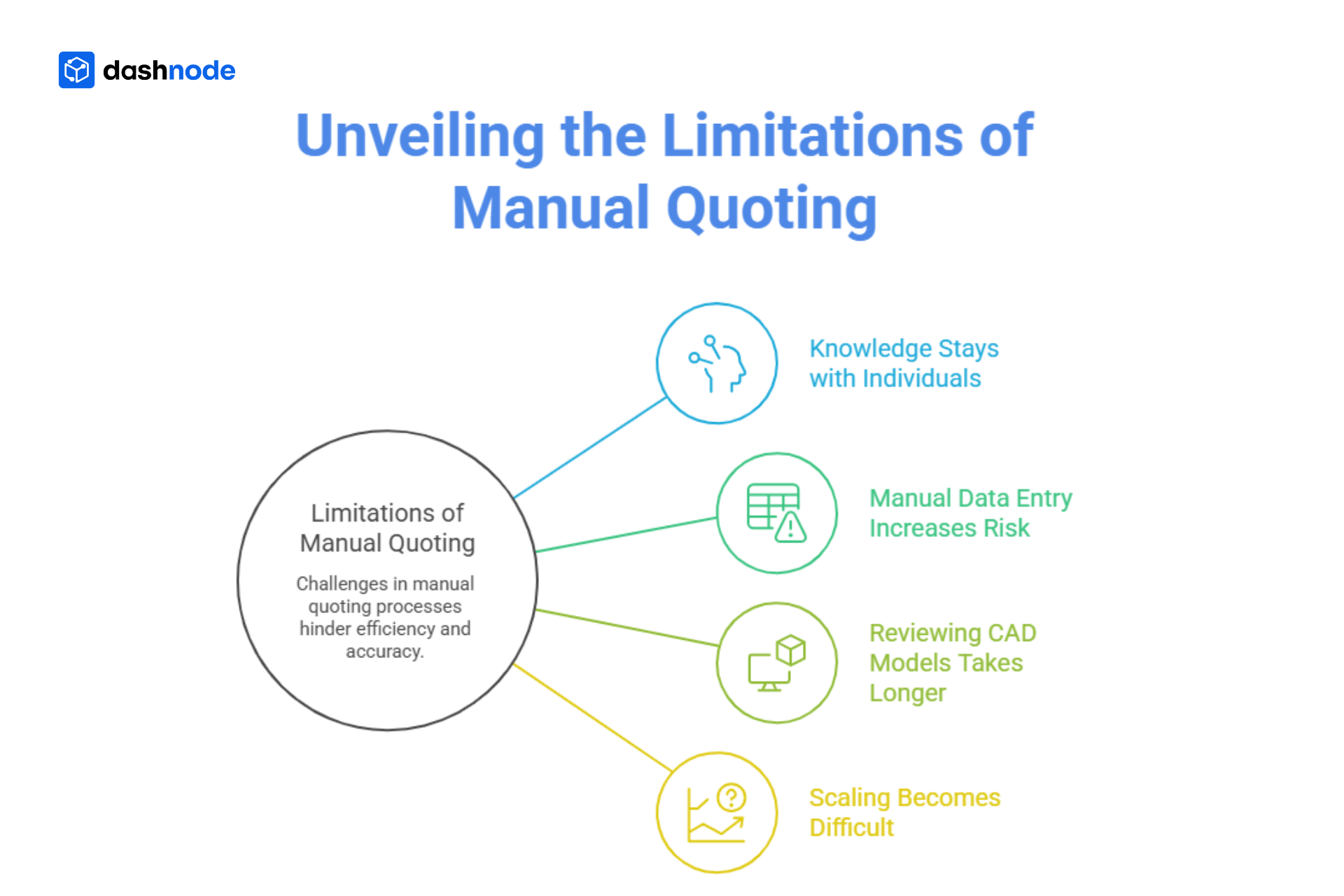
Some common limitations include:
When costing methods exist only in an estimator's spreadsheet, the organization becomes dependent on that person's experience.
Copying dimensions, material information, or machining parameters manually introduces opportunities for mistakes that affect profitability.
Estimators often switch between CAD software, spreadsheets, and internal documentation while building a single estimate. This fragmented workflow slows the entire quoting process.
A quoting process that works for ten RFQs each week may struggle when the business receives fifty or more.
Dedicated quoting software creates a more structured workflow by bringing engineering data and manufacturing cost calculations into a single environment.
Not every quoting solution is designed for custom manufacturing. Before investing in software, evaluate how well it supports the way your shop estimates parts today and how it can support future growth.
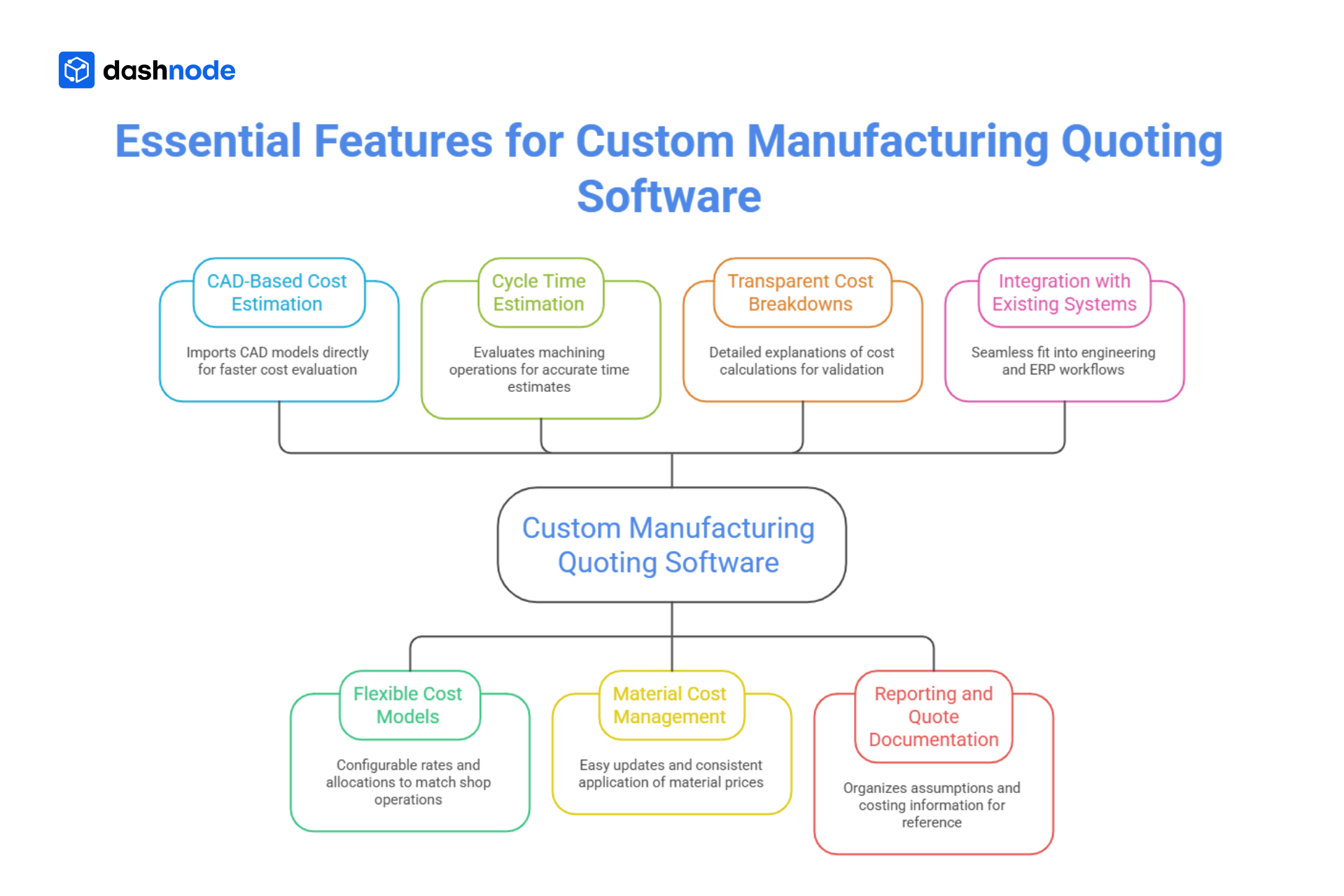
Software that imports CAD models directly reduces the need to recreate geometry or manually extract dimensions from engineering drawings.
This allows estimators to begin evaluating manufacturing costs much sooner.
Every machine shop operates differently. Hourly machine rates, labor costs, overhead allocation, and tooling expenses should all be configurable to reflect your actual manufacturing environment.
Software that forces standardized costing models may produce estimates that don't accurately represent your business.
Reliable machining time estimates help create more accurate manufacturing costs.
Look for software that evaluates machining operations rather than relying solely on generic costing formulas.
Material prices fluctuate regularly. The software should make it easy to update material costs and apply them consistently across every quotation.
Good quoting software should explain how the final estimate was calculated. Detailed cost breakdowns help engineers validate assumptions before quotations are shared with customers.
Reporting features should help teams organize manufacturing assumptions, costing information, and supporting documentation for future reference.
Estimating doesn't happen in isolation. Consider whether the software can fit into your existing engineering, production planning, or ERP workflow without creating duplicate work.
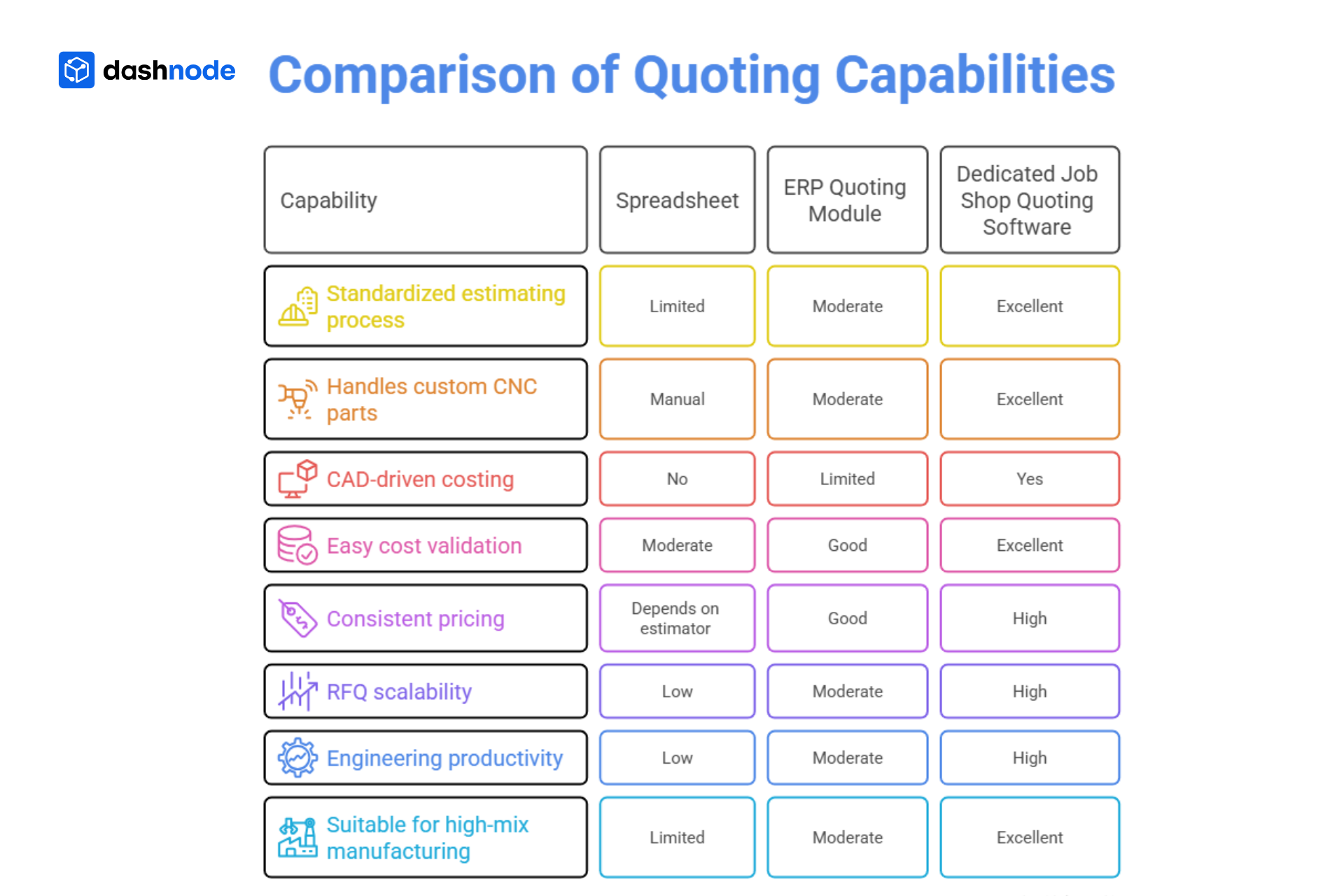
No single solution is right for every manufacturer. However, machine shops that process a large number of custom parts generally benefit from software designed specifically for manufacturing estimation rather than relying on spreadsheets or generic business systems.
Once you've shortlisted a few solutions, the next step is to evaluate how well they fit your manufacturing workflow.
Here are a few questions worth asking during your evaluation.
A machine shop producing simple turned components has different estimating requirements than one machining complex multi-axis aerospace parts. Choose software that supports your manufacturing processes and can adapt to the range of jobs your shop handles.
The software should simplify repetitive estimating tasks, not introduce additional data entry. Look for solutions that minimize manual calculations while giving engineers the information they need to validate costs before sending a quote.
Every machine shop has unique machine rates, labor costs, overheads, and production practices. Your quoting software should allow these parameters to be configured rather than forcing a one-size-fits-all costing model.
As your customer base grows, so will your RFQ volume. Consider whether the software can support additional users, larger quoting workloads, and evolving manufacturing requirements without disrupting your existing processes.
Estimators should be able to understand how the final manufacturing cost was calculated. Clear cost breakdowns make it easier to validate assumptions, identify potential errors, and discuss pricing internally before sending quotations to customers.
Artificial intelligence is becoming an important part of manufacturing estimation. It can assist with repetitive calculations, analyze CAD models more quickly, and help generate consistent manufacturing cost estimates. Engineers still review machining strategies, validate assumptions, and make the final pricing decisions based on customer requirements and production capacity.
For growing machine shops, this combination of AI-assisted estimation and engineering expertise can improve productivity while maintaining confidence in the final quote.
Every machine shop has its own quoting workflow, and no single solution manages every step of that process. Dashnode is designed to strengthen one of the most important stages: manufacturing cost estimation.
Dashnode analyzes CAD models and generates CNC machining cost estimates. These estimates provide engineering teams with a structured foundation for preparing customer quotations.
With Dashnode, machine shops can:
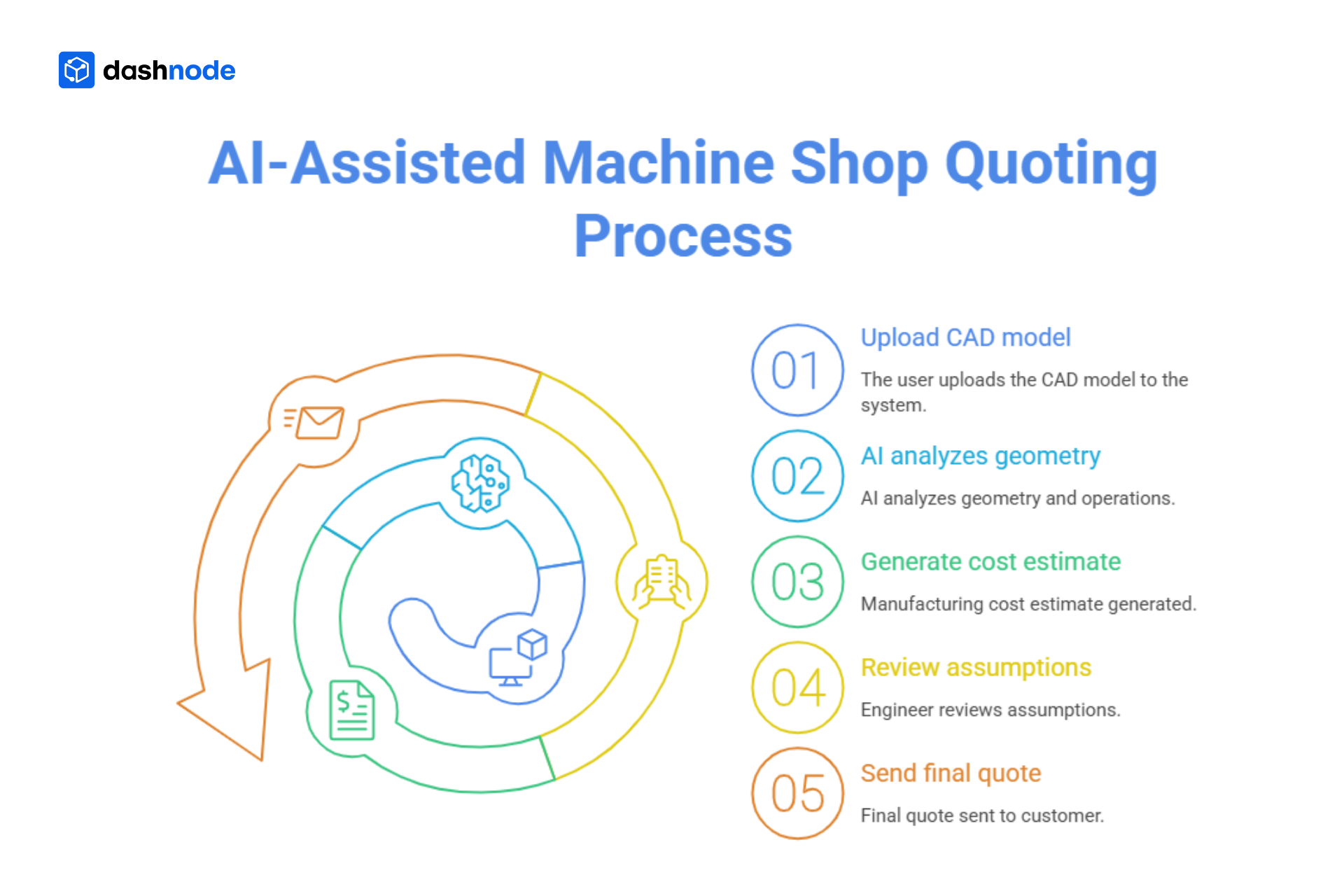
For manufacturers evaluating job shop quoting software or machine shop quoting software, Dashnode complements existing quoting processes by making cost estimation more efficient and repeatable.
By combining engineering expertise with AI-assisted manufacturing cost estimation, machine shops can reduce repetitive work while making better-informed pricing decisions.
If your estimators spend hours reviewing CAD models, updating spreadsheets, and preparing manufacturing cost estimates, it may be time to modernize the process.
Dashnode helps machine shops estimate CNC machining costs directly from CAD files, making quote preparation faster, more consistent, and easier to review.
Schedule a demo to see how Dashnode can support your existing quoting workflow.
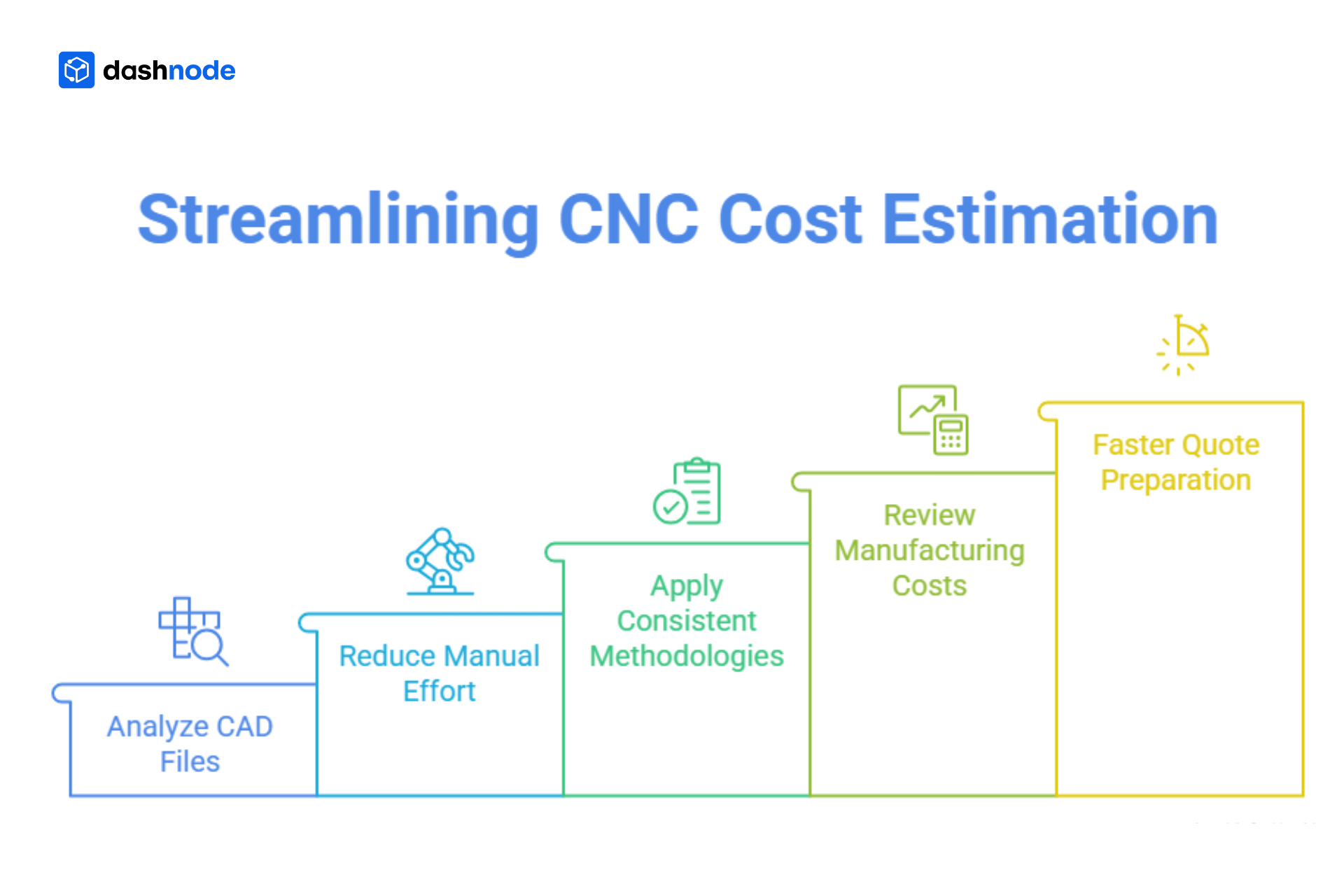
If preparing quotes is taking longer than expected, RFQs are piling up, or different estimators arrive at different costs for similar parts, it's time to consider dedicated machine shop quoting software. Dashnode help standardize manufacturing cost estimation by analyzing CAD files and generating AI-assisted cost estimates, reducing manual effort while improving consistency.
Yes. Job shop quoting software is built for high-mix, low-volume manufacturing where every RFQ may involve different materials, machining operations, tolerances, or quantities. Dashnode supports these environments by estimating CNC machining costs directly from CAD models, allowing estimators to evaluate each custom job more efficiently while maintaining engineering oversight.
Modern quoting software reduces the time spent reviewing CAD files, estimating machining costs, and preparing quotes manually. By generating detailed manufacturing cost estimates from CAD models, Dashnode helps engineering teams prepare quotations more quickly, enabling faster responses to customer RFQs without compromising accuracy.
Yes. AI-powered quoting tools are not just for large manufacturers. Small and mid-sized machine shops can use solutions like Dashnode to reduce manual costing effort, improve consistency across quotations, and respond to customer RFQs faster. This allows estimators to spend more time on engineering decisions rather than repetitive calculations.
Yes. Accurate manufacturing cost estimation helps machine shops avoid underquoting, maintain consistent pricing, and make informed decisions before submitting customer quotations.