.png)


In manufacturing cost calculation, precision isn’t just about machining tolerances—it extends to financial accuracy too. If your machine hourly rate (MHR) isn’t accurate, you could be:
✅ Underpricing jobs, leading to reduced profit margins.
✅ Overpricing quotes, losing out on competitive bids.
✅ Failing to justify machine investments, impacting long-term planning.
Even a small 10–15% error in your machine hour rate can significantly impact profitability, especially in high-volume CNC machining environments.

This is where the MHR becomes crucial. A well-calculated machine hourly rate helps manufacturers quote jobs accurately, optimize machine utilization, and identify cost-saving opportunities.
In simple terms, the machine hour rate refers to the total cost of running a machine per hour, including both fixed and variable expenses.
Dashnode's Machine Hour Rate Calculator simplifies the process by helping you evaluate machine costs, operating expenses, and hourly production economics without building complex spreadsheets.
Check out our free MHR Calculator

While an MHR calculator helps you quickly estimate machine-hour rates, it is also important to understand the factors that influence those rates. Fixed costs, operating expenses, machine utilization, and production efficiency all play a role in determining the true cost of machine time.
Let's examine these cost components and see how they affect machine hour rate calculations in real-world manufacturing environments.
The MHR consists of fixed and variable costs. Fixed costs are incurred regardless of whether the machine runs, while variable costs fluctuate based on machine usage.
This structured approach is often referred to as the machine hour rate method, widely used in manufacturing cost estimation and CNC machining hourly rate calculations.
Let’s analyze these two categories in detail.
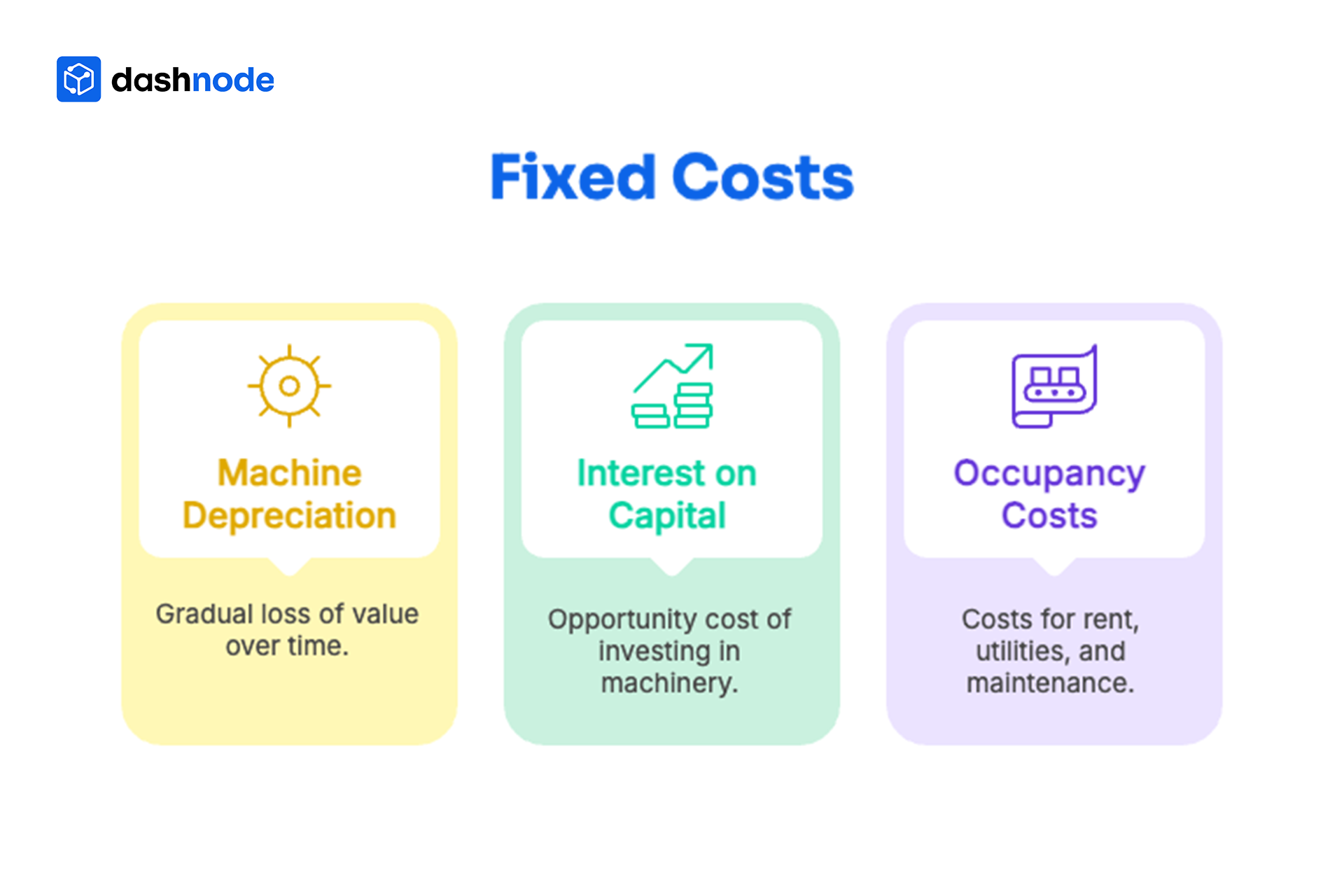
Machines don’t last forever. Depreciation accounts for the gradual loss of value over time due to wear and tear, obsolescence, and technological advancements.
📌 Formula:
Depreciation (D) = (Original Cost - Salvage Value) / Useful Life
📌 Example Calculation:
Depreciation = (16,00,000 - 1,60,000) / 10 = ₹1,44,000 per year
📌 Why It Matters:
Since depreciation directly impacts profitability, it's essential to use proper machine depreciation methods. In India, manufacturers should comply with depreciation rates as specified in the Income Tax Act, 1961 for tax optimization and regulatory compliance.
Machine depreciation is a critical component in machine hour rate calculation, as it directly affects long-term cost recovery and pricing accuracy.
Purchasing a CNC machine ties up capital, which could have been used elsewhere for business growth. Interest on capital represents this opportunity cost, even if no loan was taken.
📌 Formula:
Interest on Capital (I) = Average Invested Capital × Interest Rate
📌 Example Calculation:
📌 Why It Matters:
A realistic assessment of capital costs helps manufacturers evaluate financing options and plan future investments wisely.
Every machine occupies valuable factory space, which incurs costs for rent, utilities, and property maintenance.
📌 Formula:
Occupancy Cost = Space Occupied (sq. m) × Rent per sq. m per month × 12
📌 Example Calculation:
📌 Why It Matters:
Many manufacturers overlook this manufacturing overhead allocation, which directly impacts profit margins.

Unlike fixed costs, variable costs increase as the machine runs.
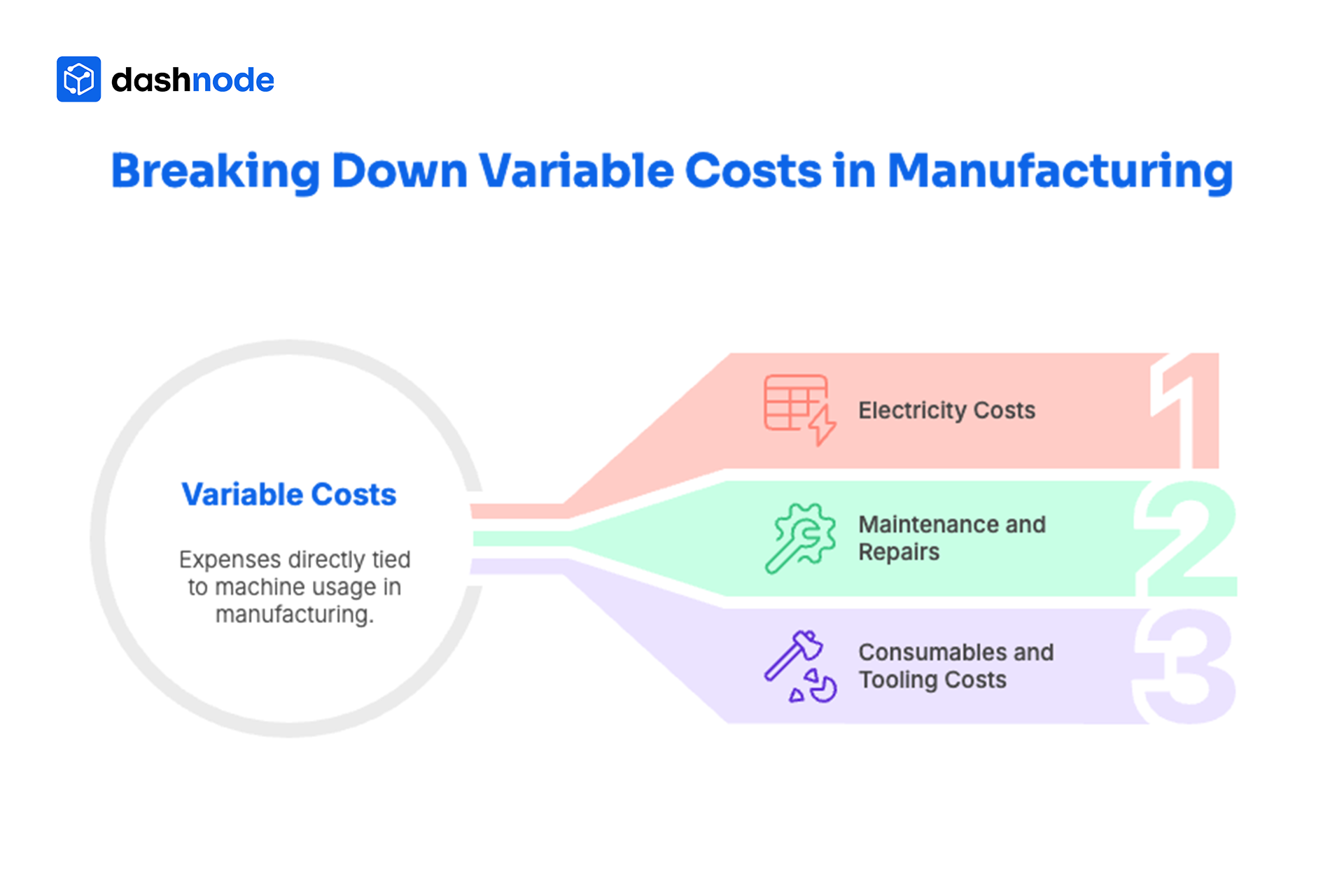
📌 Formula:
Electricity Cost = Power Consumption (kW) × Electricity Rate (₹ per kWh)
📌 Example Calculation:
📌 Why It Matters:
Optimizing energy efficiency is crucial for reducing manufacturing overhead costs.
✔ Includes routine servicing, tool replacements, and repairs.
📌 Example Calculation:
📌 Why It Matters:
Following proper maintenance and repair costs tracking reduces unexpected downtime and extends machine life.
✔ Includes cutting tools, coolants, lubricants, and wear parts.
📌 Example:
If tooling and coolant costs ₹70 per hour, this should be included in the MHR calculation.
📌 Formula:
Total Variable Costs per Hour = Electricity Cost + Maintenance Cost per Hour + Consumables

Even when the machine hour rate formula is applied correctly, many manufacturers overlook key cost components that significantly impact accuracy.
These include:
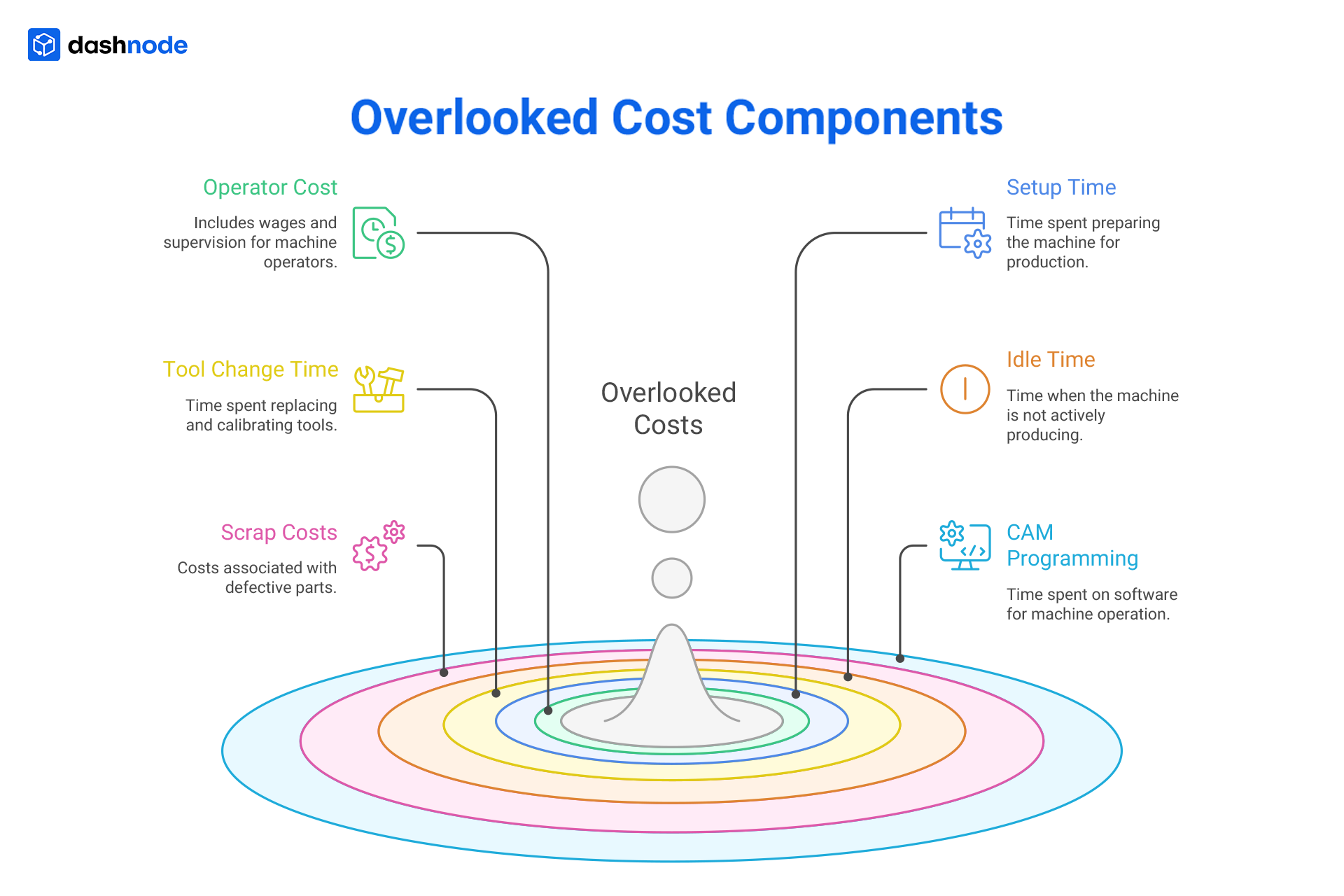
Ignoring these factors can introduce a 15–30% error in your machine hour rate calculation.
Cycle time calculation plays a critical role in determining accurate machining costs and overall machine utilization.
Cycle time refers to the total time required to complete one part, including cutting, loading/unloading, and tool changes.
Spindle time cost, i.e., the time when the tool is actively cutting material is a key contributor to CNC machining hourly rate calculations.
Basic cycle time calculation formula:
Cycle Time = Machining Time + Setup Time + Idle Time
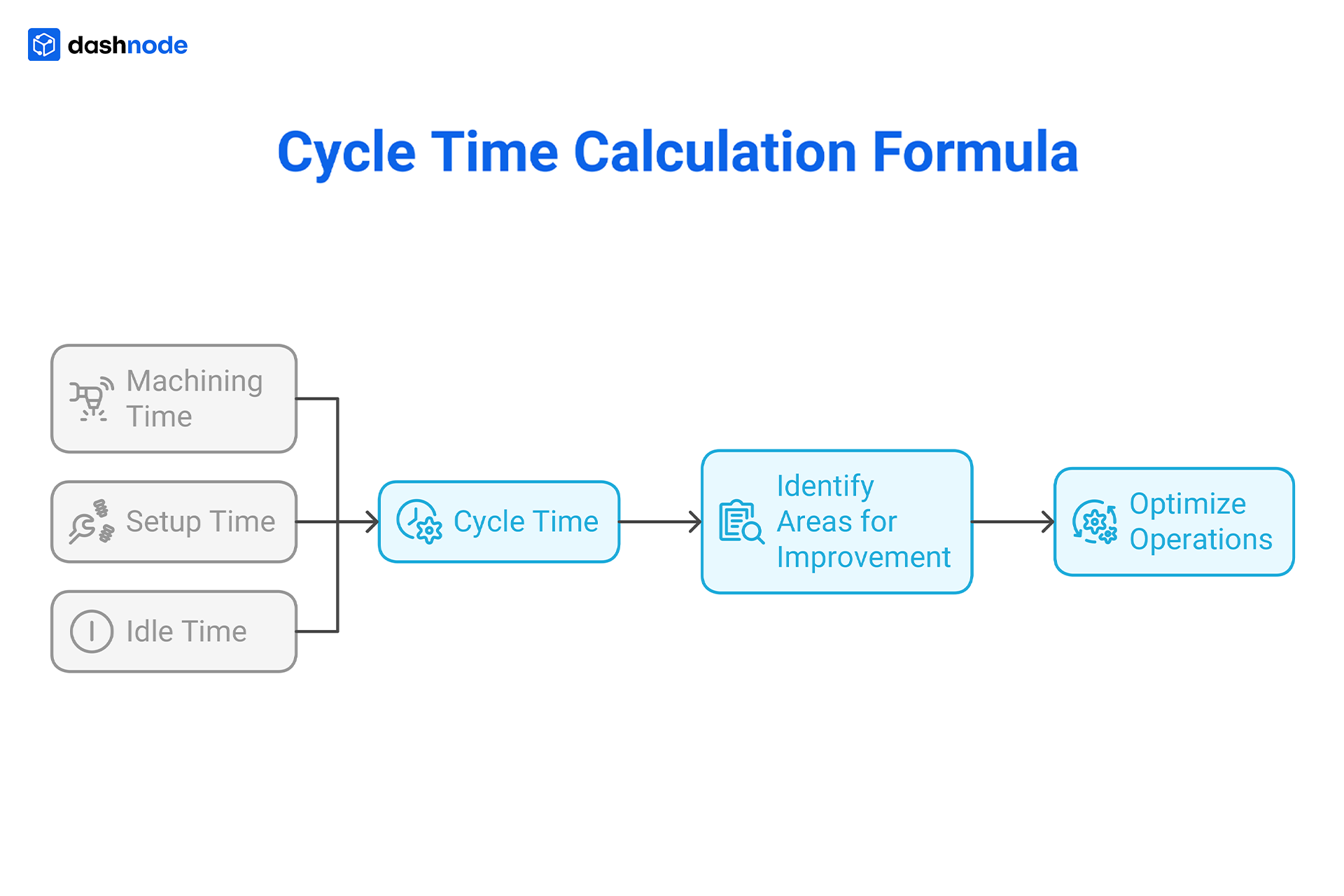
Using a cycle time calculator or automated costing software helps manufacturers estimate machining time more accurately and improve overall costing precision.
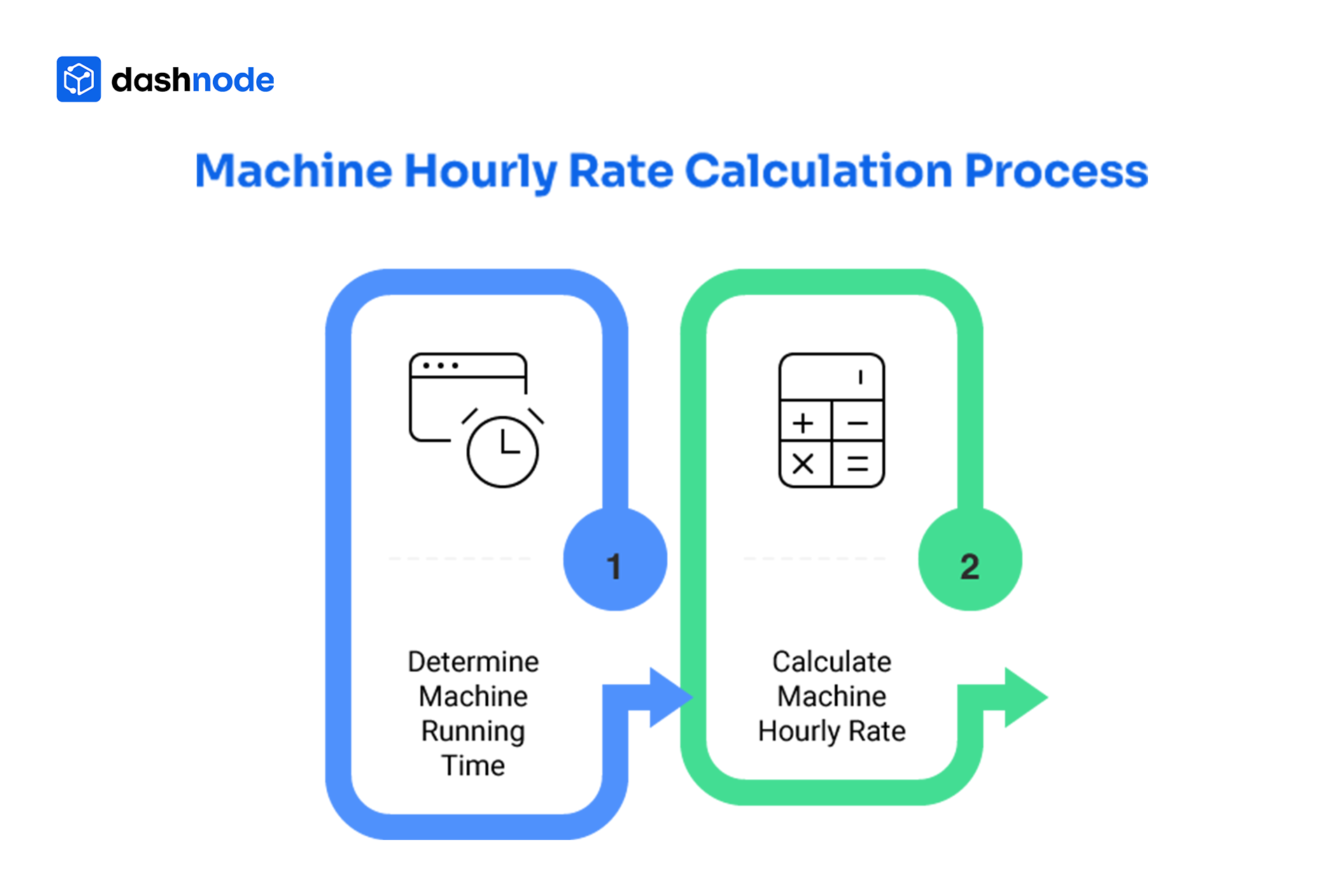
📌 Formula:
Machine Running Time (TRT) = Total Available Time - (Downtime + Maintenance Time)
📌 Example Calculation:
TRT = 1,500 - (100 + 200) = 1,200 hours per year
📌 Formula:
Machine Hourly Rate (MHR) = (Total Fixed Costs / TRT) + Total Variable Costs per Hour
📌 Example Calculation:
MHR = (2,60,000 / 1,200) + 220 = ₹492.67 per hour
Many manufacturers rely on spreadsheets or machine hour rate calculation Excel sheets to estimate costs.
While Excel-based methods can work initially, they often struggle with:
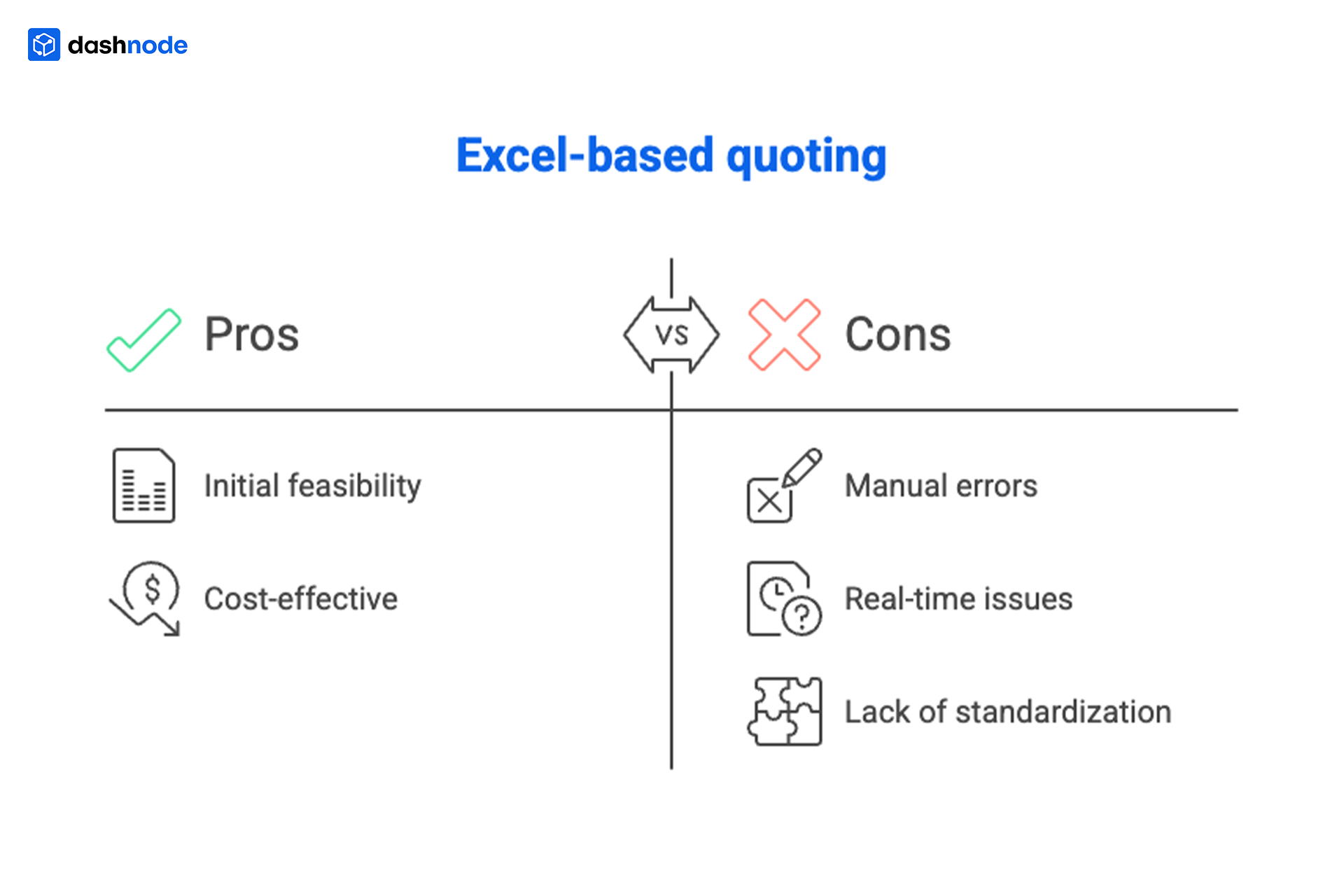
As production complexity increases, Excel-based machine hour rate calculation becomes harder to maintain and scale.
Understanding how to calculate machine hour rate is only the first step; the real value lies in how you apply it.
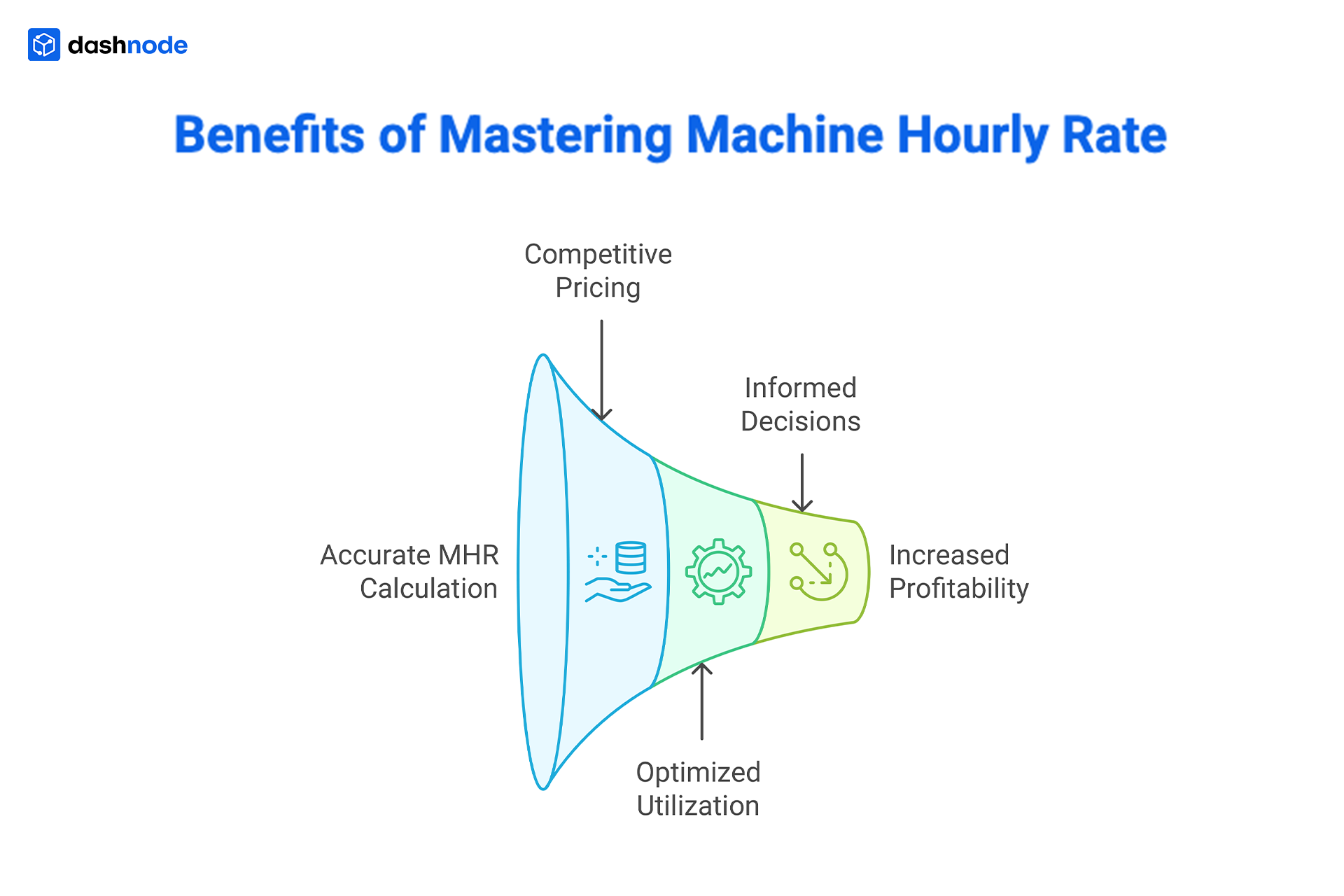
Mastering machine hourly rate (MHR) allows manufacturers to:
✔ Price jobs competitively without underquoting.
✔ Optimize machine utilization for cost savings.
✔ Make informed investment decisions.
However, as manufacturing complexity grows, manual costing methods become time-consuming and prone to errors.
For automated cost estimation, Dashnode by Dashnode.ai offers real-time insights, helping manufacturers streamline pricing and maximize profitability.
By combining accurate machine hour rate calculation with Dashnode, manufacturers can improve quoting speed, maintain consistent margins, and scale operations efficiently.
📌 Get CNC Costing in Seconds with Dashnode
Machine hour rate is critical in CNC machining because it directly impacts job pricing and profitability. An accurate MHR helps manufacturers avoid underquoting, control costs, and stay competitive. It also plays a key role in CNC machining cost calculation and quoting processes.
Machine hour rate is the cost of running a machine per hour, while machining cost is the total cost of producing a part. Machining cost includes the machine hour rate multiplied by machining time, along with material cost, setup cost, and auxiliary operations.
Several factors influence machine hour rate, including:
Among these, machine utilization and depreciation often have the biggest impact on overall cost.
Yes, machine hour rate can be calculated using Excel by creating a structured sheet that includes fixed costs, variable costs, and machine running hours. However, Excel-based calculations can become complex and error-prone as production variables increase, making automated costing tools a more reliable option for scaling operations.
Cycle time plays a key role in determining machining cost. While the machine hour rate defines the cost per hour, the cycle time determines how long the machine runs for each part. Accurate cycle time calculation, including spindle time and idle time, ensures precise cost estimation and better pricing decisions.