.png)


CNC machining cost calculation begins the moment a client sends a drawing and requests a quote. Your response must be both fast and financially accurate. A professional CNC machining cost estimate requires more than a rough cycle time and a quick material calculation. It requires structure.
Engineers who quote jobs for clients operate at the intersection of technical feasibility and commercial viability. If your estimate is too high, you lose the job. If it is too low, you win the job but sacrifice margin. The difference often lies in how clearly you define your cost model.
This guide explains how to calculate machining cost for CNC machines using a practical, repeatable CNC machining cost calculation framework that works in real Indian manufacturing conditions.
In competitive manufacturing environments, quoting speed matters. However, speed without structure increases risk. A well-prepared CNC machining cost estimate helps you:
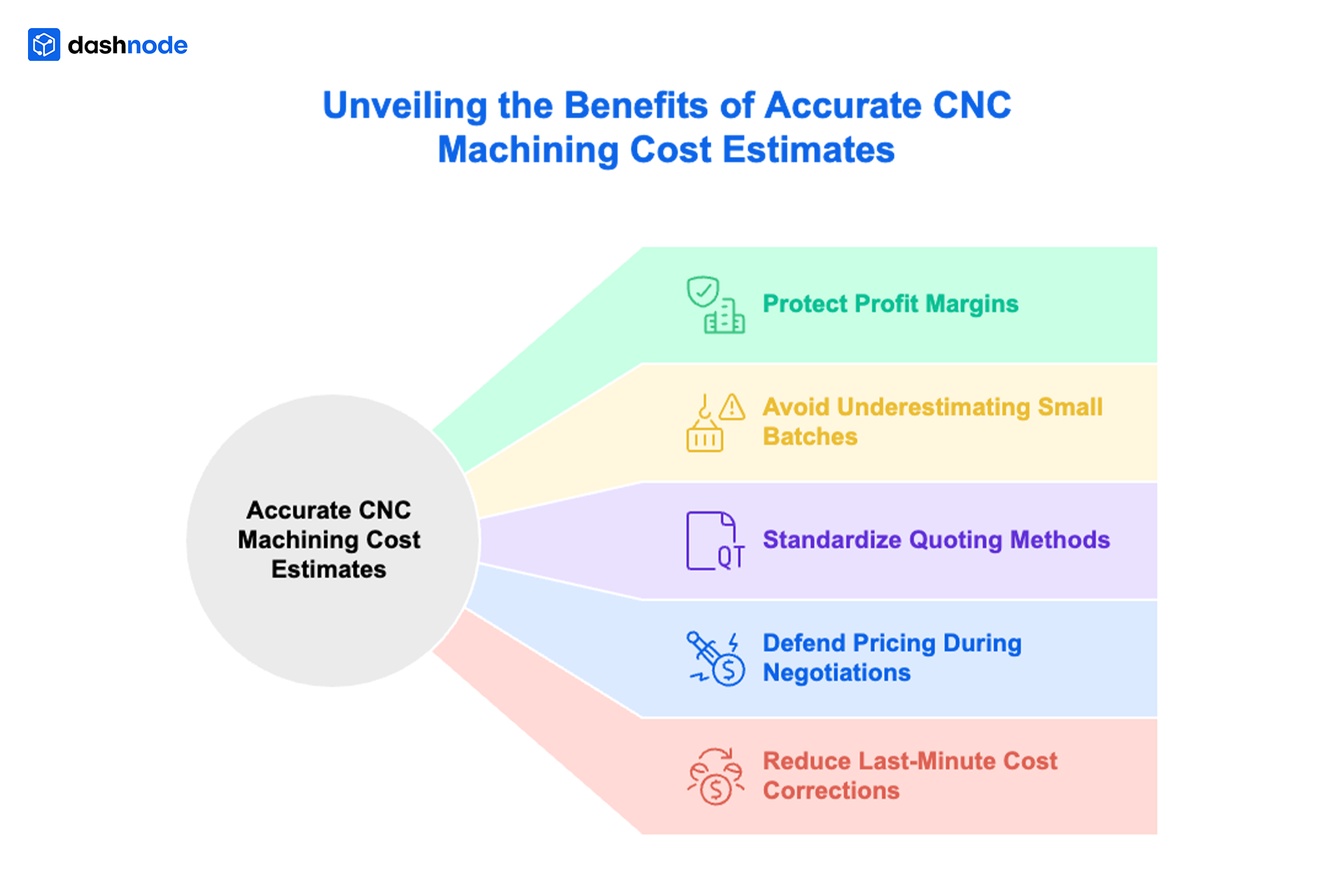
Costing should not depend on memory or assumption. It should follow a clear system.
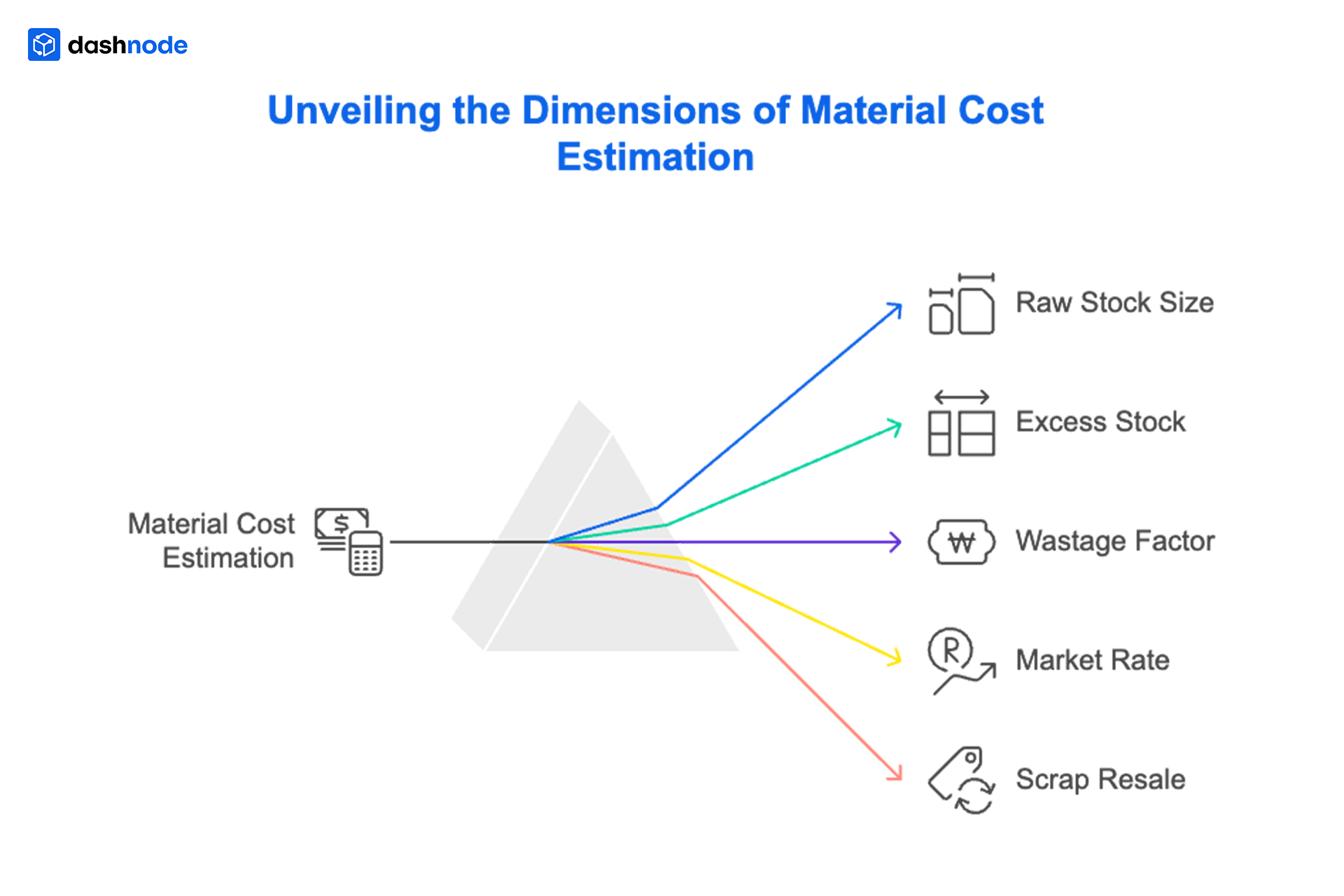
Material estimation is the foundation of every accurate CNC machining cost calculation. However, engineers often calculate only the finished part weight, forgetting the machining allowance and scrap.
A proper material cost estimate should include:
Example: Aluminium Part
Material cost calculation:
0.8 × 280 = ₹224
Wastage (10%) = ₹22
Total material cost ≈ ₹246 per part
Material prices fluctuate frequently. If you rely on outdated rates, your CNC machining cost estimate becomes inaccurate. Regularly updating raw material data ensures financial consistency.
For parts with high material removal, the gap between raw stock and finished weight can significantly influence cost.
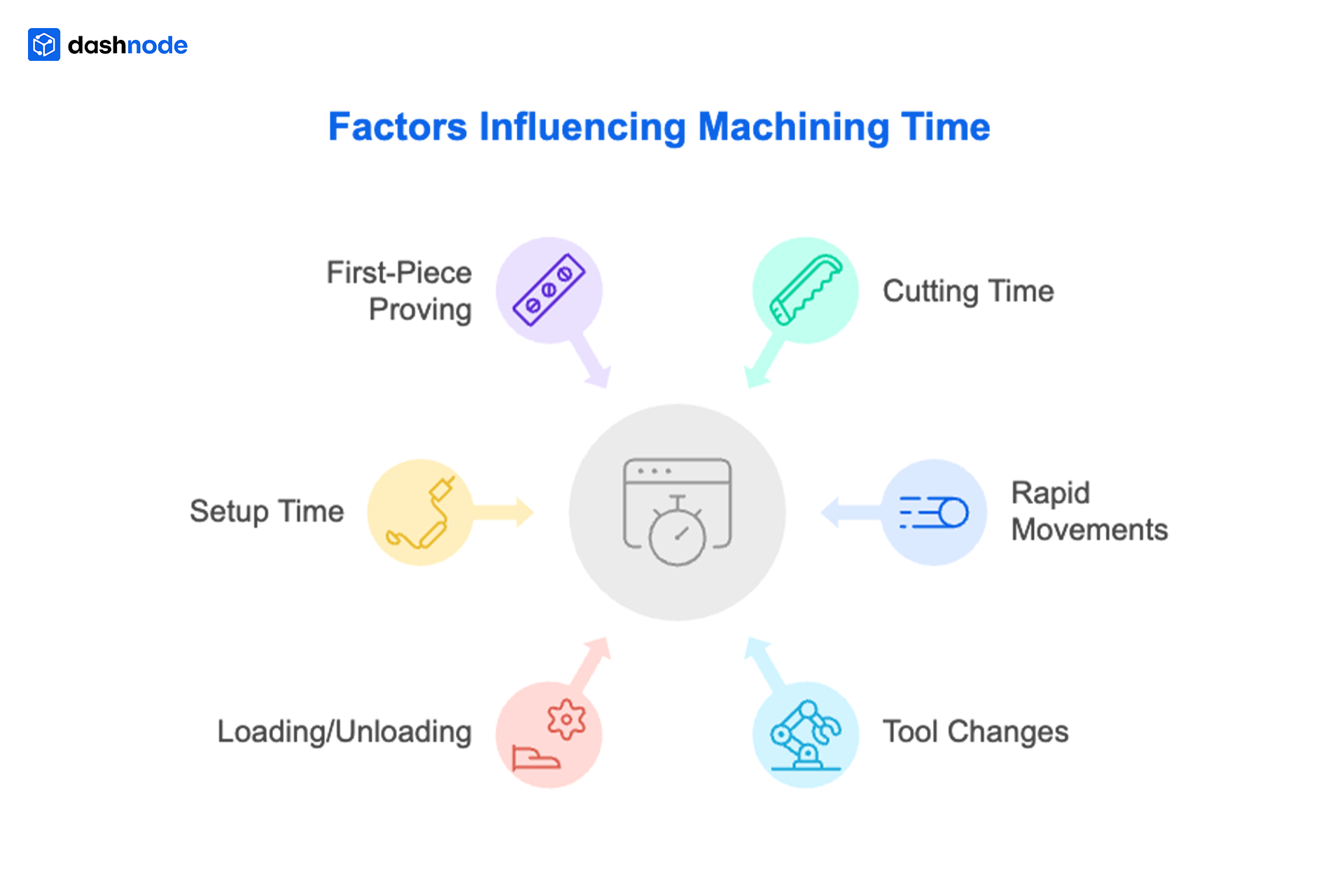
Machining time drives a major portion of the cost. Any error in machining time directly affects the overall CNC machining cost calculation. Your time per part must reflect actual production behavior, not just CAM simulation output.
Include:
Example Calculation
20 minutes = 0.33 hours.
Now consider setup time. If setup requires 2 hours:
Batch size significantly impacts time per part and overall cost. Many engineers underestimate setup time in small-batch jobs, leading to margin erosion.
An accurate time per part calculation strengthens your cost model and reduces risk.
Your machine hour rate reflects the real cost of operating your CNC machine per hour. It is one of the most important inputs in any CNC machining cost calculation model. It must include both direct and indirect expenses.
Typical cost components in Indian workshops:
Example
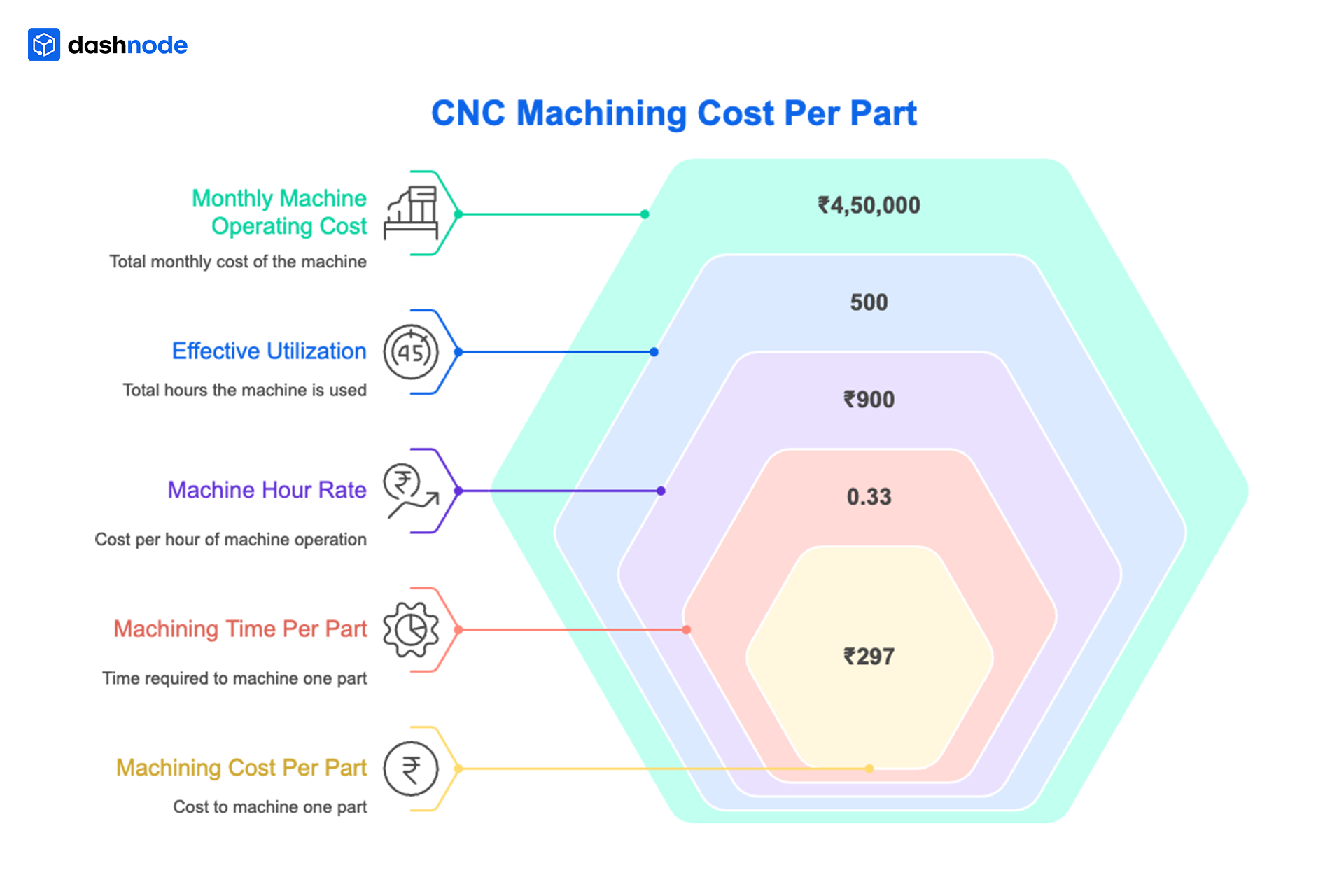
If monthly machine operating cost is ₹4,50,000 and effective utilization is 500 hours:
Machine hour rate = ₹900 per hour
If machining time per part is 0.33 hours:
Machining cost per part = 0.33 × 900 = ₹297
Review your machine hour rate every 6–12 months. Power tariffs, salary increments, and maintenance contracts change regularly and directly impact your CNC machining cost estimate.
Now combine all inputs into a clear cost model:
Total Cost per Part = Material Cost + (Time per Part × Machine Hour Rate) + Tooling + Overheads
Using our example:
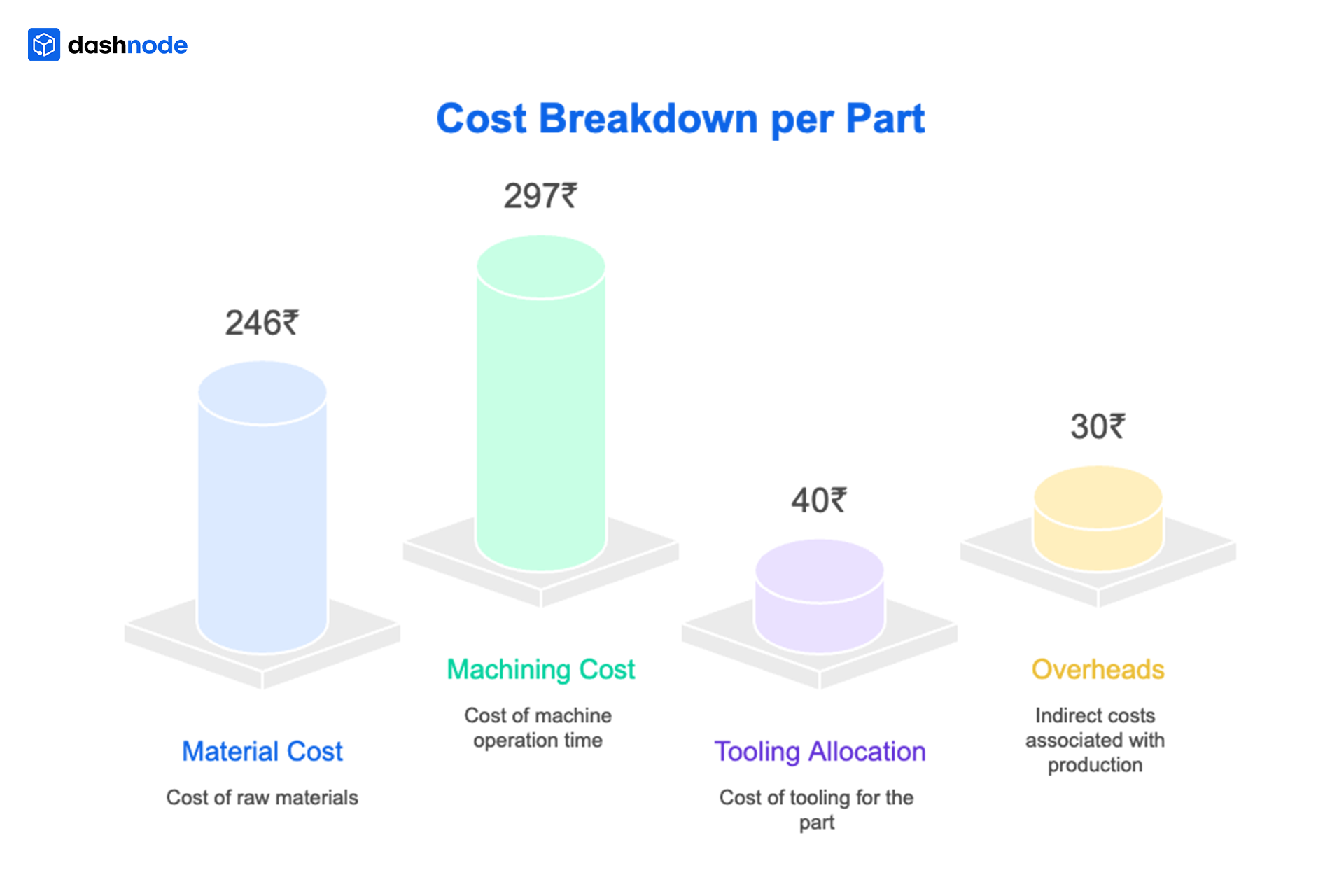
Total production cost per part = ₹613
This cost model ensures you understand where each rupee is allocated. If material cost increases or machining time improves, you can immediately calculate impact.
Let us calculate a full CNC machining cost estimate for 100 aluminium components.
Inputs:
Breakdown:
Material cost per part: ₹246
Machining cost per part: ₹297
Tooling & overhead: ₹70
Total cost per part: ₹613
For 100 parts:
₹613 × 100 = ₹61,300
If you apply a 20% margin:
Selling price per part ≈ ₹735
This structured CNC machining cost estimate gives you confidence in pricing discussions. You are no longer defending a number; you are explaining a system.
Beyond the core calculation, consider:
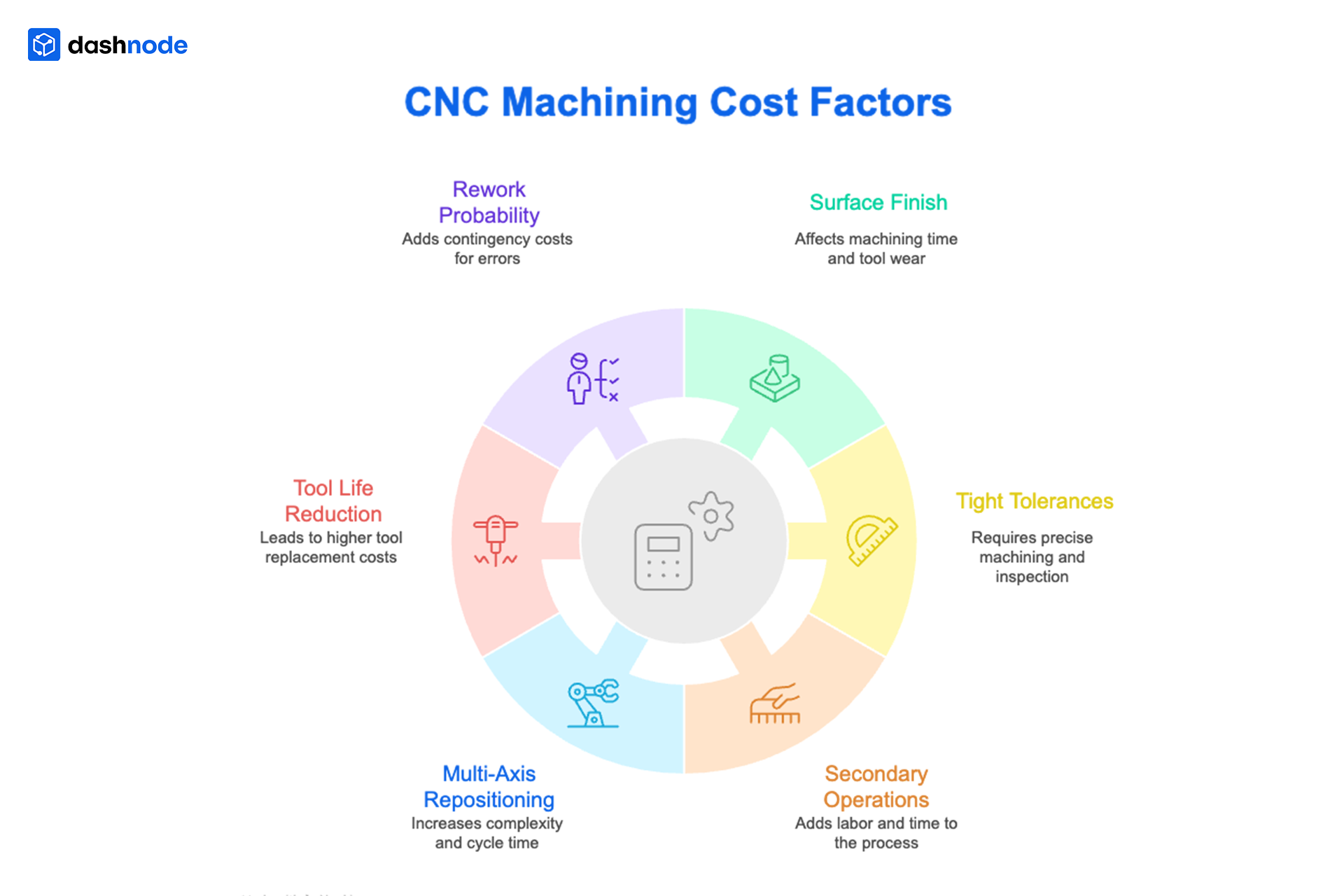
Each factor influences your final cost. Including them in your cost model improves long-term profitability.
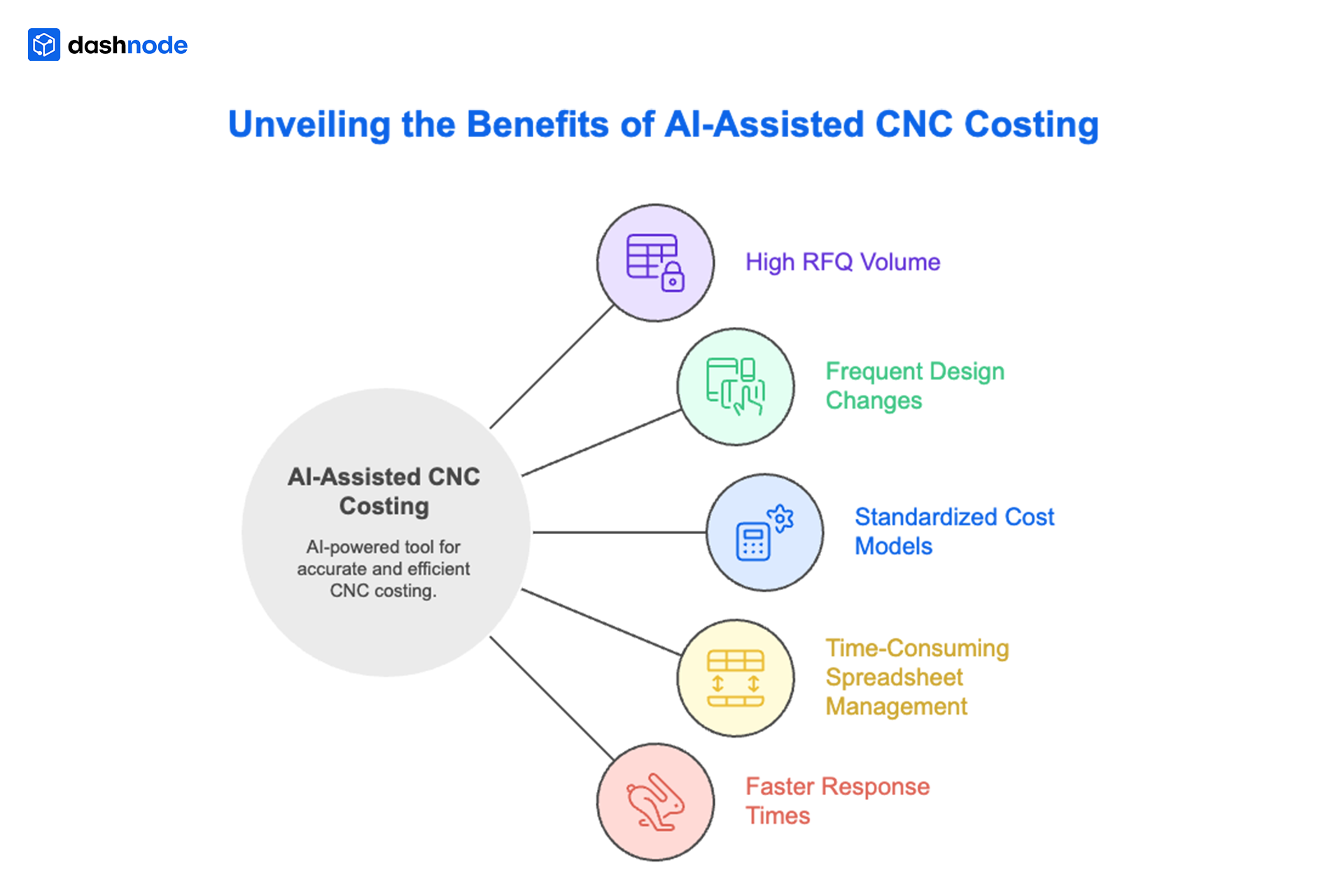
As production complexity grows, manual CNC machining cost calculation becomes increasingly difficult to standardize across teams. Traditional costing often relies on spreadsheets. While Excel provides flexibility, it also introduces challenges:
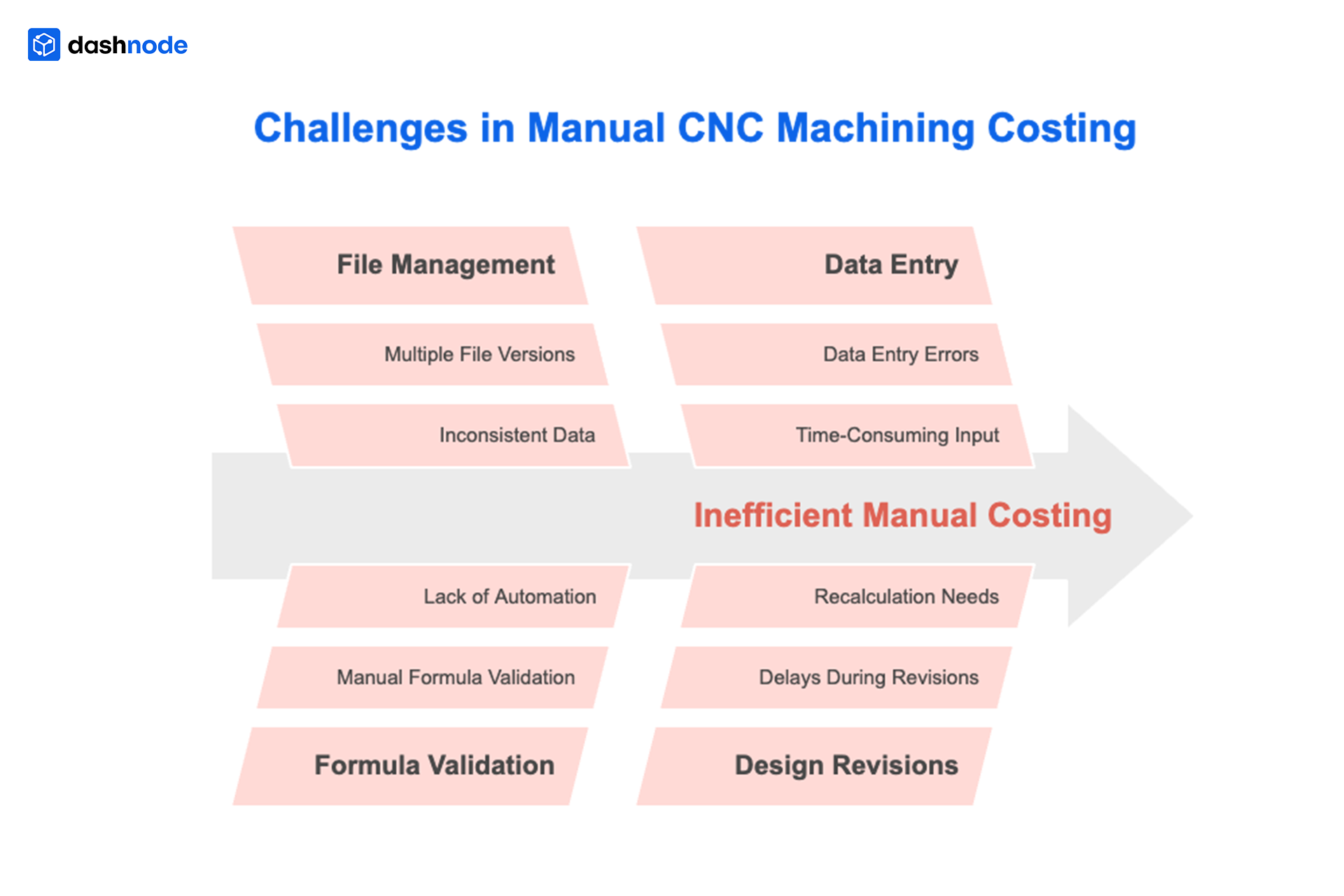
When RFQ volume increases, manual estimation consumes valuable engineering time.
Real-time estimation becomes difficult when each design change requires recalculating inputs manually.
Modern AI CNC machining cost platforms help engineers automate repetitive calculations while maintaining consistent costing logic.
You will benefit from AI-based CNC costing if:
Evaluating a structured demo provides clarity on how the system works with your machine data and costing parameters.
Dashnode supports engineers by analyzing uploaded CAD files and automatically generating a structured CNC machining cost estimate. It combines AI CNC machining cost analysis with CAD-based geometry recognition to reduce manual estimation effort.
Instead of manually calculating material volume and machining time, the system processes geometry and provides:
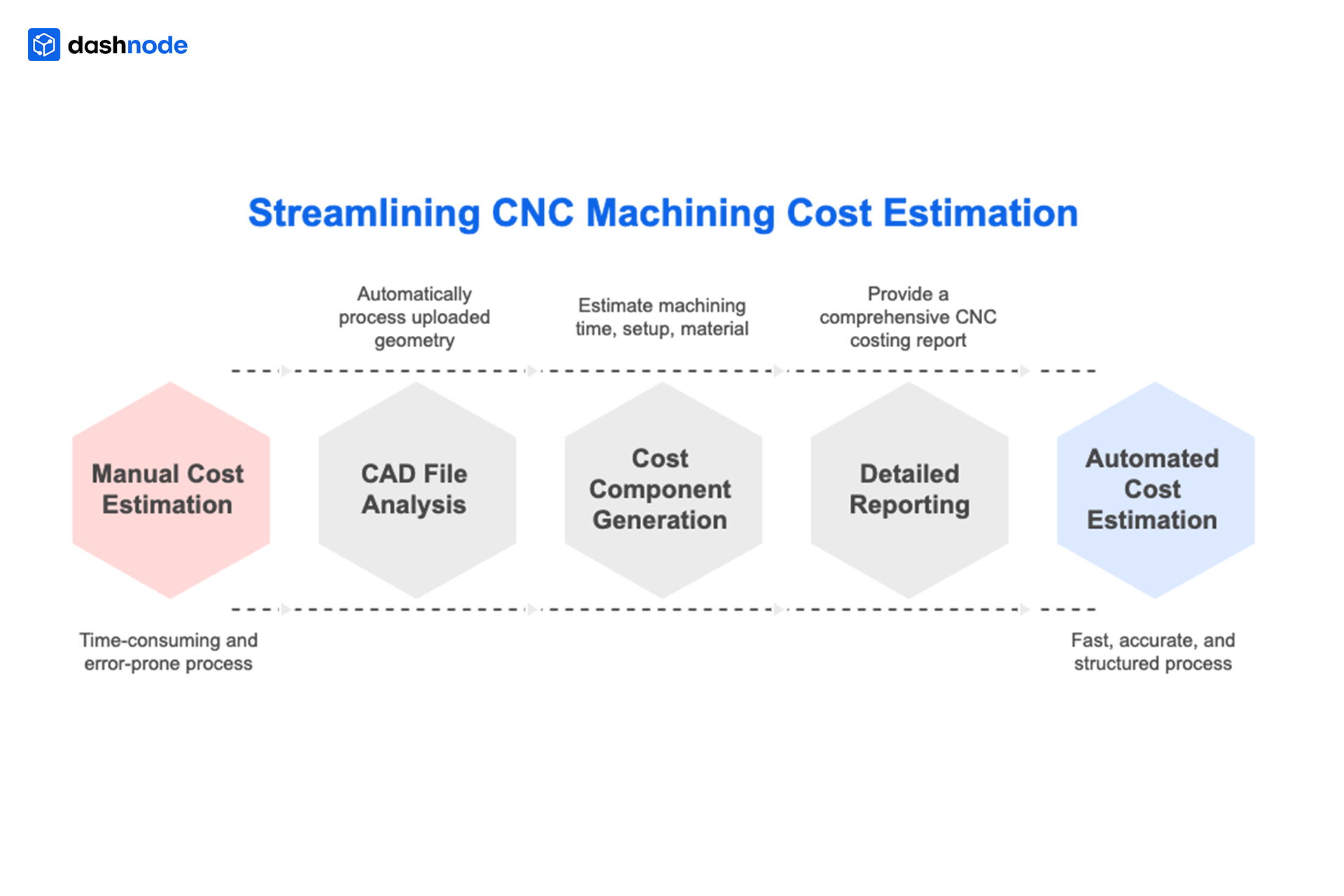
When part geometry changes, the estimate updates automatically. This enables real-time estimation during revision cycles. Engineers still define the machine hour rate, the margin percentage, and the business strategy. The system supports the analytical workload, allowing engineers to focus on validation and client communication.
If your team handles multiple RFQs daily, AI-assisted costing fits can speed up your workflow and reduce manual effort without losing accuracy. Book a demo to see how CAD-based analysis can integrate with your existing processes and machine configurations.
Accuracy improves when machine-hour rates, material costs, and setup details are correctly set. When these inputs match real shop-floor conditions, Dashnode’s estimates align with actual production results by over 90%.
Yes. CAD-based analysis allows the system to estimate machining complexity and time. However, highly specialized parts may require engineering validation before final submission.
No. CAM programming remains essential for production. AI costing supports the quotation stage before full programming begins.
Professional platforms use encrypted storage and secure processing protocols. Always review vendor security documentation before implementation.
Implementation depends on configuring the machine hour rate, material libraries, and cost parameters. Once configured, engineers can begin generating CNC machining cost estimates immediately.