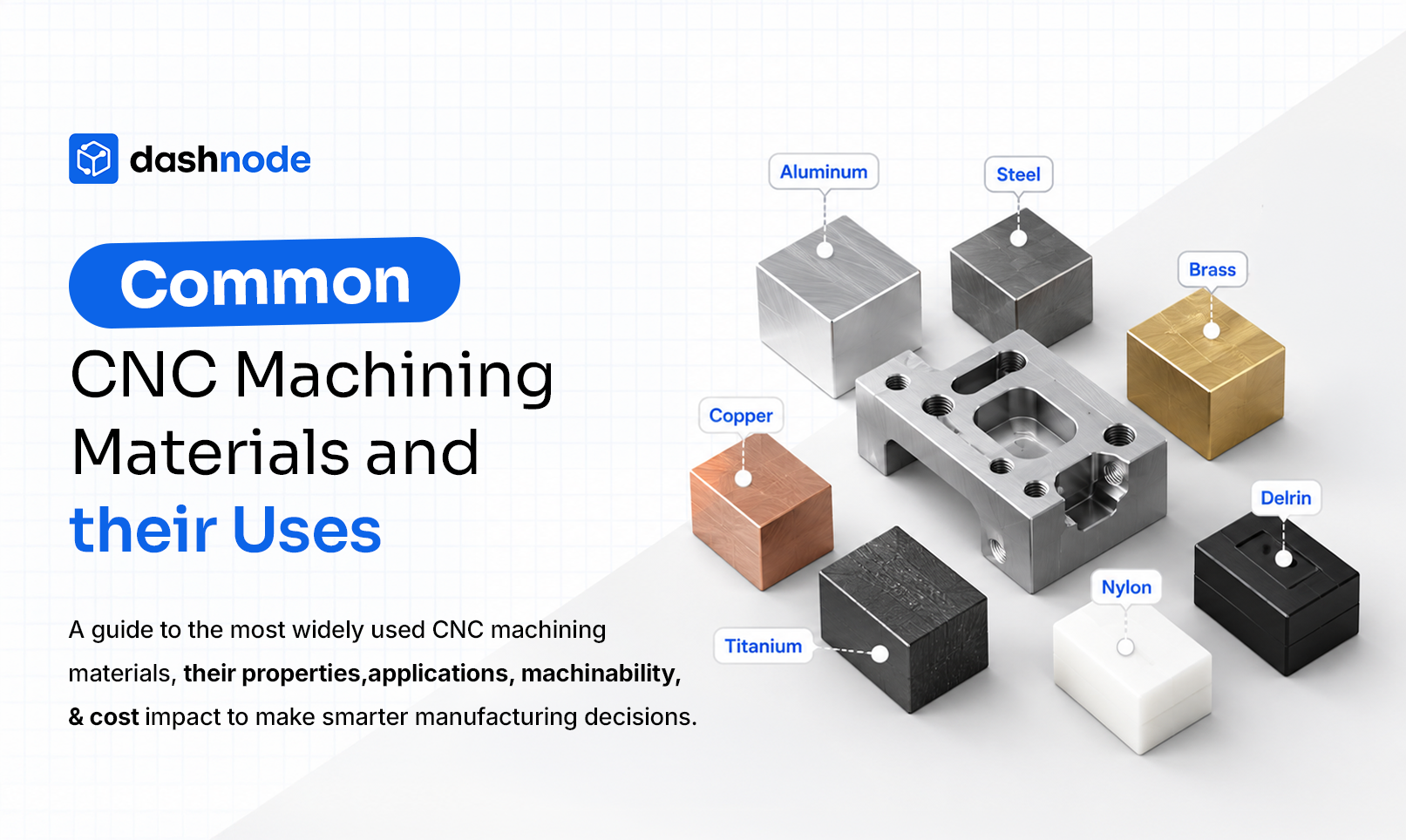
Choosing the right material from the common CNC machining materials directly impacts part performance, manufacturability, and production costs. While machine capability and design complexity influence outcomes, material choice often determines machining time, tool wear, surface finish, strength, and overall project economics.
For CNC manufacturers and machine shops, selecting the right material goes beyond meeting technical specifications. It affects quote accuracy, production efficiency, lead times, and profitability. For example, an aluminium part can often be machined faster and at a lower cost than an identical component made from titanium or hardened steel.
This guide examines the most widely used CNC machining materials, their properties, applications, machinability, and cost implications to help manufacturers make informed material selection and production decisions.
Every CNC-machined part is designed to meet specific performance requirements. Some applications prioritise lightweight construction, while others demand strength, corrosion resistance, thermal stability, or electrical conductivity. The chosen material influences not only how a component performs in service but also how efficiently it can be manufactured.
Materials with high machinability typically support faster cycle times, longer tool life, and lower production costs. More challenging materials may require slower cutting speeds, specialised tooling, and additional processing steps. Understanding these trade-offs early helps manufacturers balance performance requirements with manufacturing efficiency and cost.
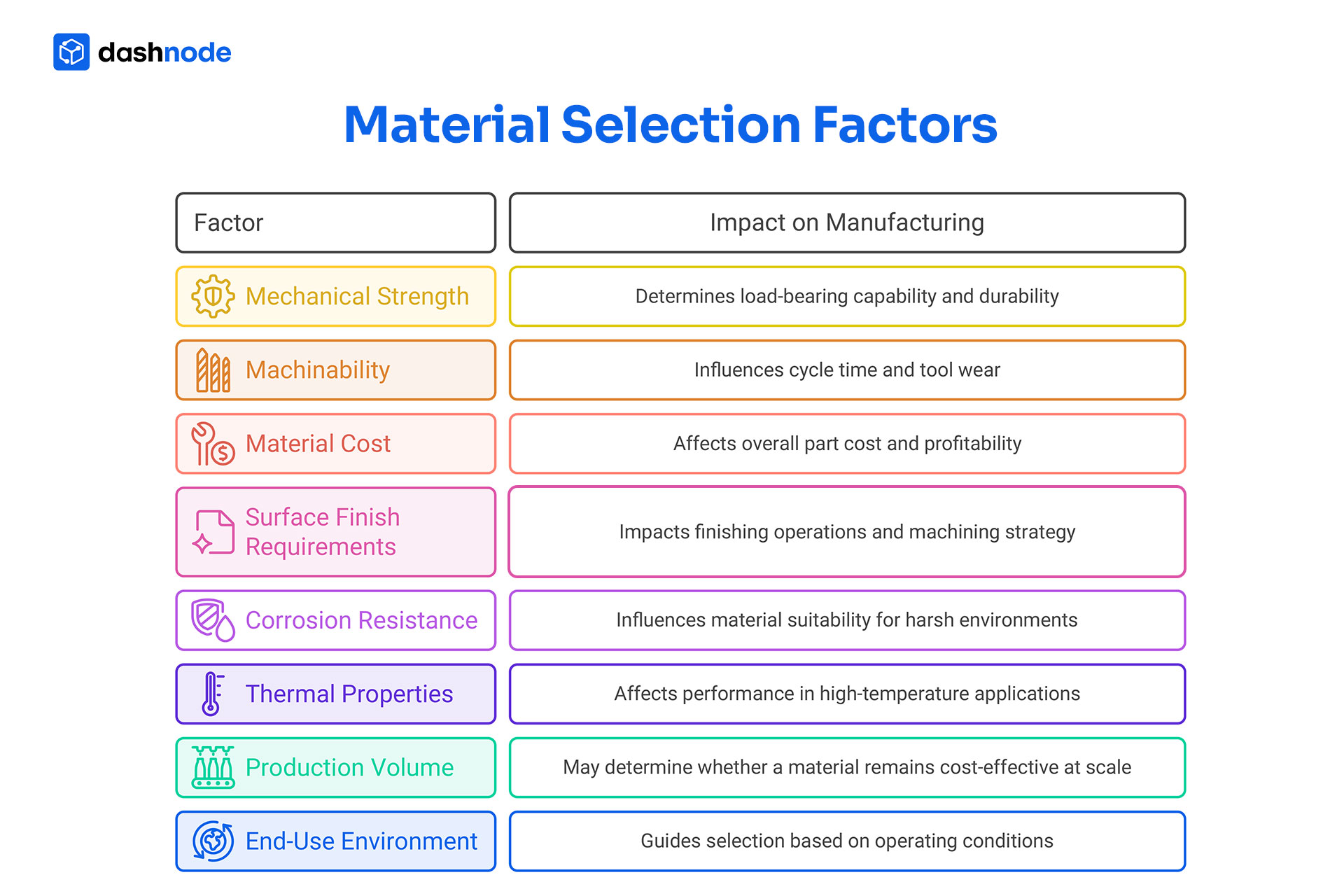
Manufacturers that understand these factors can make more informed decisions during product development and quotation processes.
Modern CNC machining supports a wide range of metals and engineering plastics, each offering a different balance of strength, weight, machinability, corrosion resistance, and cost. Commonly used materials include aluminium, mild steel, stainless steel, tool steel, brass, copper, titanium, ABS, nylon, Delrin, and PEEK.
The right choice depends on the part's performance requirements, production volume, operating environment, and budget. While some materials prioritise ease of machining and affordability, others deliver superior strength, wear resistance, or corrosion protection at a higher manufacturing cost.
The table below compares the most common CNC machining materials based on performance, machinability, and cost considerations.
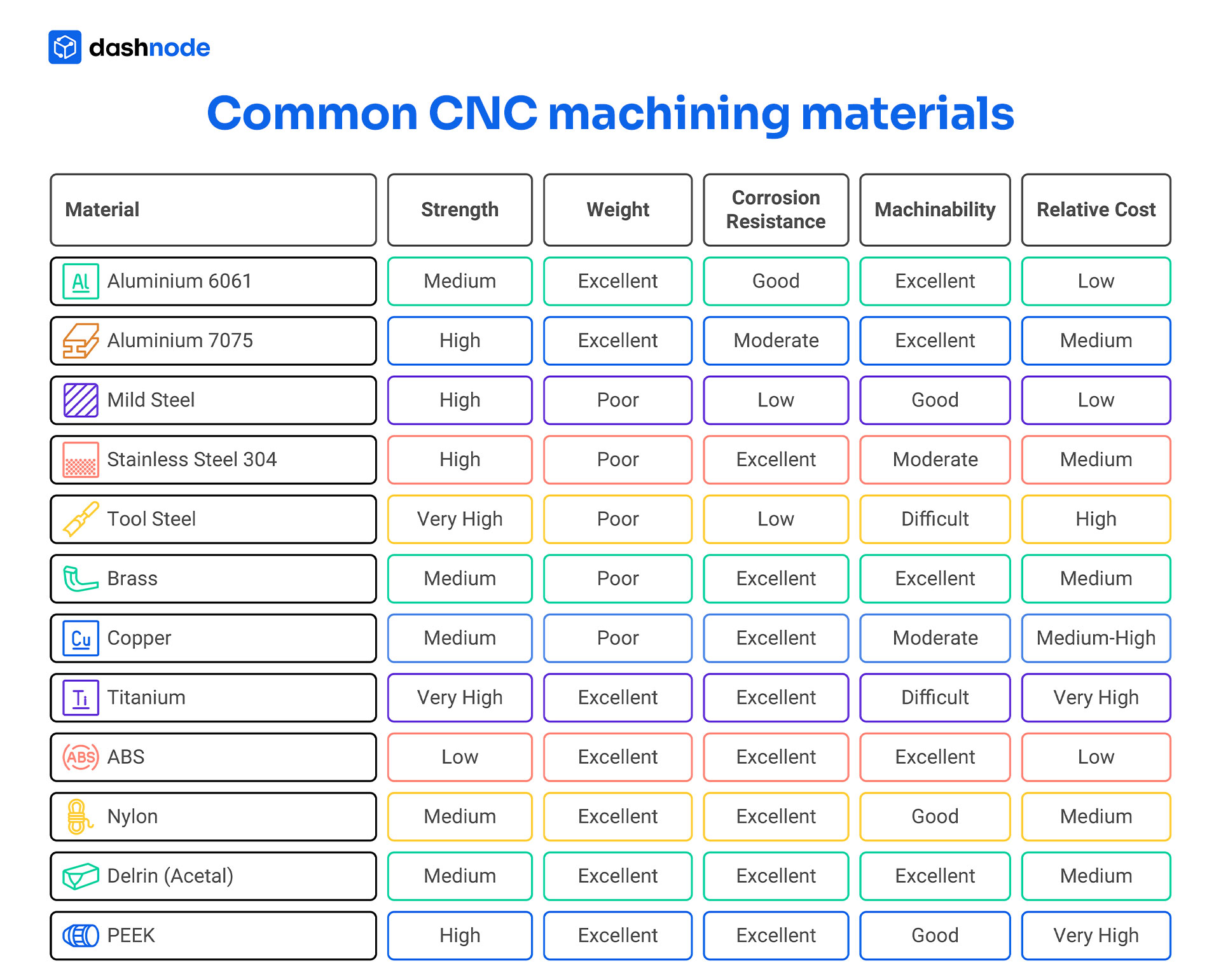
No single material excels in every category. Aluminium offers an excellent balance of machinability and affordability, while titanium delivers exceptional performance at a significantly higher cost. Engineering plastics provide lightweight alternatives for many applications but may not meet emanding structural requirements.
In the following sections, we will explore each material family in greater detail, including its properties, applications, machining considerations, and impact on manufacturing costs.
Among all CNC machining materials, aluminium remains the most widely used due to its excellent balance of strength, weight, machinability, and cost. Manufacturers across aerospace, automotive, electronics, industrial equipment, and consumer products rely on aluminium because it machines quickly and delivers consistent results.
One of aluminium’s biggest advantages is its machinability. Cutting tools can remove material efficiently, allowing shops to achieve faster cycle times, tighter tolerances, and better surface finishes compared to many other metals. This combination helps reduce manufacturing costs while maintaining part quality.
Key Properties of Aluminium

For many CNC shops, aluminium is the benchmark material for efficient production. It supports higher cutting speeds, reduces tool wear, and enables shorter cycle times, helping manufacturers lower costs and accelerate delivery schedules.
Among these grades, 6061 aluminium is the most commonly used CNC machining material because it offers an excellent balance of machinability, corrosion resistance, strength, and cost.
Common Applications of Aluminium
Aluminium CNC machining is widely used for:
Its versatility makes aluminium one of the best materials for CNC machining when manufacturers need a balance of performance and affordability.
Steel CNC machining serves applications that require greater strength, wear resistance, and durability than aluminium can provide. Although steel generally increases machining time and tooling requirements, its mechanical properties make it essential for many industrial applications.
The term "steel" covers several material categories, each offering different performance characteristics and machining considerations.
Mild steel, also known as low-carbon steel, remains one of the most economical materials used in CNC machining. It offers good strength, reliable machinability, and broad availability.
Manufacturers frequently choose mild steel for structural components, machine frames, brackets, and industrial equipment where extreme corrosion resistance is not a priority.
Advantages of Mild Steel

Limitations
Mild steel lacks the corrosion resistance found in stainless steel and may require painting, powder coating, or other protective finishes when used in demanding environments.
Common Applications of Mild Steel

For cost-conscious projects requiring strength and durability, mild steel often delivers the best value.
When corrosion resistance becomes critical, manufacturers often turn to stainless steel CNC machining. Stainless steel contains chromium, which forms a protective oxide layer that helps prevent rust and corrosion.
This characteristic makes stainless steel particularly valuable in industries where parts face moisture, chemicals, or stringent hygiene requirements.
Advantages of Stainless Steel
'Machining Challenges
Compared with aluminium and mild steel, stainless steel is more difficult to machine. It generates higher cutting forces and retains heat during machining. Certain grades also work-harden, which can accelerate tool wear and increase cycle times. These characteristics often result in higher manufacturing costs.
Common Applications of Stainless Steel

For products operating in corrosive environments, stainless steel often justifies its higher machining cost through improved durability and longer service life.
Tool steel occupies a specialised category within CNC machining materials. Manufacturers use it when components must withstand extreme wear, repeated impacts, or high operating stresses.
Tool steels contain carefully controlled alloying elements that improve hardness, toughness, and wear resistance.
Advantages of Tool Steel
Machining Challenges
Tool steels become increasingly difficult to machine as hardness increases. Shops often need specialised tooling, reduced cutting speeds, and additional finishing operations.
These factors increase machining time and production costs compared with aluminium or mild steel.
Common Applications of Tool Steel

Because tool steel directly impacts machining efficiency, accurate quoting requires a clear understanding of both material properties and machining complexity.
The following table highlights the key differences among the most commonly used steel categories.

Selecting the right steel depends on the intended application. A structural machine frame may perform perfectly with mild steel, while a food-grade processing component requires stainless steel. A stamping die, on the other hand, demands the hardness and wear resistance of tool steel.
Understanding these trade-offs is essential not only for engineering decisions but also for accurate CNC cost estimation. Material selection influences machining time, tooling requirements, and production economics long before the first part reaches the machine.
Brass and copper occupy a unique position among CNC machining materials because of their excellent electrical conductivity, corrosion resistance, and precision machining characteristics. While they may not match steel's strength or aluminium's versatility, they play a critical role in industries where conductivity, thermal performance, or aesthetic appearance matter most.
Manufacturers commonly use these materials in electrical systems, fluid handling equipment, telecommunications components, and precision instruments.
Brass is an alloy primarily composed of copper and zinc. It is widely regarded as one of the easiest metals to machine, making it a favorite among CNC manufacturers producing complex, high-precision components.
Its low-friction properties and excellent dimensional stability allow machinists to achieve tight tolerances while minimising tool wear.
Advantages of Brass
Limitations
Brass generally costs more than mild steel and may not provide the strength required for heavily loaded structural applications.
Common Applications of Brass
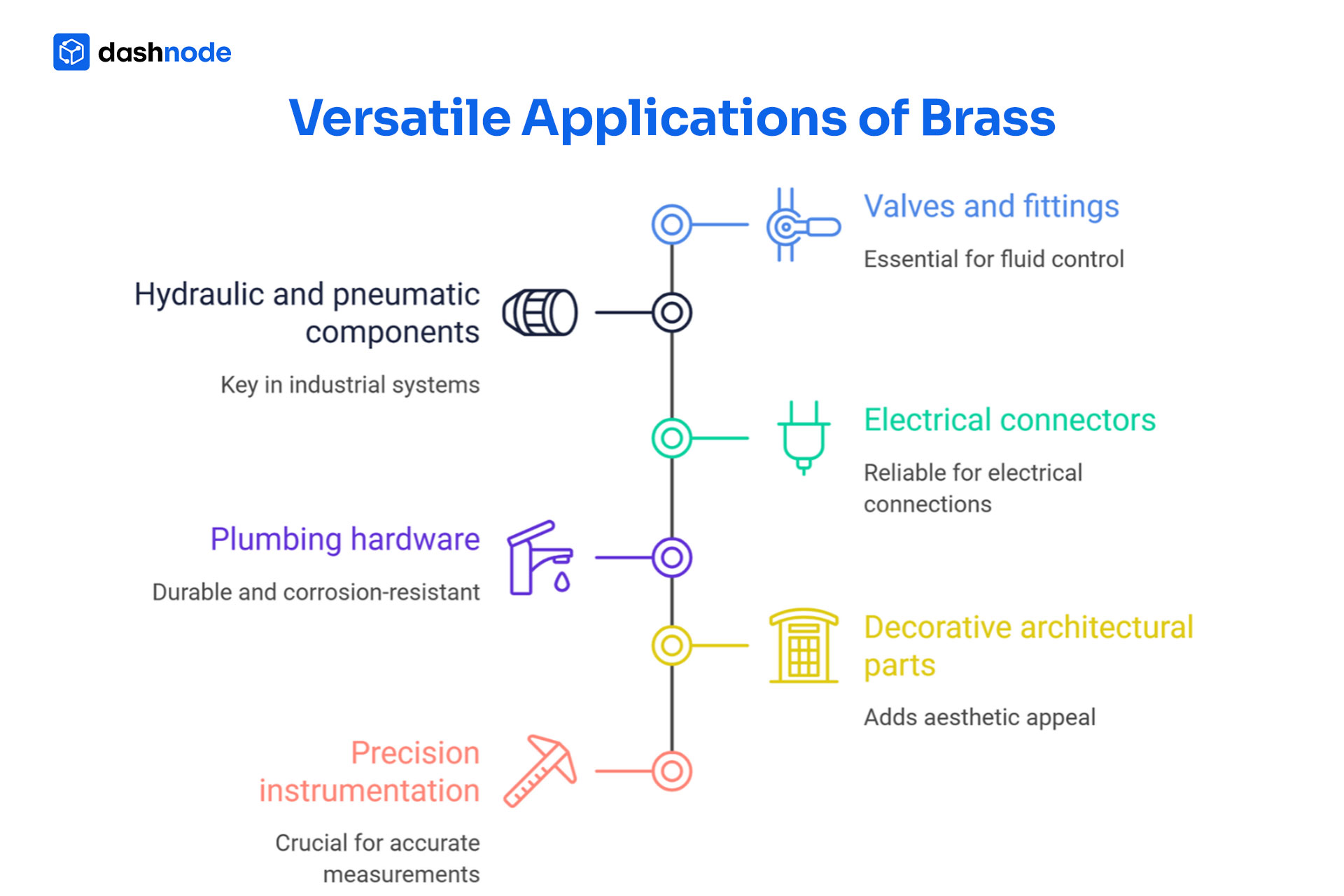
Because brass machines so efficiently, manufacturers often achieve lower machining costs despite higher raw material prices.
Copper stands apart because of its unmatched electrical and thermal conductivity. Industries that rely on efficient energy transfer frequently select copper for mission-critical components.
However, copper's softness and tendency to deform during machining can present challenges that require specialised tooling and machining strategies.
Advantages of Copper
Limitations
Common Applications of Copper
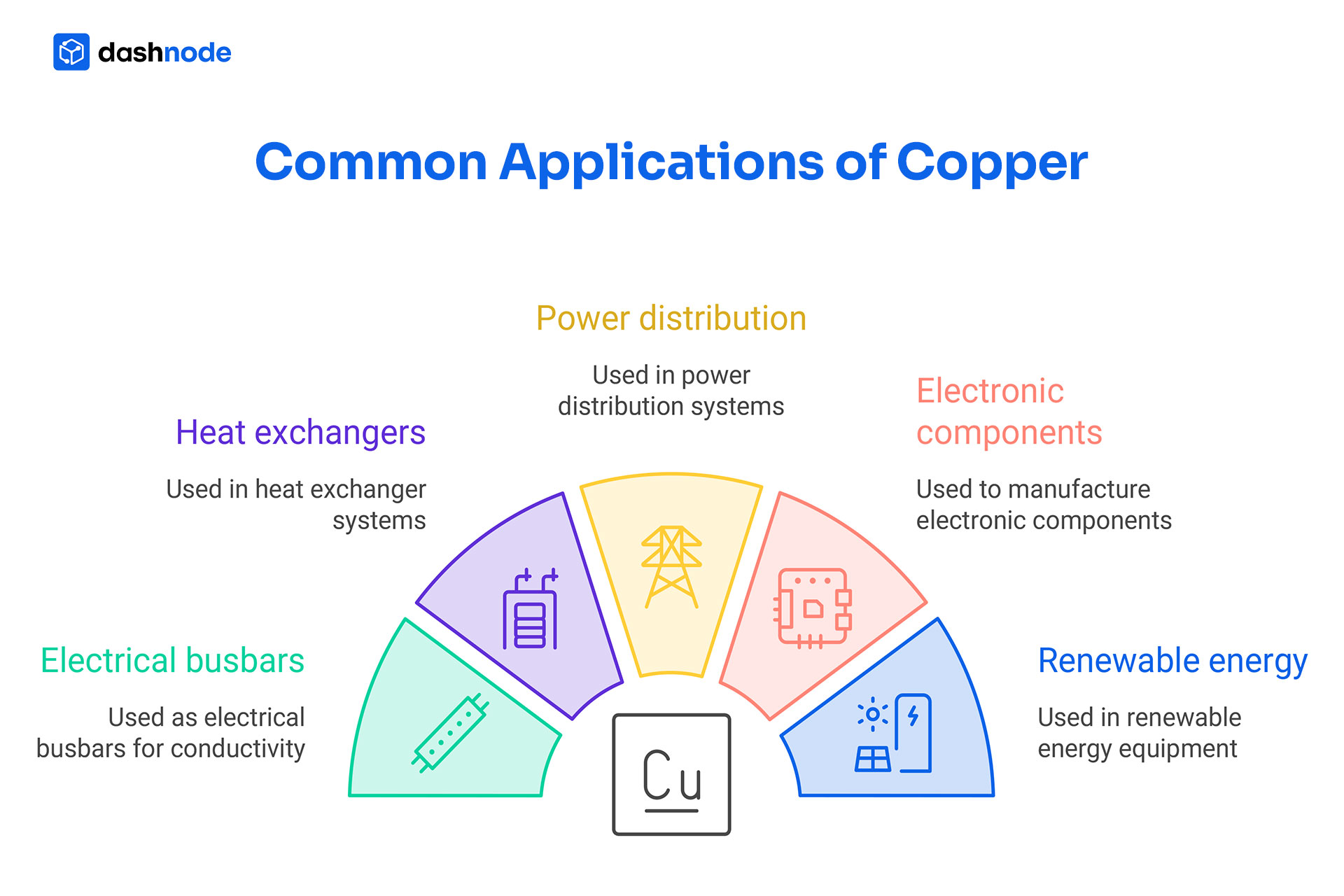
As electrification continues across industries, demand for precision-machined copper components continues to grow.
For manufacturers balancing conductivity and machinability, brass often provides the most practical solution. When maximum conductivity is non-negotiable, copper becomes the preferred choice.
Titanium is often considered the premium material among CNC machining metals. It combines exceptional strength, low weight, outstanding corrosion resistance, and biocompatibility, making it indispensable in industries where performance outweighs manufacturing costs.
Despite its benefits, titanium presents significant machining challenges that directly impact production planning and cost estimation.
Titanium offers a unique combination of properties rarely found in a single material.
Key benefits include:
These characteristics explain why titanium is frequently selected for mission-critical components.

Aircraft manufacturers use titanium extensively in structural assemblies, landing gear components, engine parts, and fasteners. The material helps reduce weight while maintaining strength.
Titanium's biocompatibility makes it ideal for implants, surgical instruments, orthopedic devices, and dental applications.
High-performance and racing applications use titanium for exhaust systems, suspension components, and specialised engine parts where weight reduction improves overall performance.
While titanium performs exceptionally well in service, it is one of the most challenging materials to machine efficiently.
Several factors contribute to its complexity:
As a result, manufacturers often reduce cutting speeds and use specialised tooling strategies to maintain quality and extend tool life.
While metals dominate many CNC machining applications, engineering plastics offer compelling advantages when weight reduction, chemical resistance, electrical insulation, or cost efficiency are priorities.
Modern plastic CNC machining materials provide excellent dimensional stability and can replace metal components in many applications.
The most commonly machined plastics include ABS, Nylon, Delrin (Acetal), and PEEK.
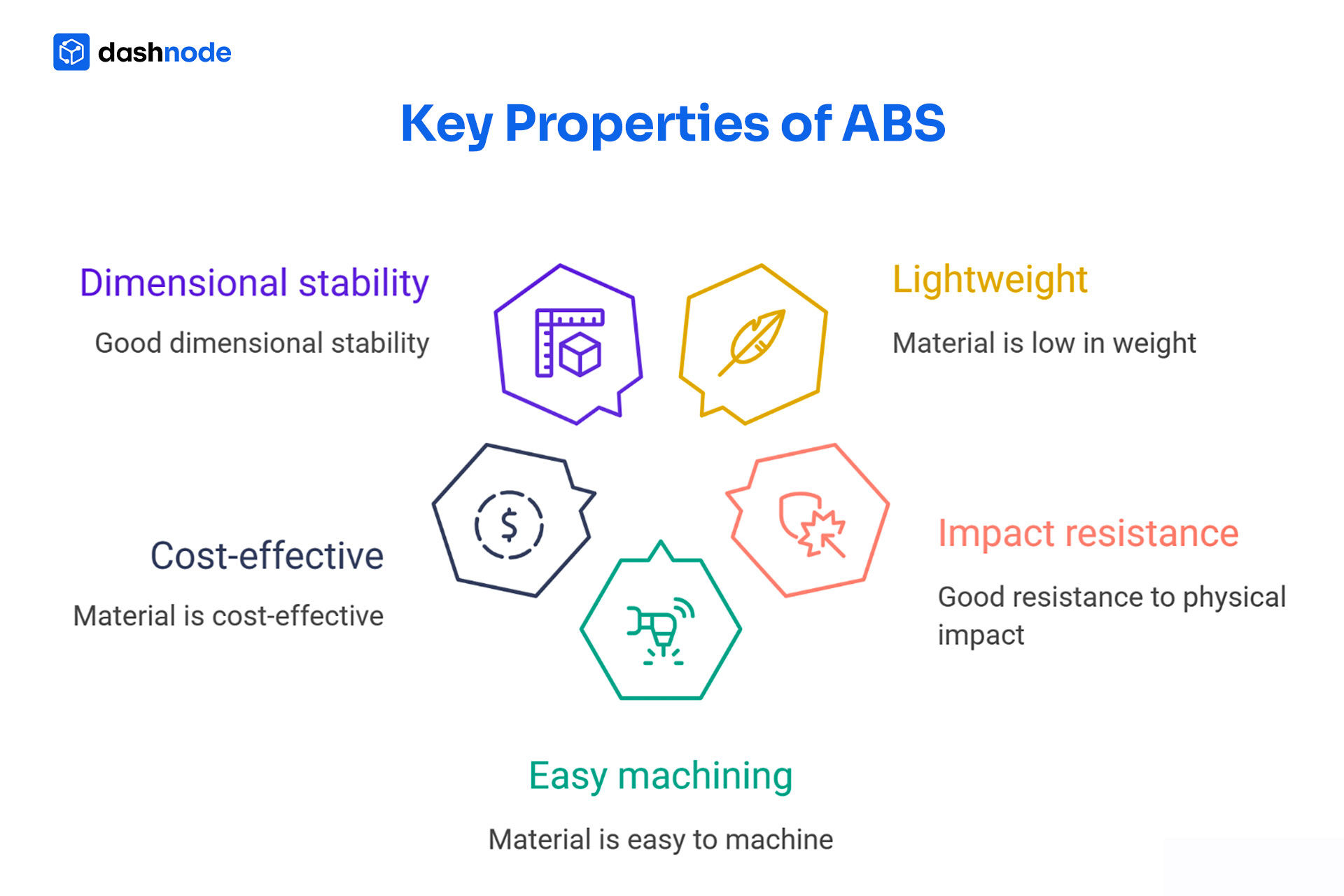
ABS remains one of the most widely used plastics for CNC prototypes and low-volume production parts. Its affordability and ease of machining make it an attractive option during product development.
Key Properties
Common Applications of ABS
Limitations
ABS does not perform well in high-temperature environments and offers lower mechanical strength than engineering-grade plastics.
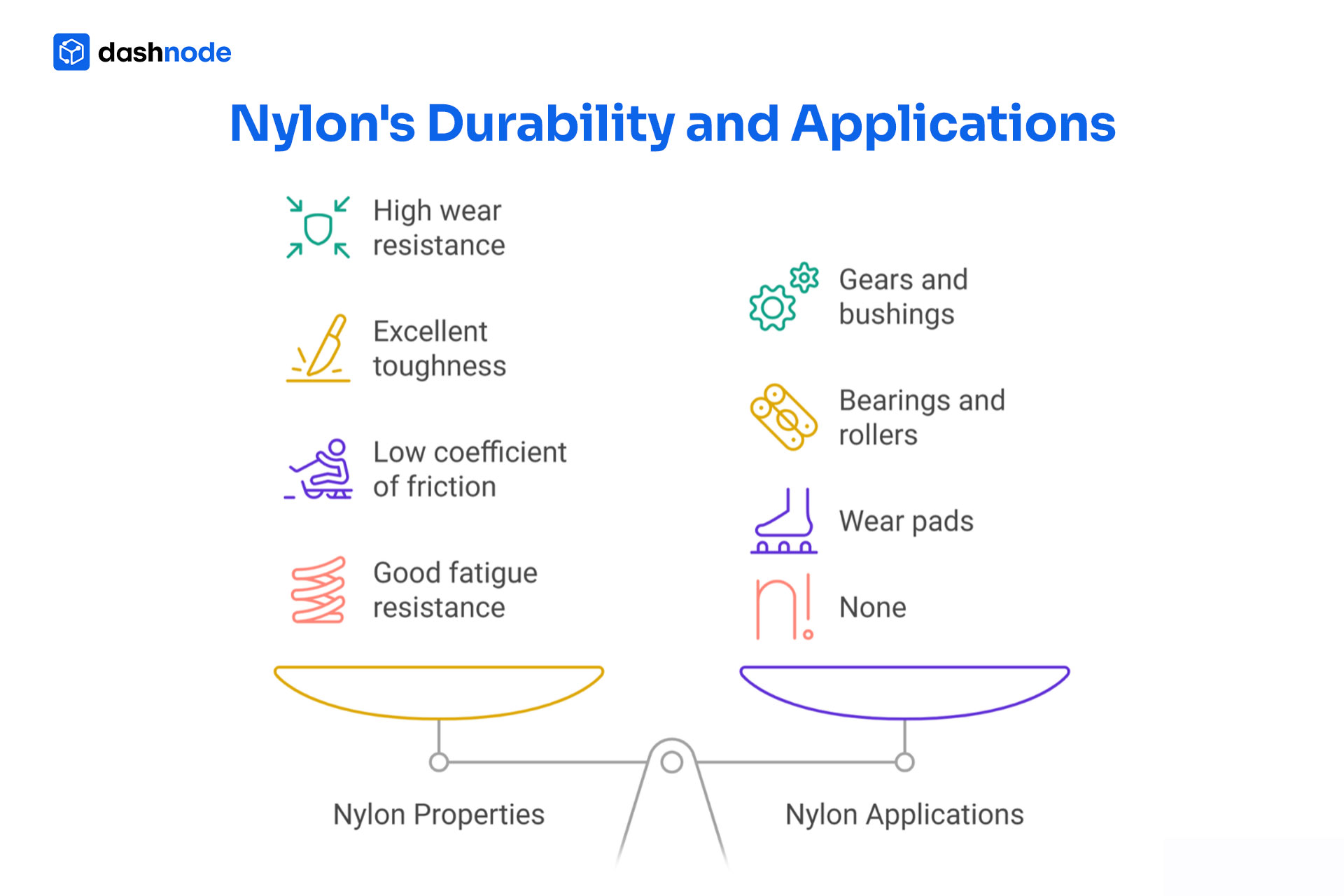
Nylon is valued for its wear resistance, toughness, and low-friction characteristics. Manufacturers often use it as a replacement for metal components in dynamic assemblies where reducing weight and noise is important.
Key Properties
Common Applications of Nylon
Limitations
Nylon can absorb moisture, which may affect dimensional stability in certain environments.
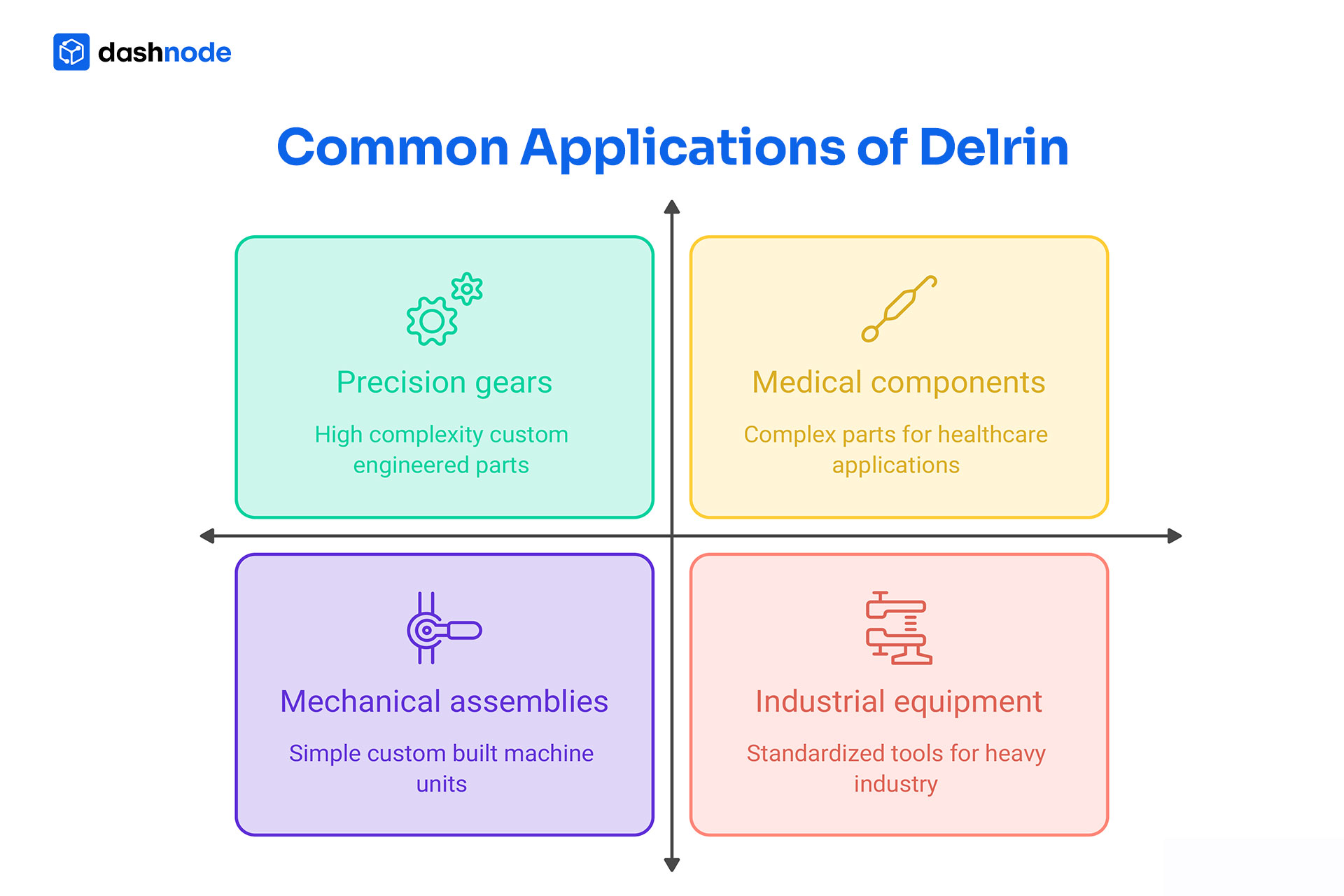
Delrin, commonly known as acetal, is one of the most machinable engineering plastics available. Its combination of strength, dimensional stability, and low friction makes it a popular material for precision mechanical components.
Key Properties
Common Applications of Delrin
Limitations
Delrin generally offers lower temperature resistance than high-performance plastics such as PEEK.
PEEK represents the premium end of engineering plastics. It delivers exceptional mechanical properties and thermal stability, allowing it to replace metal components in demanding environments.
Key Properties
Common Applications of PEEK

Limitations
The primary drawback of PEEK is cost. Both raw material expenses and machining costs are significantly higher than most engineering plastics.
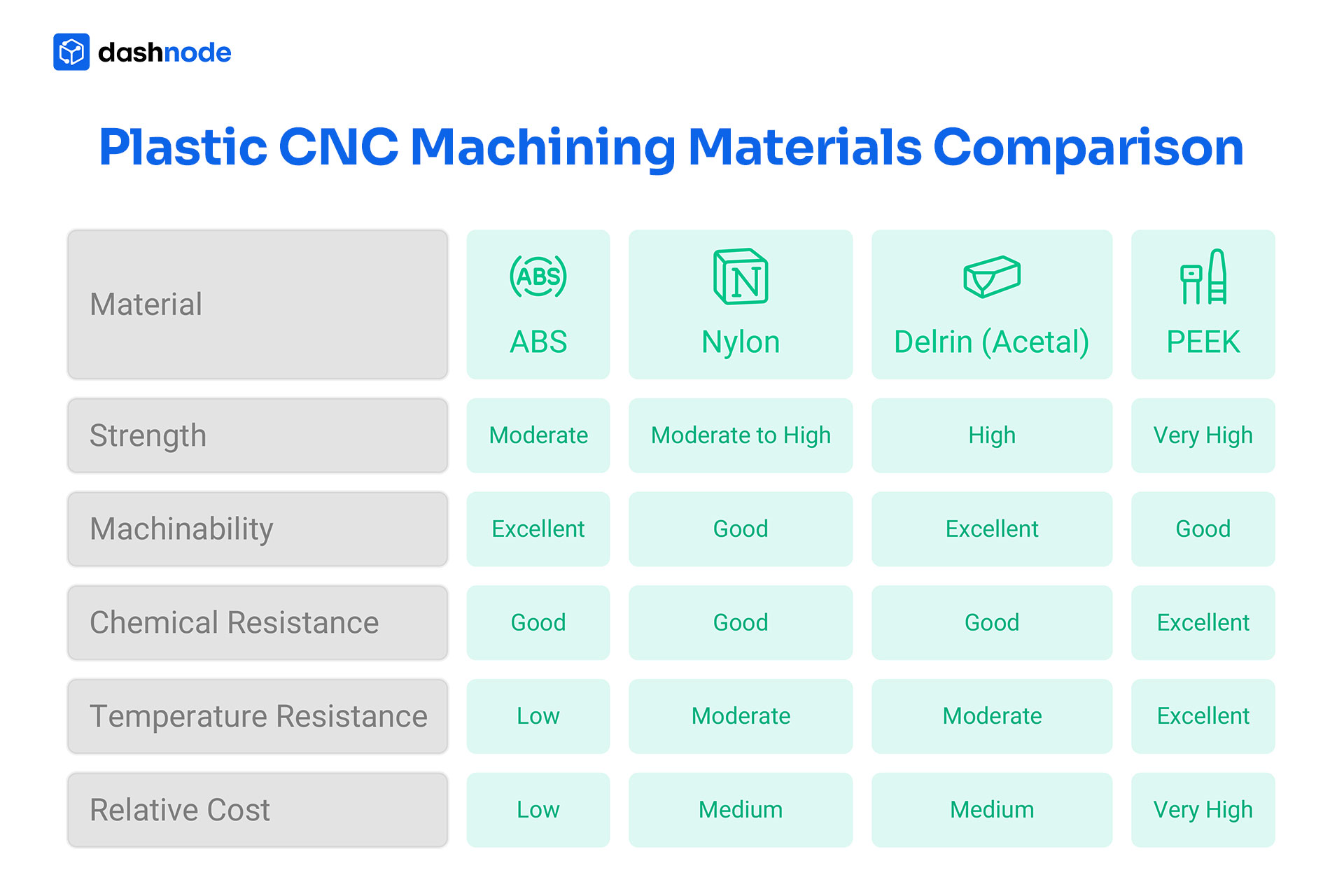
Like metals, engineering plastics present different trade-offs in performance, machinability, and cost. Selecting the right material requires balancing application requirements with manufacturing efficiency.
Material selection influences far more than raw material expenses. It affects machining time, tool wear, setup requirements, scrap rates, and finishing operations, all of which contribute to the final part cost.
Material prices vary widely. Aluminum and mild steel are generally cost-effective choices, while titanium and high-performance plastics such as PEEK carry significantly higher material costs.
Materials with good machinability, such as aluminum and brass, support faster cutting speeds and shorter cycle times. More challenging materials like stainless steel and titanium require slower machining parameters, increasing machine utilisation and labour costs.
Harder materials accelerate tool wear and may require specialised tooling, fixturing, or machining strategies. These factors increase both setup time and production costs.
Errors are more costly when working with expensive materials. Scrapping a titanium or PEEK component has a far greater financial impact than scrapping a part made from aluminum or ABS.
Some materials require additional processes such as anodising, passivation, heat treatment, or grinding. These secondary operations add time and cost to production.
These factors make material selection a critical consideration in accurate CNC cost estimation.

Selecting the right material is only part of the equation. Manufacturers must also account for how that choice affects machining time, tooling, setup requirements, finishing operations, and overall production costs.
As RFQ volumes grow and turnaround expectations shrink, estimating these variables manually becomes increasingly difficult. Even when part geometry remains unchanged, switching from aluminum to stainless steel, titanium, or PEEK can significantly alter manufacturing costs.
Without a consistent estimation process, manufacturers risk underquoting projects, reducing margins, or overquoting and losing business opportunities. This has increased the demand for automated costing workflows that evaluate both part geometry and material requirements.
Ultimately, choosing from the many common CNC machining materials available today involves balancing performance, manufacturability, and cost. Understanding these trade-offs helps manufacturers make better material decisions, improve quote accuracy, and maintain profitability in a competitive market.
Dashnode is a CNC quoting software that helps CNC manufacturers generate faster, more consistent cost estimates directly from CAD files.
By combining part geometry with manufacturing considerations, Dashnode helps teams reduce manual effort, improve quote consistency, respond to RFQs faster, and make more informed costing decisions.
Accurate material selection remains a critical input for reliable cost estimation. By incorporating material-specific manufacturing considerations into the quoting process, manufacturers can improve accuracy while reducing estimation time.
Book a free demo to see how Dashnode helps CNC manufacturers generate faster and more accurate cost estimates directly from CAD files.
The most common CNC machining materials include aluminium, mild steel, stainless steel, tool steel, brass, copper, titanium, ABS, nylon, Delrin (acetal), and PEEK. Each material offers different advantages in terms of strength, machinability, corrosion resistance, and cost.
Brass and aluminium are generally considered the easiest materials to machine. They allow high cutting speeds, produce excellent surface finishes, and cause relatively low tool wear compared to harder materials such as titanium and tool steel.
Neither material is universally better. Aluminium offers excellent machinability, lower weight, and faster production times, while steel provides higher strength and durability. The best choice depends on the application's performance requirements and budget.
Aluminium 6061 and mild steel are often considered the most cost-effective CNC machining materials because they balance affordability, availability, and machinability. However, the ideal material depends on the part's functional requirements.
Common plastic CNC machining materials include ABS, nylon, Delrin (acetal), and PEEK. Manufacturers use these materials for lightweight components, wear-resistant parts, electrical insulation, and high-performance engineering applications.
Material choice affects raw material expenses, machining time, tool wear, setup requirements, finishing operations, and scrap risk. Even when part geometry remains unchanged, selecting a different material can significantly alter manufacturing costs.
Key considerations include strength requirements, weight, corrosion resistance, temperature resistance, electrical conductivity, wear resistance, production volume, regulatory requirements, and budget. Manufacturers should evaluate both performance needs and manufacturing costs when selecting materials.