.png)

.png)
Precision isn’t a luxury in 2026 it’s the baseline. When you’re building parts with tight tolerances, micro-features, or critical finishes, accuracy matters. And so does speed.
But here's the truth: getting a precision machining quote that’s both accurate and fast still feels like a slow, manual, back-and-forth process in most shops.
Let’s fix that.
This guide breaks down how to get precise machining quotes done right and fast without compromising on quality, accuracy, or cost visibility.
Precision machining is more than just CNC with better tolerances. It’s a specialized approach to manufacturing that emphasizes:
.png)
You’ll find it used in industries where failure is not an option: medical implants, aerospace connectors, optics, robotics, and semiconductor tooling.
Precision is a spec. But quoting it is a process.
Unlike general CNC work, precision parts require quoting at a different level of detail:
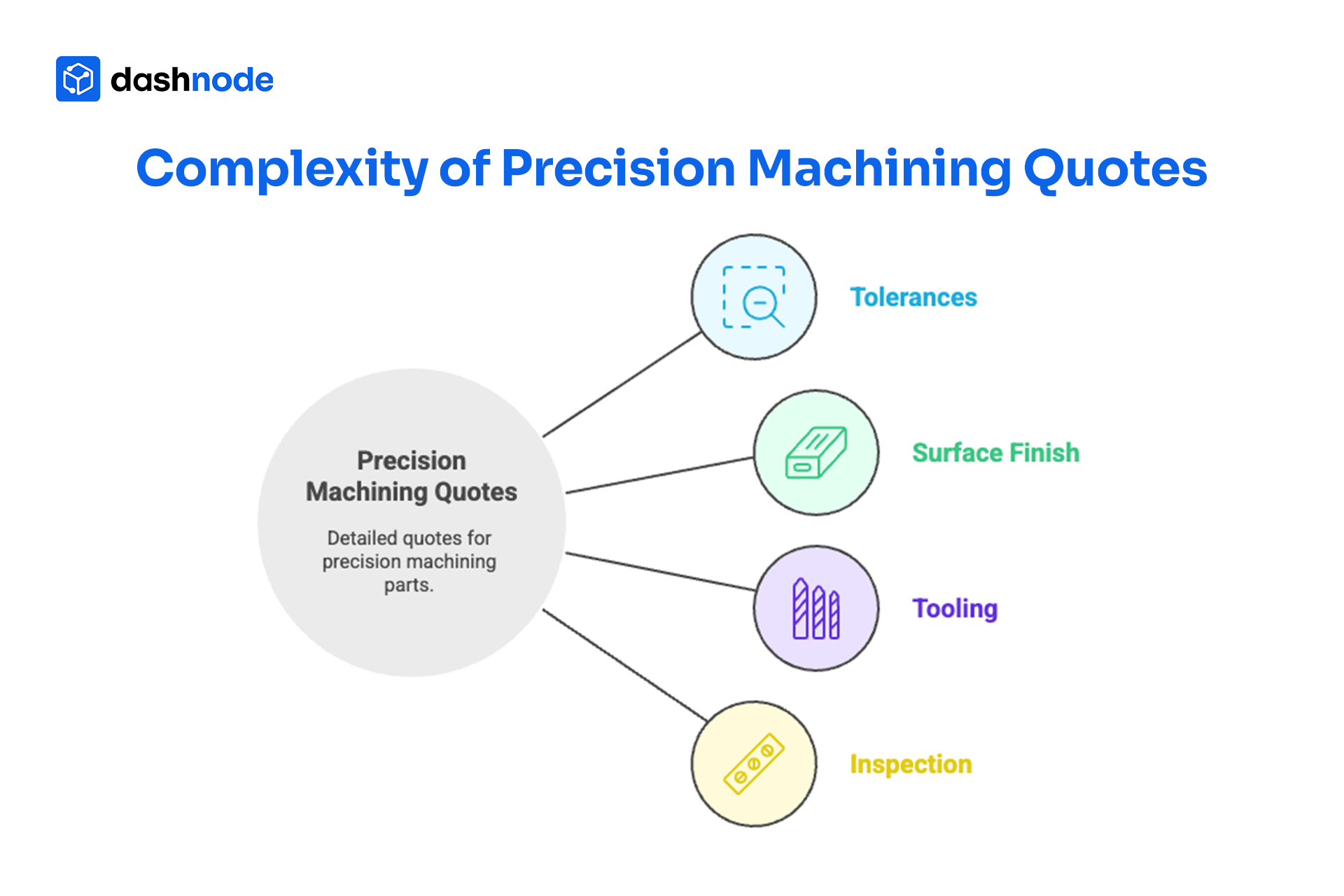
All this affects cost. So if a quote doesn’t reflect these parameters, it’s not just slow — it’s wrong.
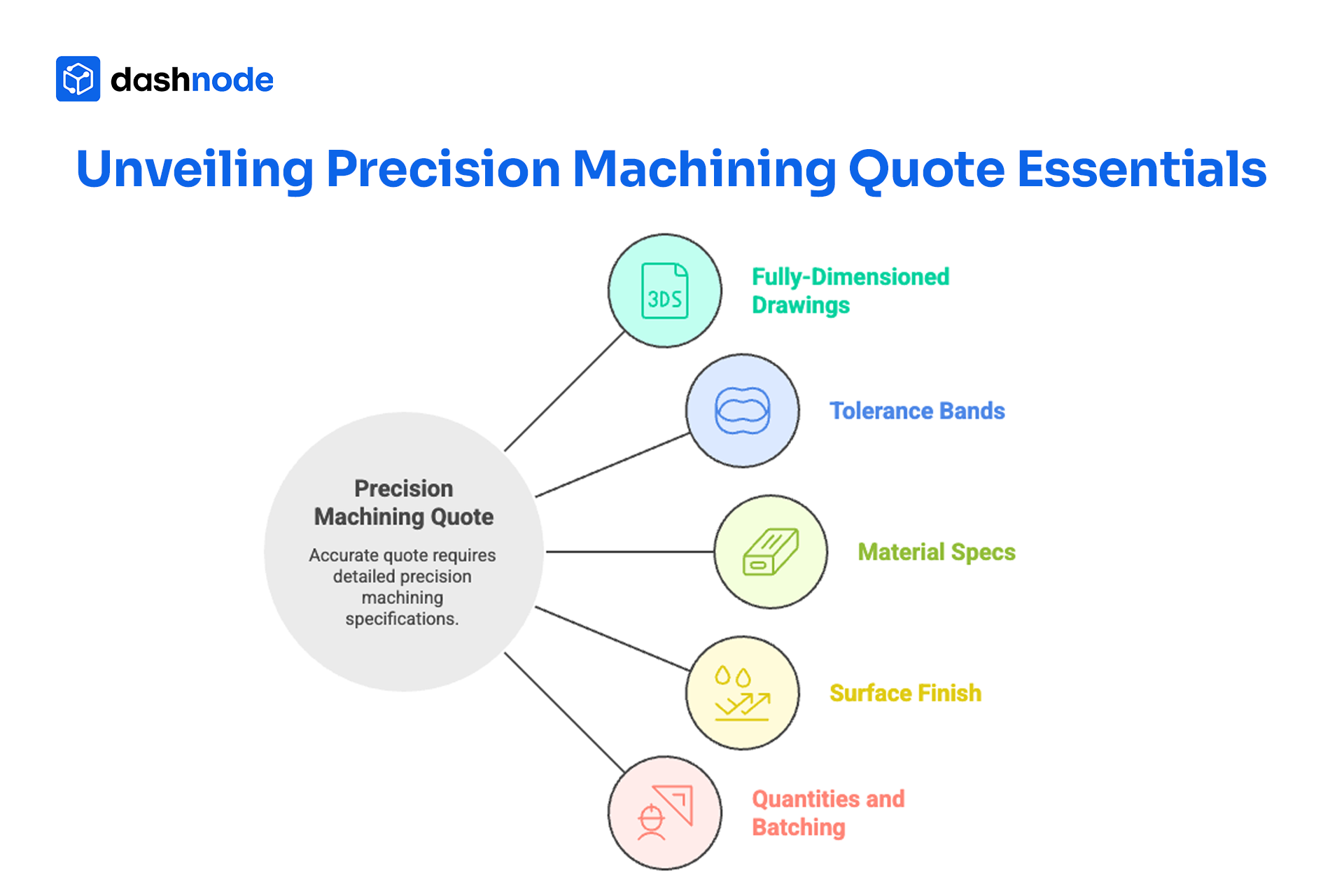
Precision machining depends on features that aren’t always obvious in a 3D model. Callouts for:
...are critical. Without them, your quote is a guess.
Instead of marking everything ±0.01 mm, use functional tolerancing:
It reduces both quote time and part cost.
Machining titanium or hardened steels? That changes everything — cycle time, tool life, even fixturing.
Include:
Avoid vague terms like “mirror finish.” Instead:
Even for precision work, setup cost dominates small batch runs. Share expected quantities upfront:
A vendor can quote faster — and more competitively — when they see volume and repeat potential.
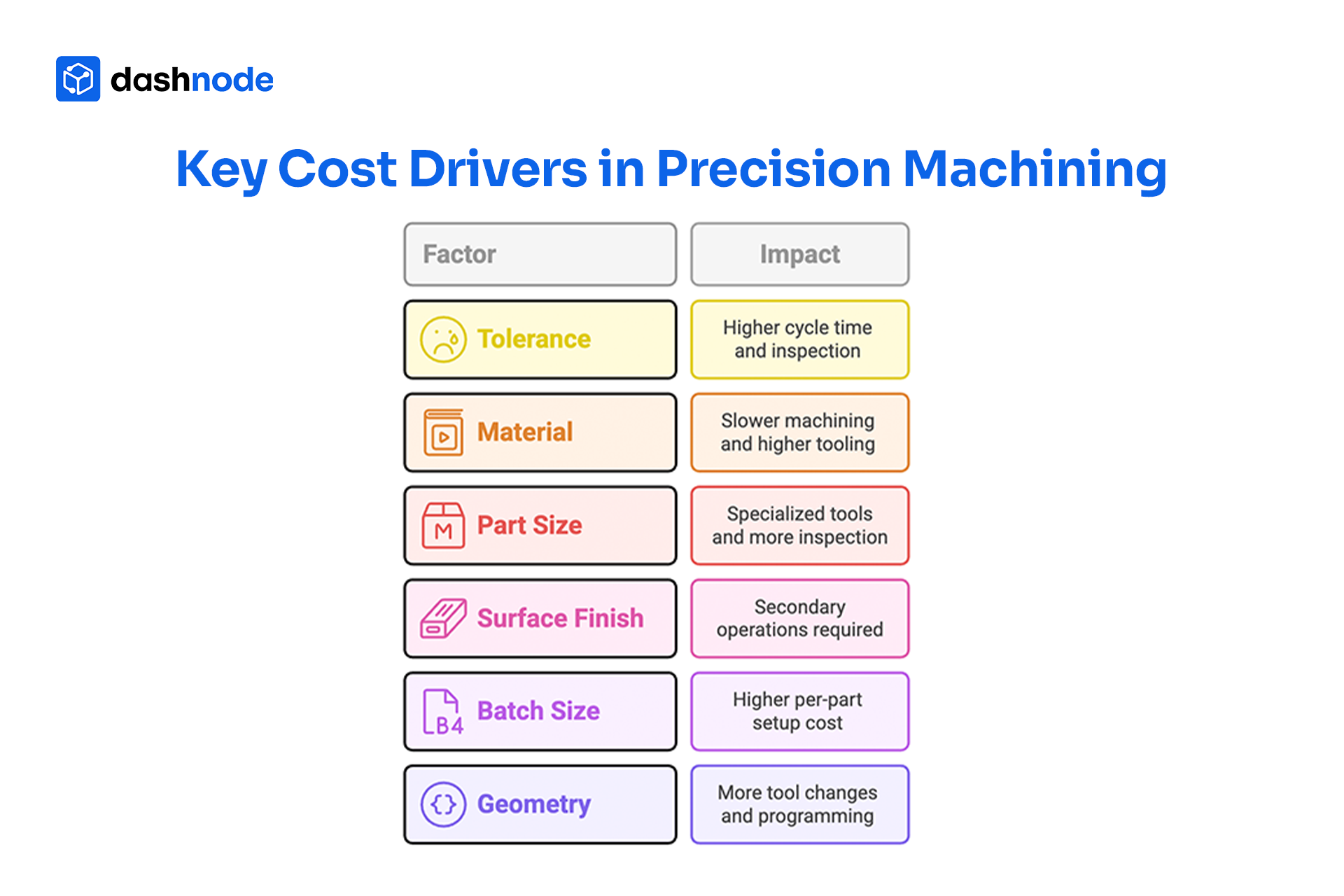
Knowing these helps you design better — and quote smarter.
Modern quoting platforms are changing the game:
If your quoting process takes days, it’s not your team — it’s your tooling. Switch to platforms that can:
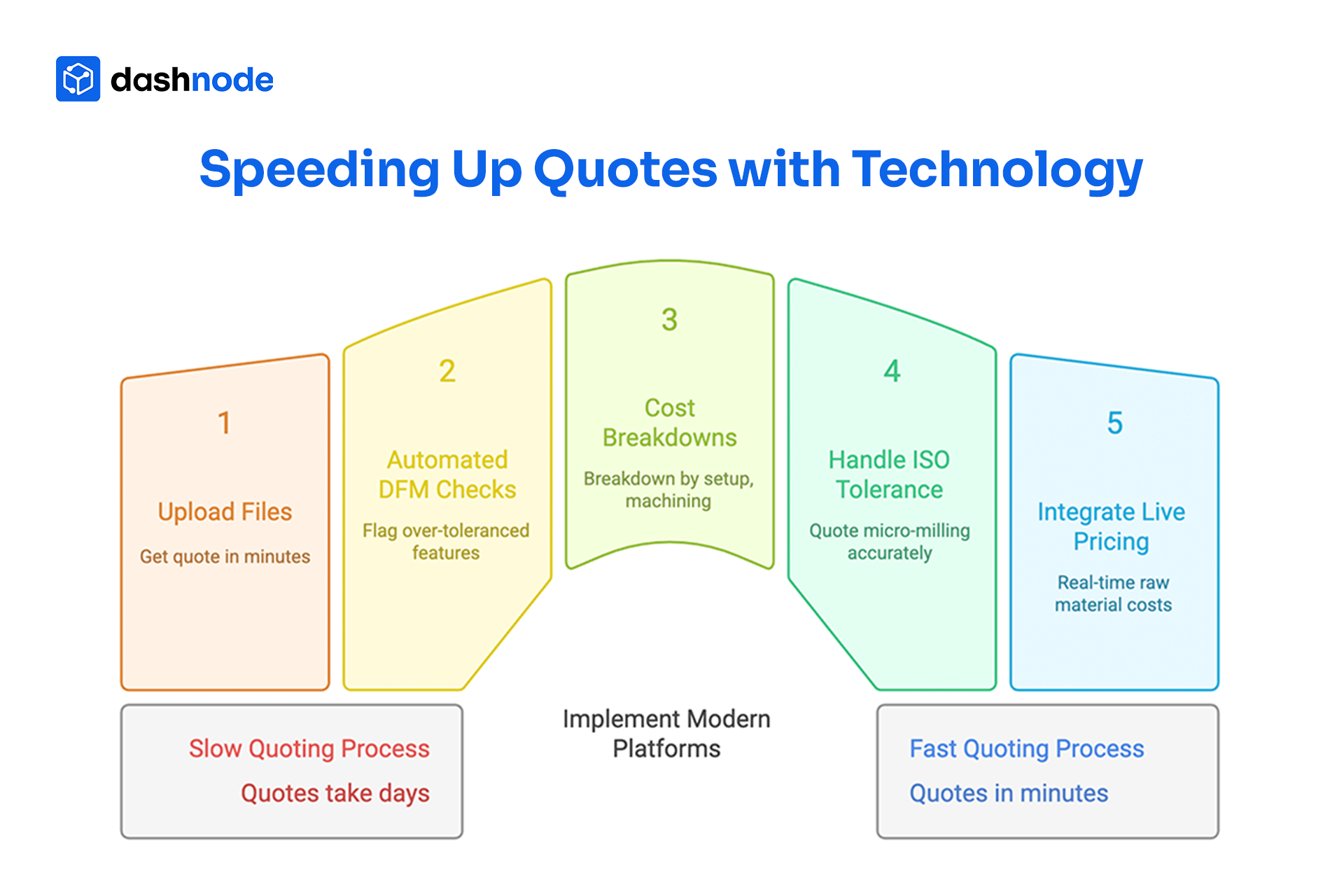
Still quoting precision parts with spreadsheets and tribal knowledge? ACE changes that.
Dashnode is a purpose-built platform that transforms the way engineers and estimators handle tight-tolerance quoting:
Teams using ACE have reported reducing quote turnaround time by up to 75%, while improving accuracy and transparency with sourcing teams.
If you build with microns, you can’t quote with guesswork. ACE helps you win the quoting game before the part is even cut.
Dashnode is built to help engineers and estimators quote tight-tolerance parts faster:
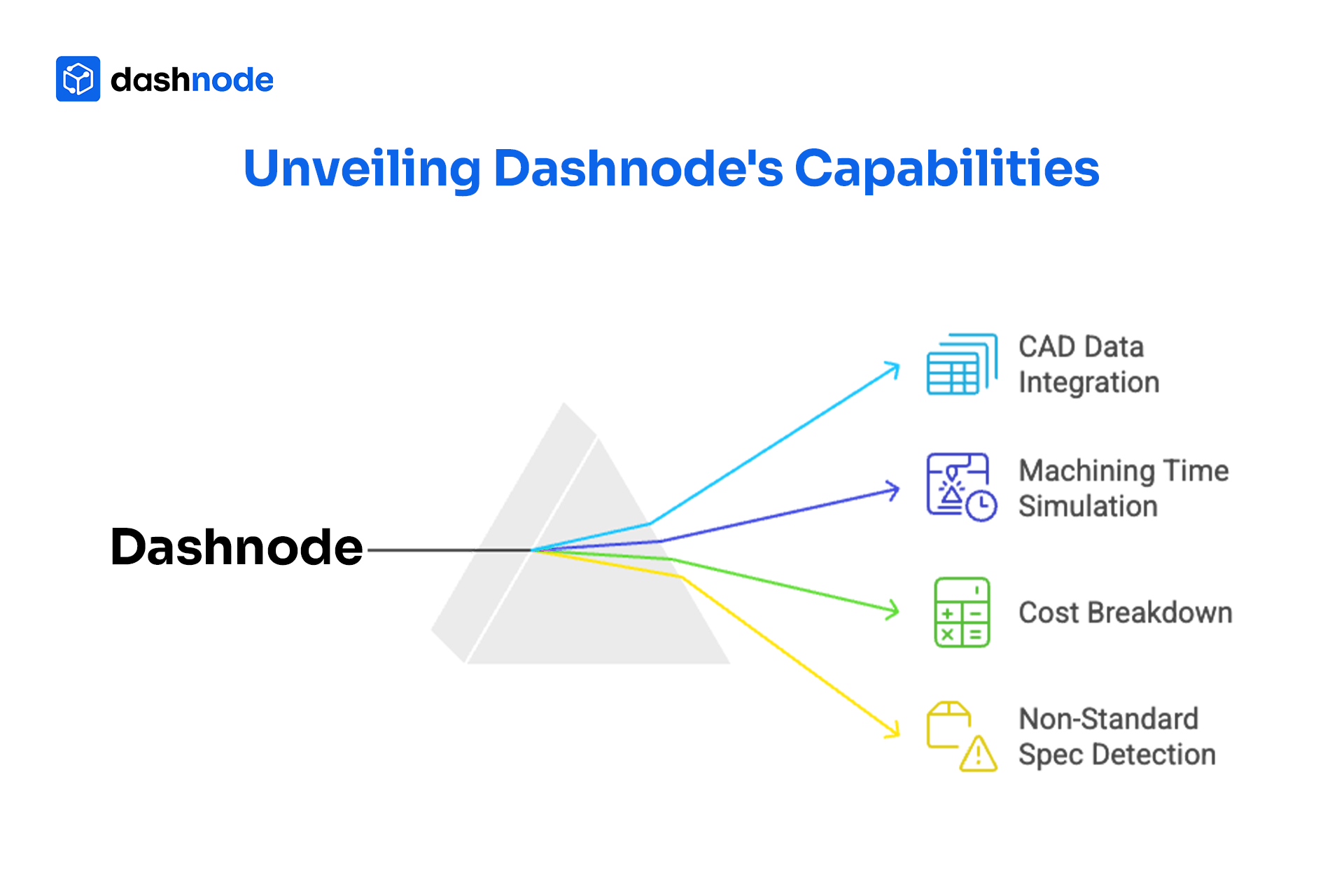
When seconds matter — and microns do too — ACE helps you quote with clarity and speed.
Read More: CNC Cost Calculator : How to Estimate CNC Machining Cost with Dashnode
Tight tolerances typically refer to dimensions held within ±0.01 mm or tighter. These are common in industries like aerospace, medical, and robotics.
Fine finishes like Ra 0.4 µm require slower passes, polishing, or additional processes like lapping or anodizing—each of which adds cost.
ISO fits (e.g., H7, h6) ensure global manufacturing compatibility and consistency. Vendors quoting ISO tolerances require calibrated tools and detailed inspection, impacting price and lead time.
Specialized quoting platforms like ACE, CMM data analysis, and virtual machining simulations help quote micro-features accurately without manual trial and error.
Submit fully-dimensioned 2D drawings, define tolerances clearly, and use quoting platforms that can simulate toolpaths and extract CAD features automatically—like ACE.
Precision is no longer optional. Whether you're building surgical tools or aerospace brackets, getting the quote right (and fast) is the first competitive advantage.
Use the tools available. Ask the right questions. And don’t settle for slow, generic estimates.
The fastest way to build better parts is to quote them smarter with Dashnode.
Keywords naturally included: precision machining, tight tolerances, part accuracy, fine finishing, ISO tolerance machining, micro-milling.