.png)

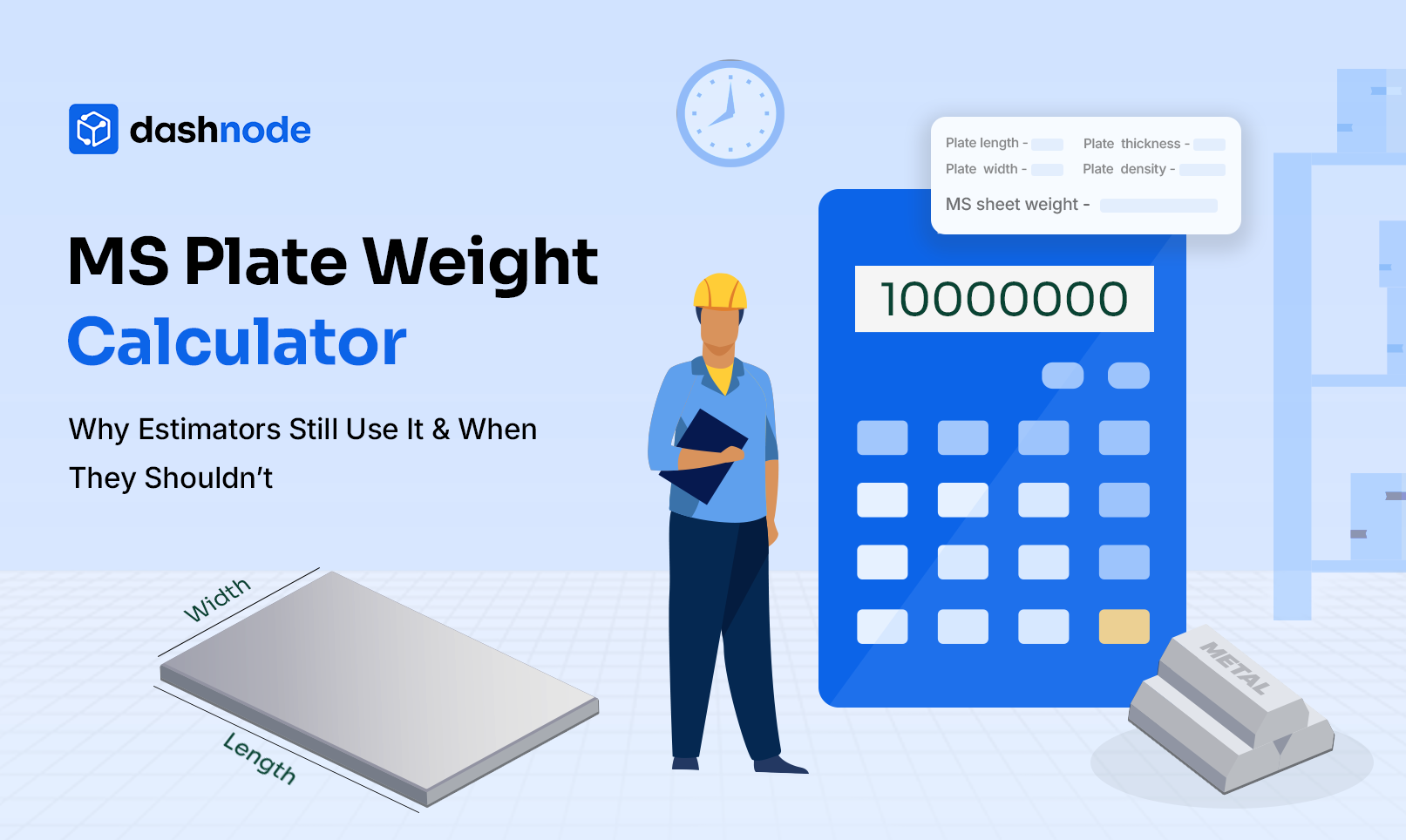
In fabrication and manufacturing, material weight is one of the first variables engineers and estimators calculate when evaluating a job. Whether the project involves machined components, structural fabrication, or general manufacturing, understanding how much steel a component weighs directly influences material cost, transport planning, and early-stage fabrication cost estimation.
For this reason, many fabrication professionals still rely on a simple but essential tool: the MS plate weight calculator.
By entering the plate length, width, and thickness, engineers can quickly estimate the MS sheet weight of a steel plate and determine how much raw material a project will require. This process depends on one key material property: mild steel density, which determines how heavy the steel is per unit volume.
However, quoting workflows in manufacturing shops are evolving. Many modern teams now combine traditional calculations, such as plate weight, with CAD-based quoting tools that analyze part geometry and generate manufacturing cost estimates automatically.
Understanding when plate weight calculations work and when they fall short is critical for accurate fabrication quoting.
An MS plate weight calculator is a simple engineering tool used to estimate the weight of mild steel plates based on their dimensions and material density.
Fabrication estimators commonly use it during the early stages of project costing.
Typical inputs include:
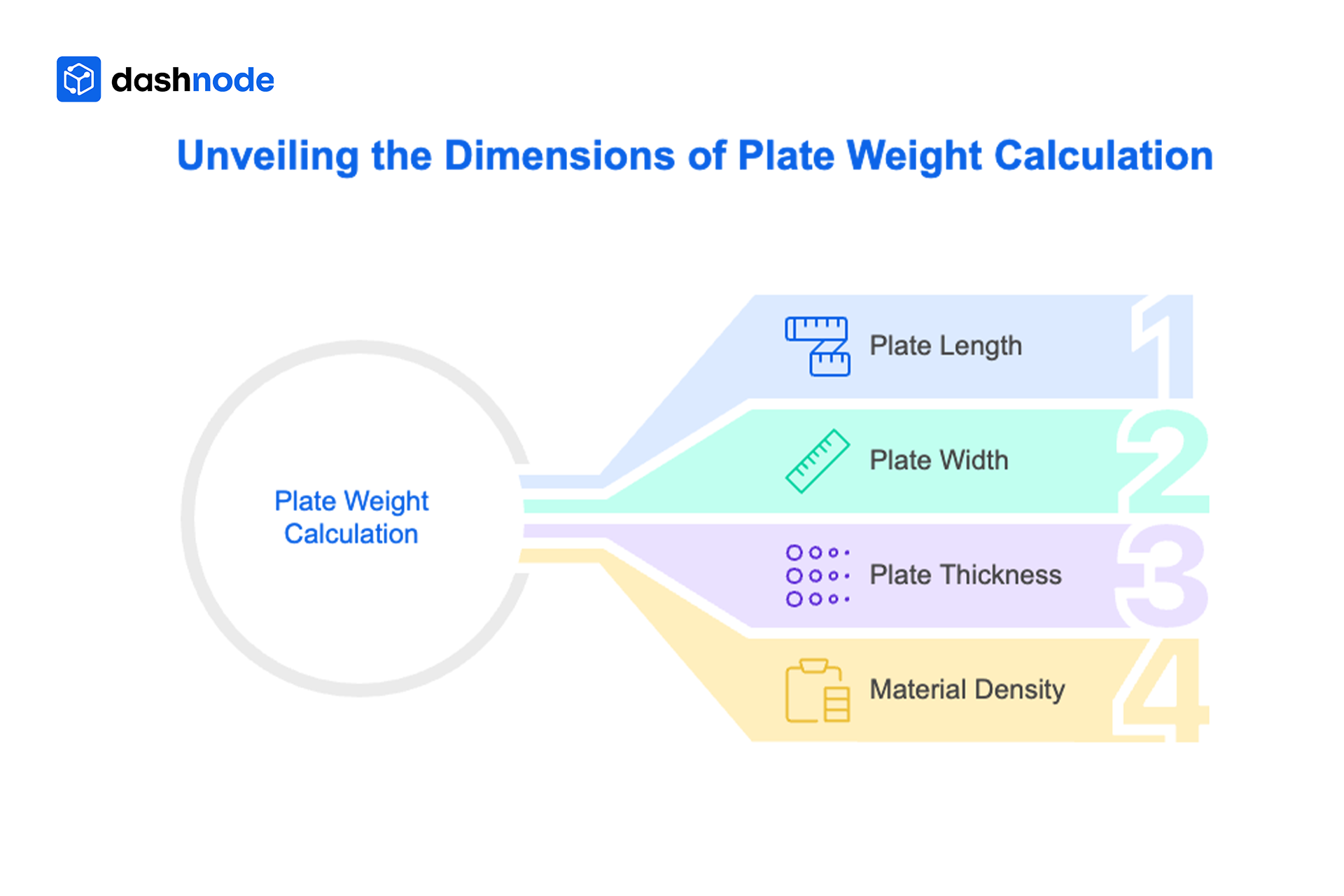
Once these values are entered, the calculator determines the total weight of the steel plate. Many engineers also use variations of this tool, such as a metal thickness calculator, to determine weight when only plate area and thickness are known.
In practical fabrication environments, these calculators help teams:
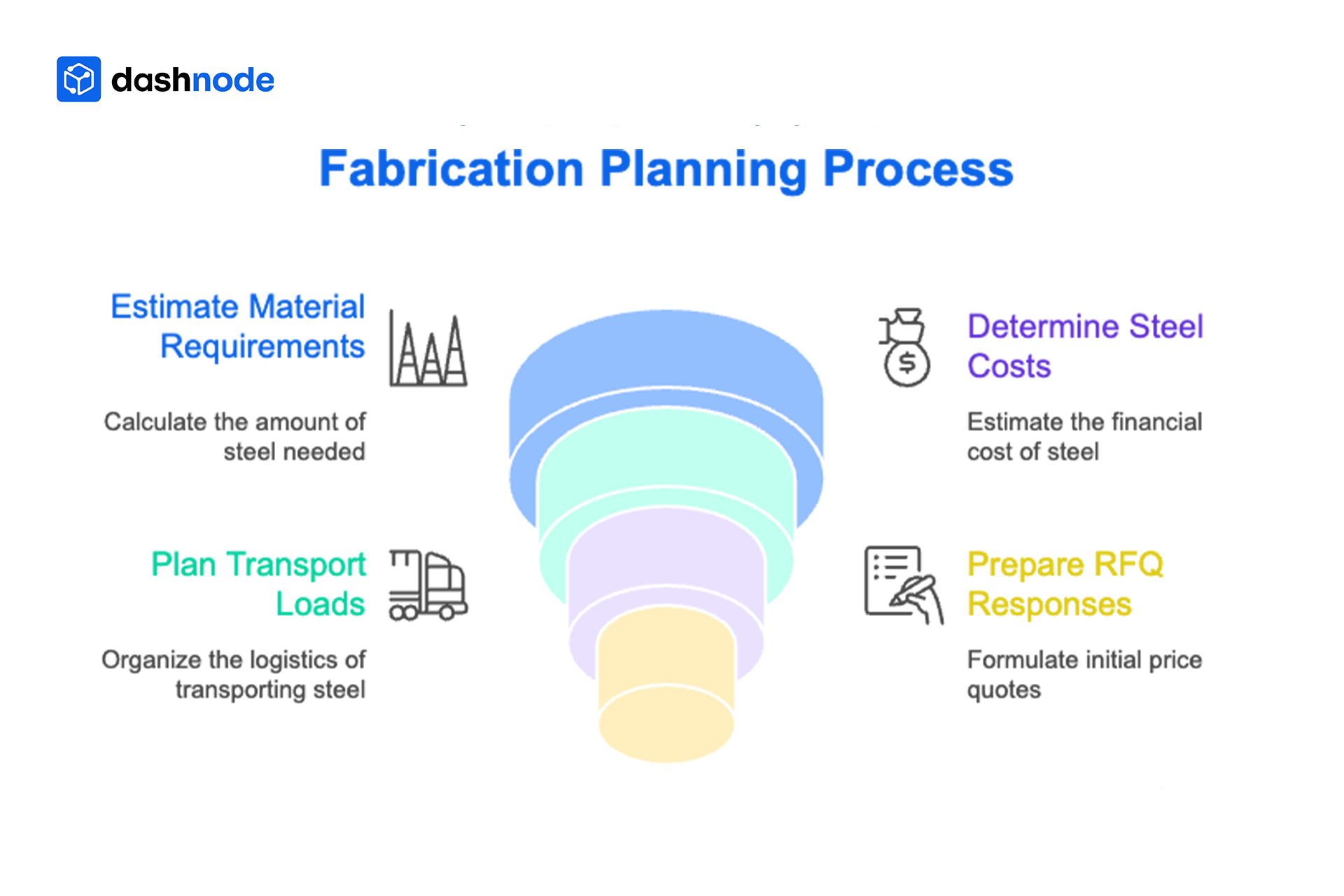
Although the calculations themselves are simple, they provide valuable insight during the initial planning phase of a fabrication job.
All mild steel plate weight calculations depend on the standard density of mild steel.
The commonly accepted value is:
Mild steel density = 7850 kg/m³
This means one cubic metre of mild steel weighs 7850 kilograms.
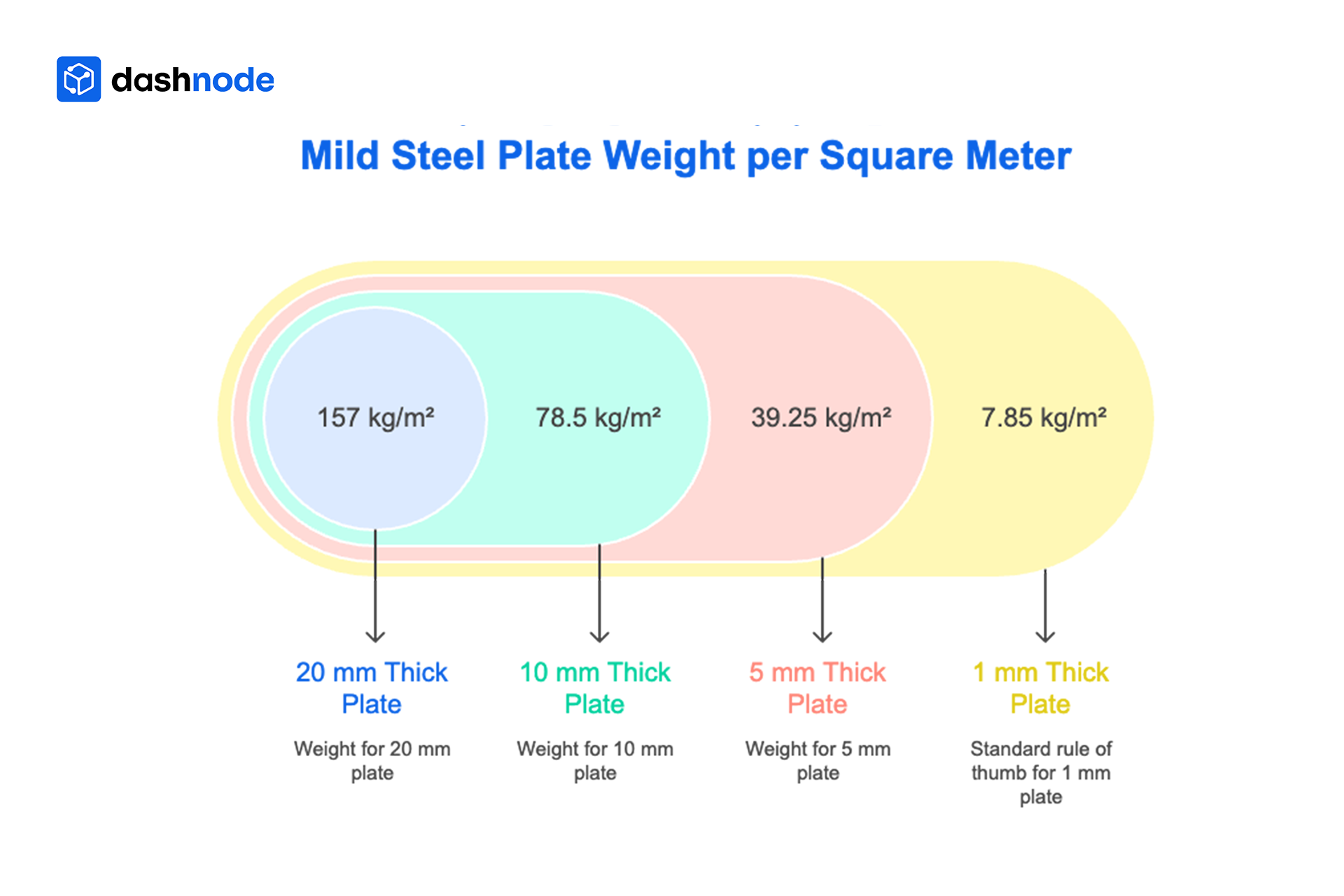
To simplify calculations, engineers often use a rule of thumb:
1 mm thick mild steel plate ≈ 7.85 kg per square metre
This shortcut allows estimators to quickly approximate steel weight per square metre without performing full volumetric calculations.
For example:
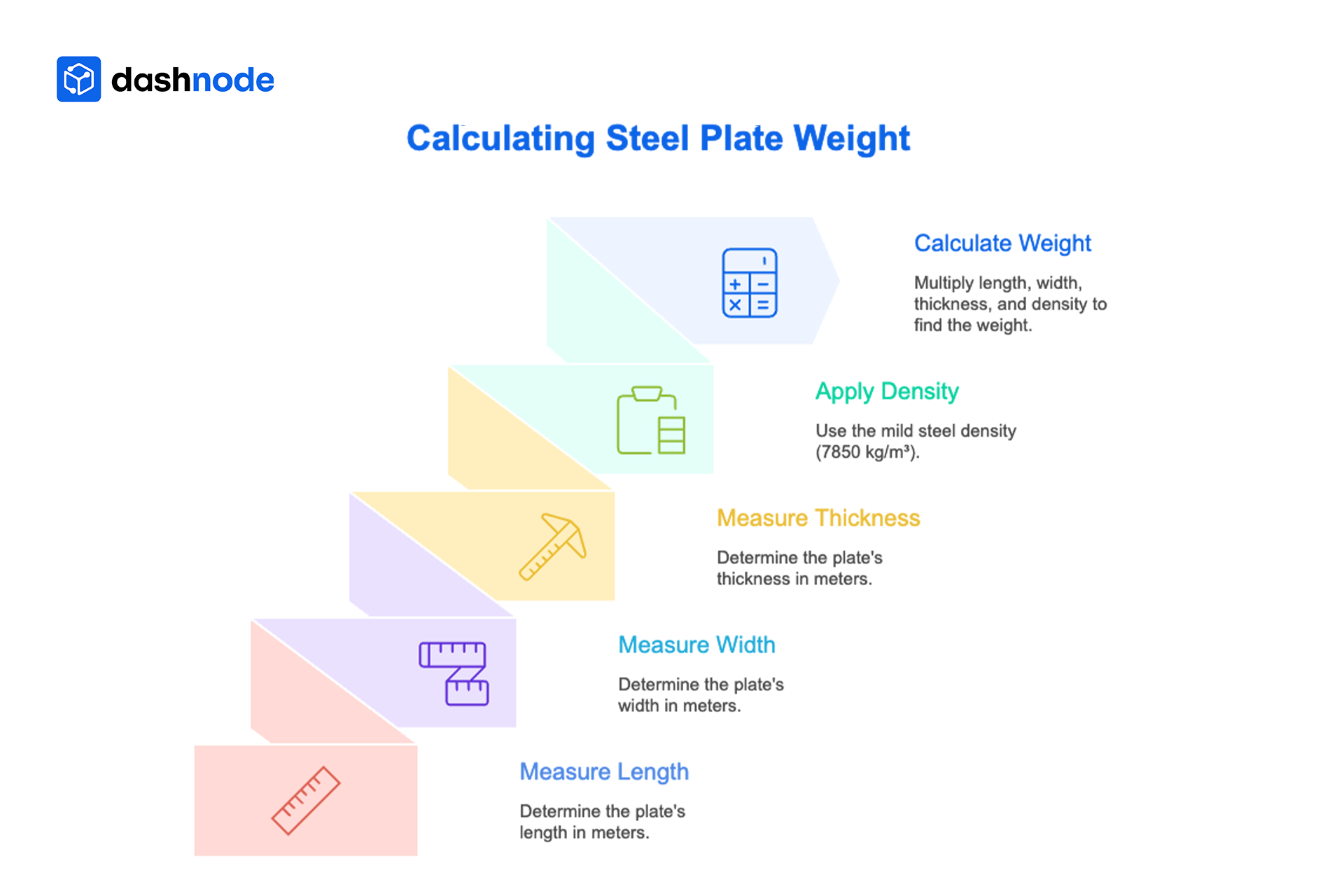
The steel plate weight formula is straightforward and based on basic geometry.
Weight (kg) = Length × Width × Thickness × Density
Where:
Unit Conversion
Since plate thickness is usually measured in millimetres, it must be converted into metres.
Example:
10 mm = 0.01 metres
This formula forms the foundation of most sheet metal weight calculation tools and online calculators used by fabrication teams.
Let’s walk through a practical example used by fabrication estimators.
Plate size:
2 m × 1 m × 10 mm
10 mm = 0.01 m
Weight =
2 × 1 × 0.01 × 7850
Weight = 157 kg
Assume steel price:
₹70 – ₹75 per kg
Material cost range:
157 × 70 = ₹10,990
157 × 75 = ₹11,775
Estimated material cost:
₹11,000 – ₹11,800
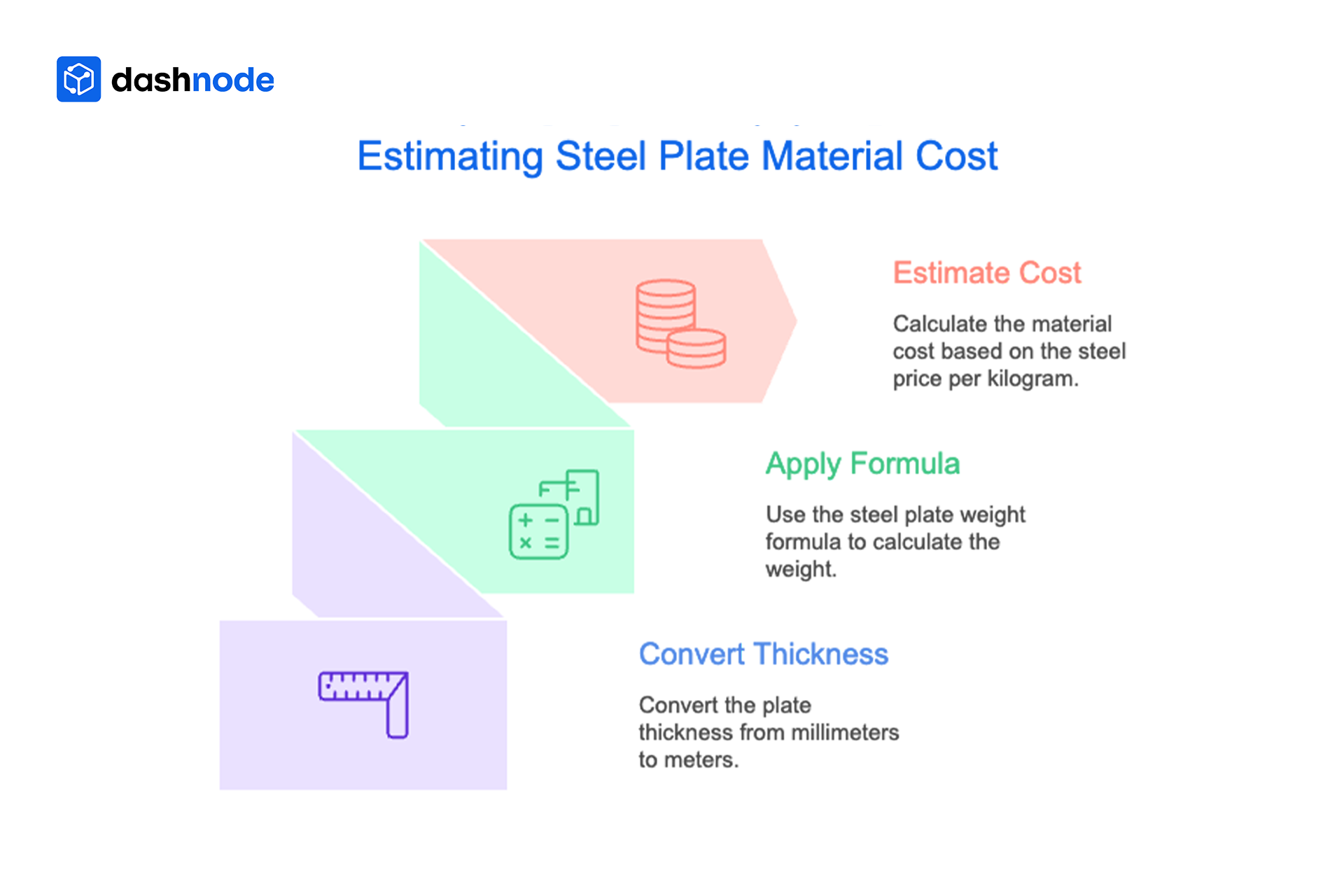
This calculation gives fabrication estimators a quick baseline for material cost estimation before quoting a job.
Instead of calculating weight each time, many fabrication professionals rely on weight-per-metre reference charts.
The table below shows steel weight per square metre based on plate thickness.
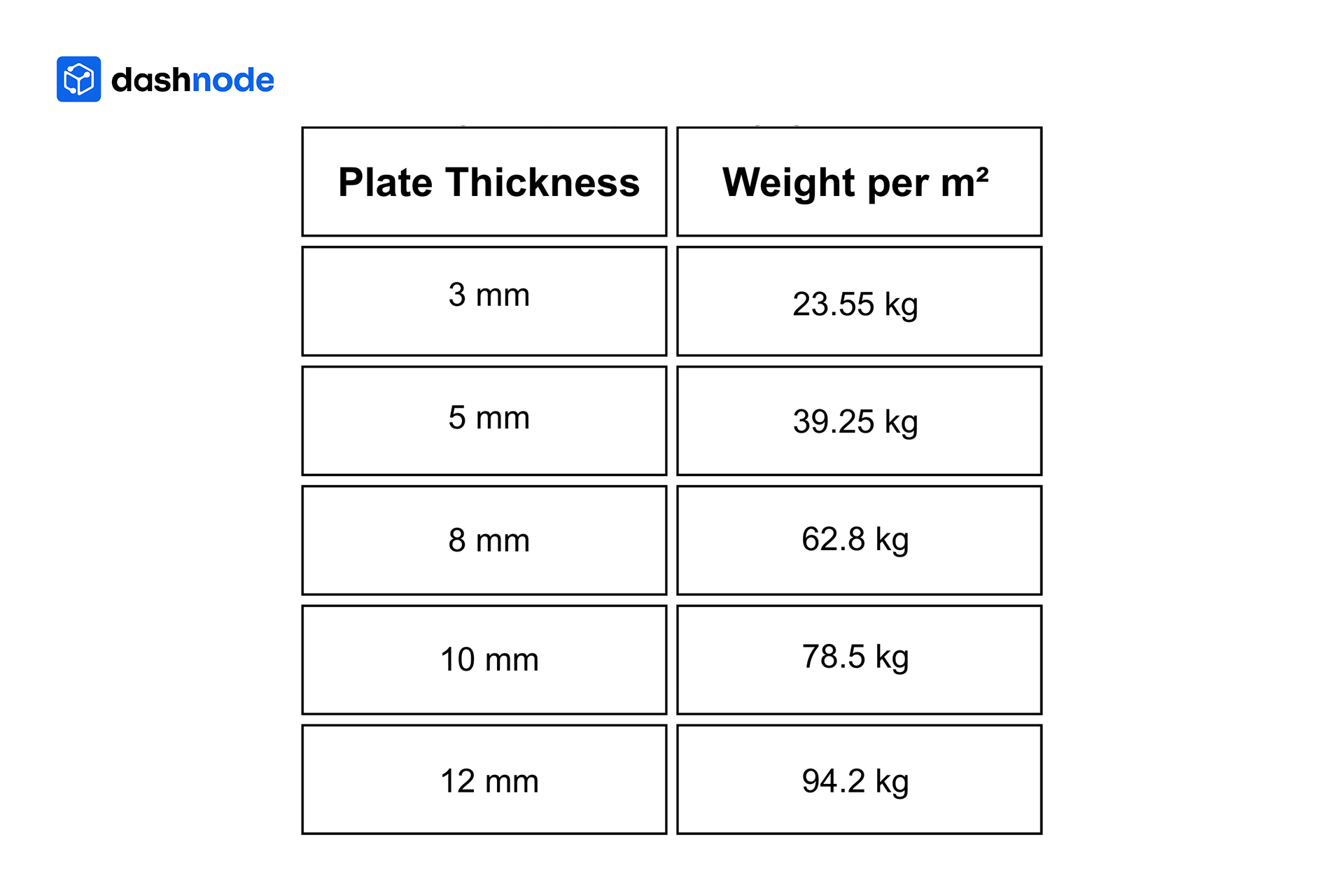
Estimators often use these charts to quickly determine the MS sheet weight by multiplying the plate area by the corresponding weight value.
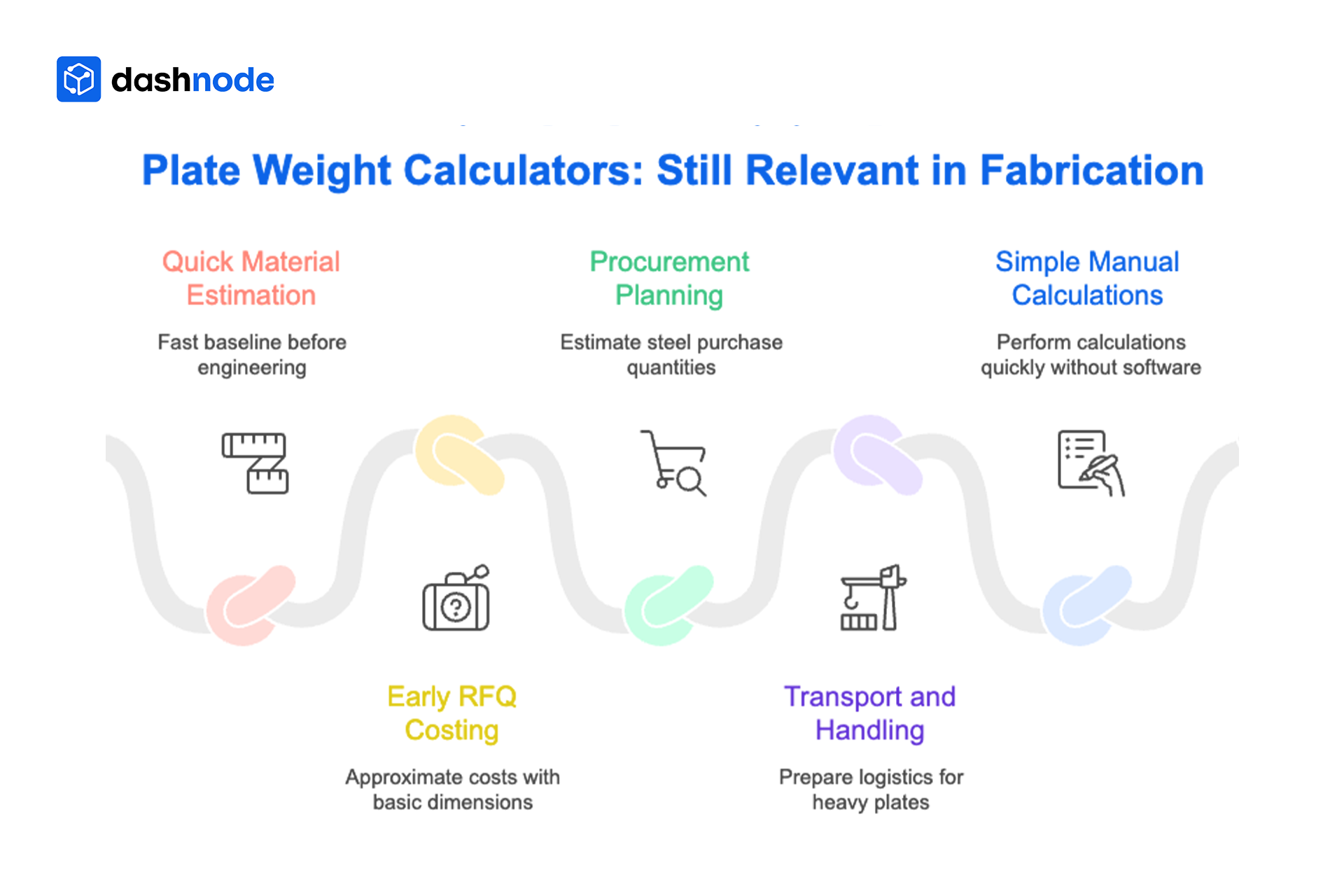
Despite advances in CAD-driven manufacturing systems, plate weight calculators remain widely used in fabrication environments.
There are several practical reasons for this.
Before detailed engineering begins, estimators need a fast way to estimate raw material consumption. Weight calculations provide an immediate baseline.
During early-stage RFQs, engineers may only receive basic dimensions. Using weight per metre calculations, they can quickly approximate material costs.
Material procurement teams rely on weight calculations to estimate steel purchase quantities.
Heavy plates require cranes, forklifts, and transport planning. Knowing the MS sheet weight helps teams prepare logistics.
Because the formulas are straightforward, estimators can perform calculations quickly without specialized software.
While useful, weight calculations only estimate raw material weight. They do not reflect the full complexity of modern fabrication processes. Several critical factors are missing from simple calculations.
Two parts made from the same plate thickness may have completely different geometries. More complex shapes often require additional machining steps or manufacturing effort.
Manufacturing processes often depend on factors beyond material weight, including part geometry, machining complexity, and production requirements.
Features such as holes, slots, and internal geometries can increase the time required to manufacture a part.
Material utilization and part layout can also influence how efficiently steel plates are used in manufacturing.
Manufacturing cost may also depend on machine capabilities, setup requirements, and production parameters.
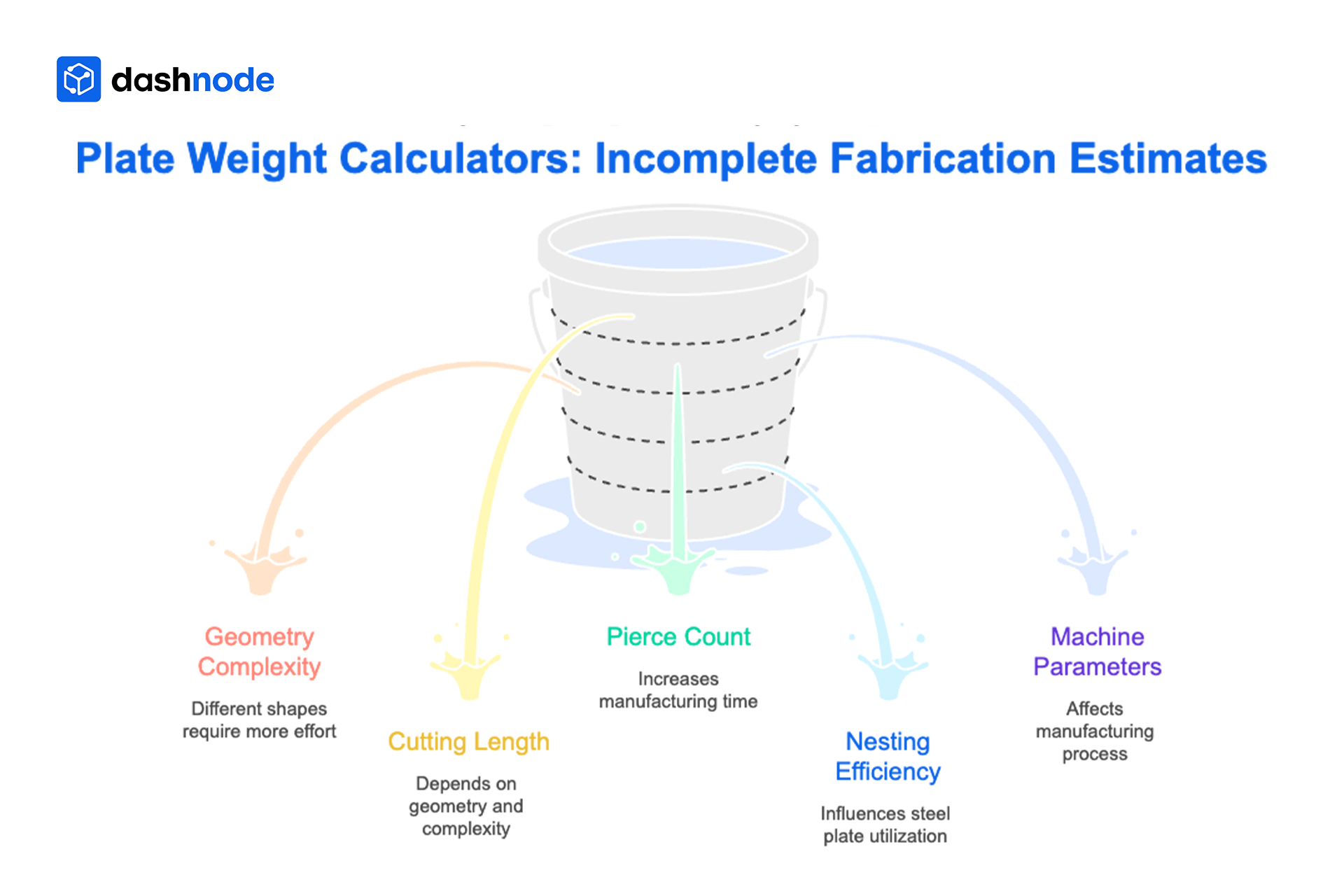
None of these factors is captured by simple weight formulas. This is why material weight alone cannot represent the full scope of manufacturing effort required for many parts.
That’s why modern fabrication shops often combine weight calculations with more advanced quoting methods.
As fabrication workflows become more digital, many shops are moving toward CAD-driven quoting systems. Instead of relying only on manual weight calculations or spreadsheet-based costing, these tools analyze the actual geometry of CAD files to estimate manufacturing requirements.
Modern quoting platforms evaluate factors such as:
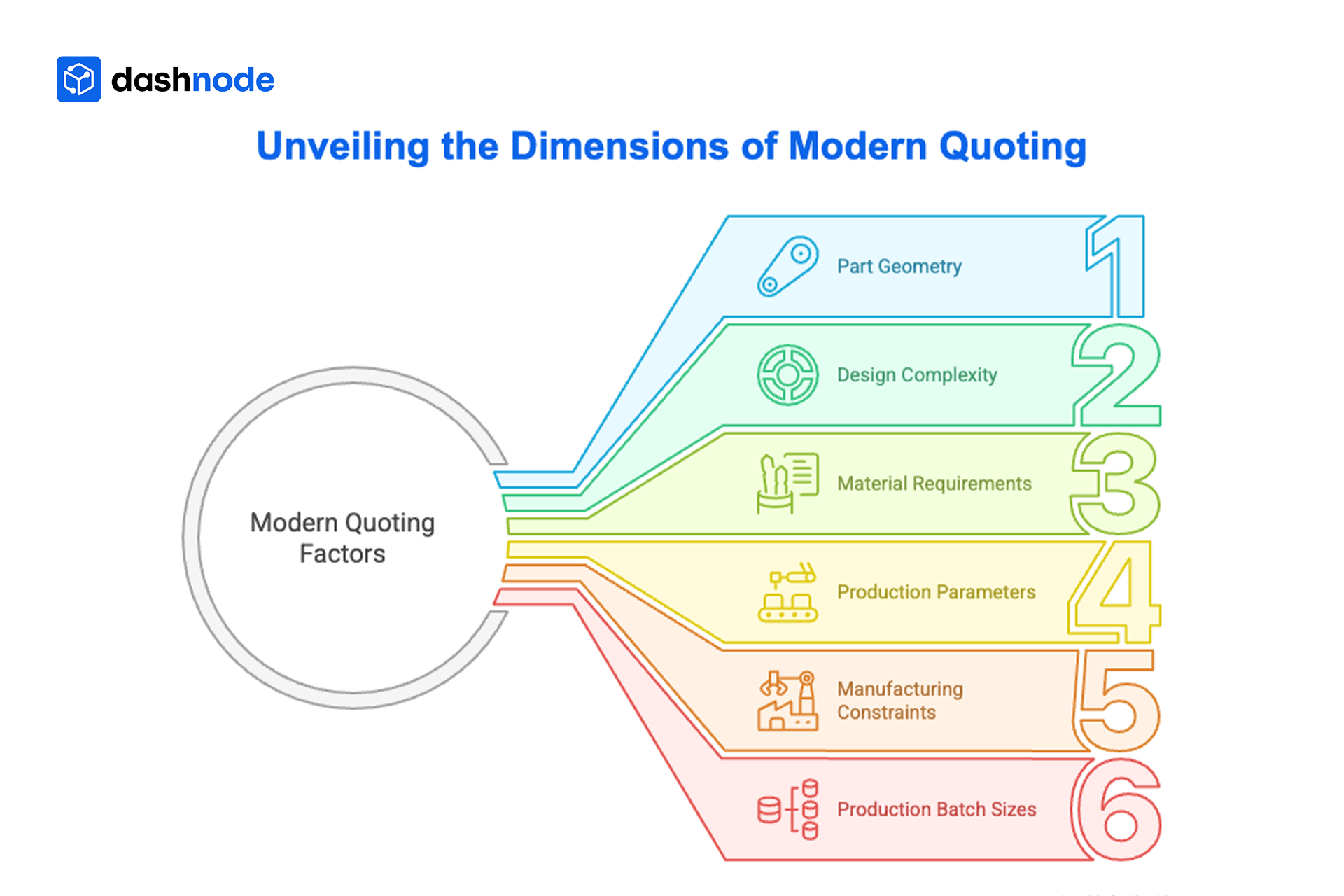
These variables help engineering and quoting teams better understand manufacturing requirements compared with weight-based calculations alone.
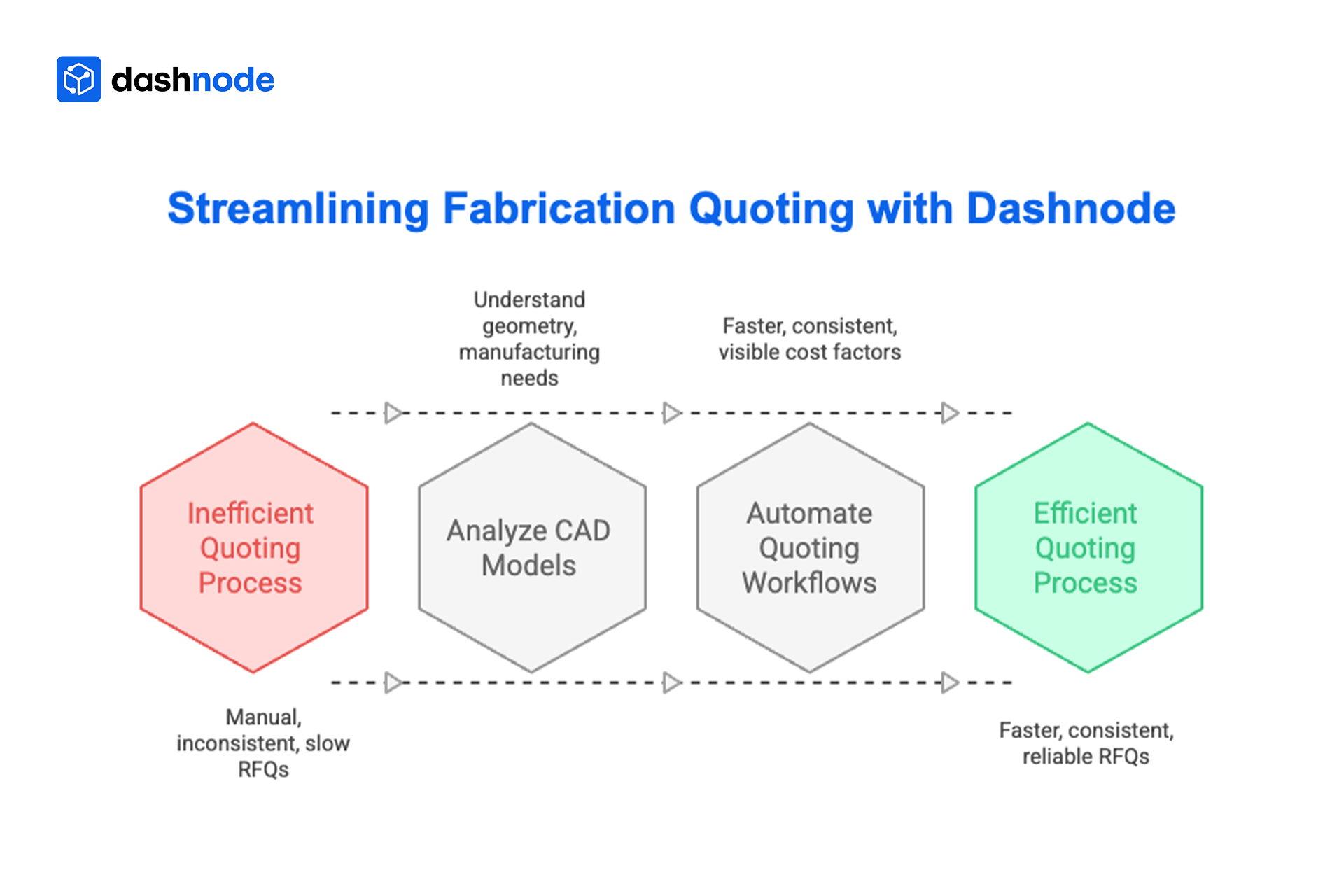
Dashnode helps teams analyze CAD models and part geometry to better understand manufacturing requirements during the quoting process.
The result is faster RFQ turnaround, more consistent quotes, and better visibility into the factors that influence CNC manufacturing costs.
For fabrication estimators handling increasing RFQ volumes, this shift represents a practical step toward more efficient and reliable quoting processes.
If your team still relies on spreadsheets and manual weight calculations to estimate fabrication jobs, it may be worth seeing how automated quoting workflows operate in practice.
Book a demo with Dashnode to see how fabrication teams are generating faster, more consistent quotes directly from CAD files.
Steel plate weight depends on its length, width, and thickness. Since the density of mild steel is constant, any change in these dimensions directly affects the total weight of the plate.
No. Plate weight calculators only estimate the raw material weight of a steel plate. Actual manufacturing cost depends on factors such as part geometry, machining complexity, production steps, and manufacturing requirements. These production variables determine machine time and processing cost, which cannot be calculated from plate weight alone.
Automated quoting platforms analyze CAD geometry to assess part complexity, material requirements, and manufacturing considerations. By analyzing the actual part design rather than only plate dimensions, these systems produce more accurate and consistent fabrication estimates.
Dashnode analyzes CAD files to evaluate part geometry and manufacturing complexity more quickly. By combining these insights with material calculations such as MS sheet weight, the platform allows fabrication estimators to generate faster and more consistent quotes without relying entirely on manual spreadsheets.
Fabrication teams typically consider automated quoting solutions when they receive high volumes of RFQs and manual estimation becomes time-consuming or inconsistent. Dashnode streamlines the quoting process by analyzing CAD files and automatically generating CNC machining cost estimates.